The Question
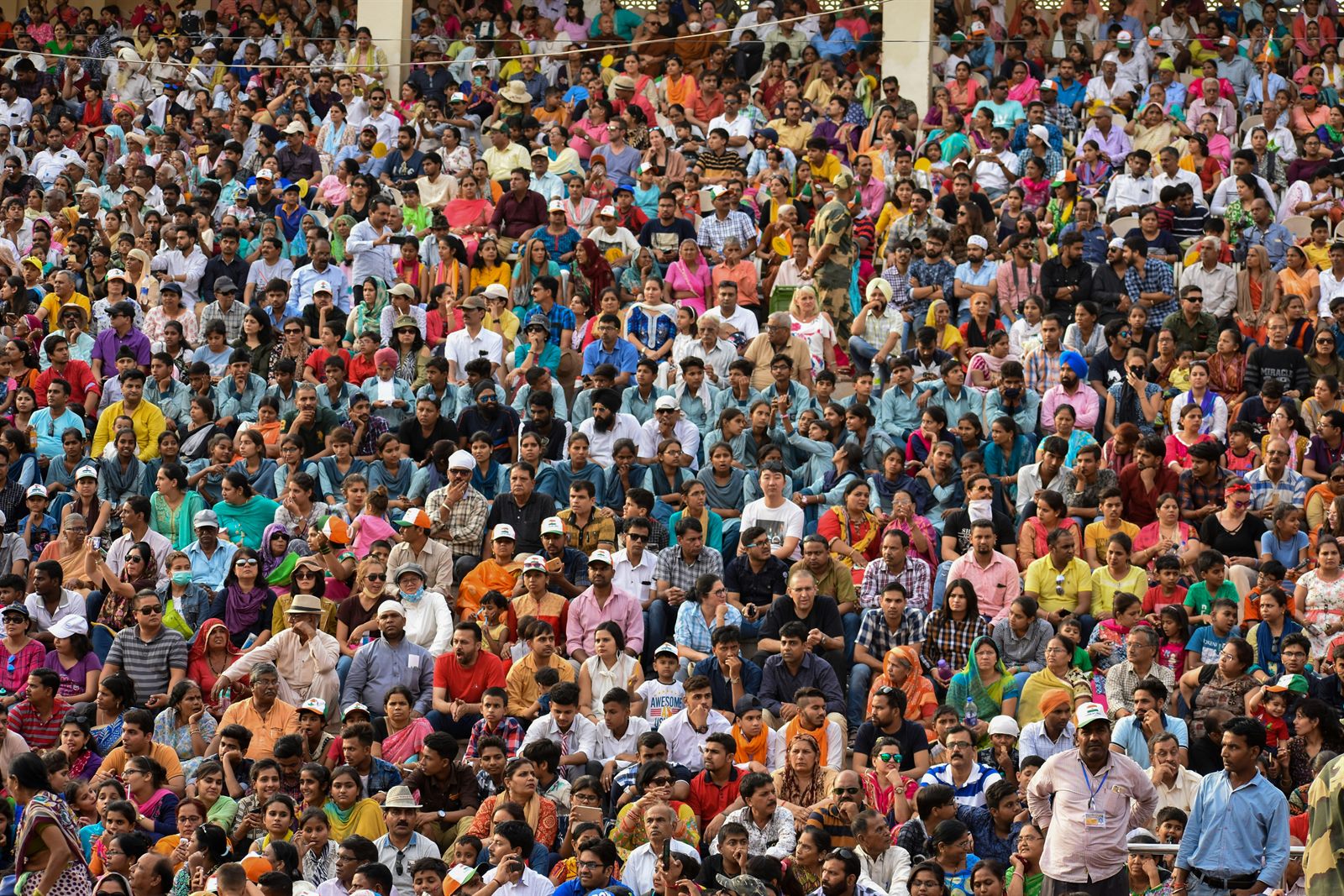
Almost everyone alive was raised on a single assumption: there will always be more of us. The population climbed from one billion around 1800 to eight billion in 2022, and for most people "the future" means a fuller, more crowded world. Governments plan for it, economists model it, and environmental fears are built on it. But the assumption is quietly cracking.
The world is still growing today, but the engine of that growth — the number of babies born per woman — is slowing everywhere, and in much of the planet it has already stalled. The question is no longer whether humanity's numbers will stop rising, but when. The official answer, from the United Nations, has long pointed to a peak somewhere around 2085 at roughly ten billion. A growing chorus of demographers now argues that peak could arrive decades earlier — perhaps before 2060, at a lower number. If they are right, the defining demographic event of the century is not overcrowding but the beginning of a long, unfamiliar decline.
What the Evidence Shows
The single most important number in demography is the total fertility rate — the average number of children a woman has over her lifetime. To keep a population stable, it needs to sit around 2.1. Across most of the developed world, it has fallen far below that: much of Europe hovers near 1.4, and several East Asian societies have plunged toward 1.0 or lower, among the lowest rates ever recorded. What shocked forecasters was not the decline itself but the pace, and the fact that it is now spreading to middle-income nations far earlier in their development than the old models assumed.
India, now the world's most populous country, has already dropped to around replacement level. Large parts of Latin America and Southeast Asia have followed. Even in some regions long expected to drive growth deep into the century, birth rates are sliding faster than projected. Because fertility feeds forward for decades — fewer babies today means fewer parents tomorrow — small changes compound into large shifts in the eventual peak. That is precisely why several independent modelling groups now put the turning point years, even decades, ahead of the UN's central line.
"We keep revising the peak earlier. Every time the data comes in, fertility has fallen faster than our previous 'low' scenario. The surprise is no longer decline — it is the speed of it."
— Institute for Health Metrics and Evaluation — Global Fertility Projections, 2024The honest caveat is that Africa holds the outcome in the balance. Sub-Saharan Africa still has high fertility and a young population, and its trajectory over the next thirty years will largely decide whether the global peak comes early or late. If African birth rates fall as quickly as they have elsewhere once education, urbanisation, and contraception spread, the early-peak scenario becomes far more likely. If they decline slowly, the UN's later timeline holds. That single uncertainty is why this forecast sits close to a coin flip rather than a confident call.
"The question of the century is not how we feed ten billion people, but how we thrive as our numbers begin, for the first time, to fall."
Why This Is Happening
Prosperity and choice reliably lower birth rates. As countries grow richer, more children survive, women gain education and careers, and contraception becomes widely available, families choose to have fewer children. This pattern has held across every culture and continent it has reached, and it is now unfolding in the developing world faster and at lower income levels than it ever did in the West.
The cost and culture of raising children have shifted. Housing, education, and childcare have become expensive just as expectations for each child have risen. Young people marry later, prioritise careers and freedom, and increasingly question whether to have children at all. In the lowest-fertility societies, these pressures have combined into a self-reinforcing norm of very small or childless families that policy has struggled to reverse.
Momentum is running out. For decades, global population kept rising even as fertility fell, because past high birth rates left huge numbers of young people entering their childbearing years. That "demographic momentum" is now fading as those cohorts age. Once it is spent, low fertility translates directly into a shrinking population — and the switch from growth to decline can happen surprisingly abruptly.
What Could Happen
Fertility keeps falling faster than the UN's central case, including across much of Africa. Global population tops out somewhere in the late 2050s below ten billion, then begins a slow decline. Governments pivot from managing growth to managing ageing and shrinking, reshaping pensions, migration, housing, and the entire logic of the economy.
African fertility declines only gradually and pockets of higher birth rates persist. Global numbers keep climbing toward ten billion and peak in the 2080s, close to the official projection. The great demographic reversal still comes, but a generation later than the early-peak models suggest.
Aggressive family policy, cultural shifts, or new technology nudge fertility back up in some low-birth countries. Growth extends further into the century and the peak arrives later and higher. History offers little precedent for a durable rebound, which is why this path is the least likely of the three.
What Can We Do

An early peak is neither disaster nor triumph — it is a profound transition, and how societies prepare will matter far more than the exact date.
Plan your own life around longer lives and smaller families. Whatever the global number does, you are likely to live longer and support ageing relatives with fewer siblings to share the load. Save accordingly, invest in your health early, and treat a long, active later life as the base case rather than a bonus.
Support policies that make parenthood genuinely feasible. The countries that soften fertility's fall are those that make housing, childcare, and flexible work affordable — not those that lecture people about duty. Back the practical measures that give people the freedom to have the families they actually want.
Prepare communities for ageing, not just growth. Shrinking, older populations need different infrastructure: healthcare, elder support, walkable towns, and dignified later-life work. Push local leaders to plan for this now, while there is time to adapt schools, transport, and services rather than react in crisis.
Rethink the growth-forever mindset. Much of our economics assumes an ever-expanding workforce and consumer base. A stable or declining population demands new thinking about productivity, migration, automation, and what prosperity means. Engaging with that shift early — as a voter, worker, and citizen — beats being blindsided by it.
- United Nations — World Population Prospects, 2024 Revision
- Institute for Health Metrics and Evaluation — Global Fertility Projections, 2024
- Wittgenstein Centre for Demography — Global Population Scenarios, 2025
- Our World in Data — Fertility & Population Trends, 2025
- Lancet — Global Fertility and Forecasting Analysis, 2024
- Forecast The World Research Desk — 800+ data sources