The Question
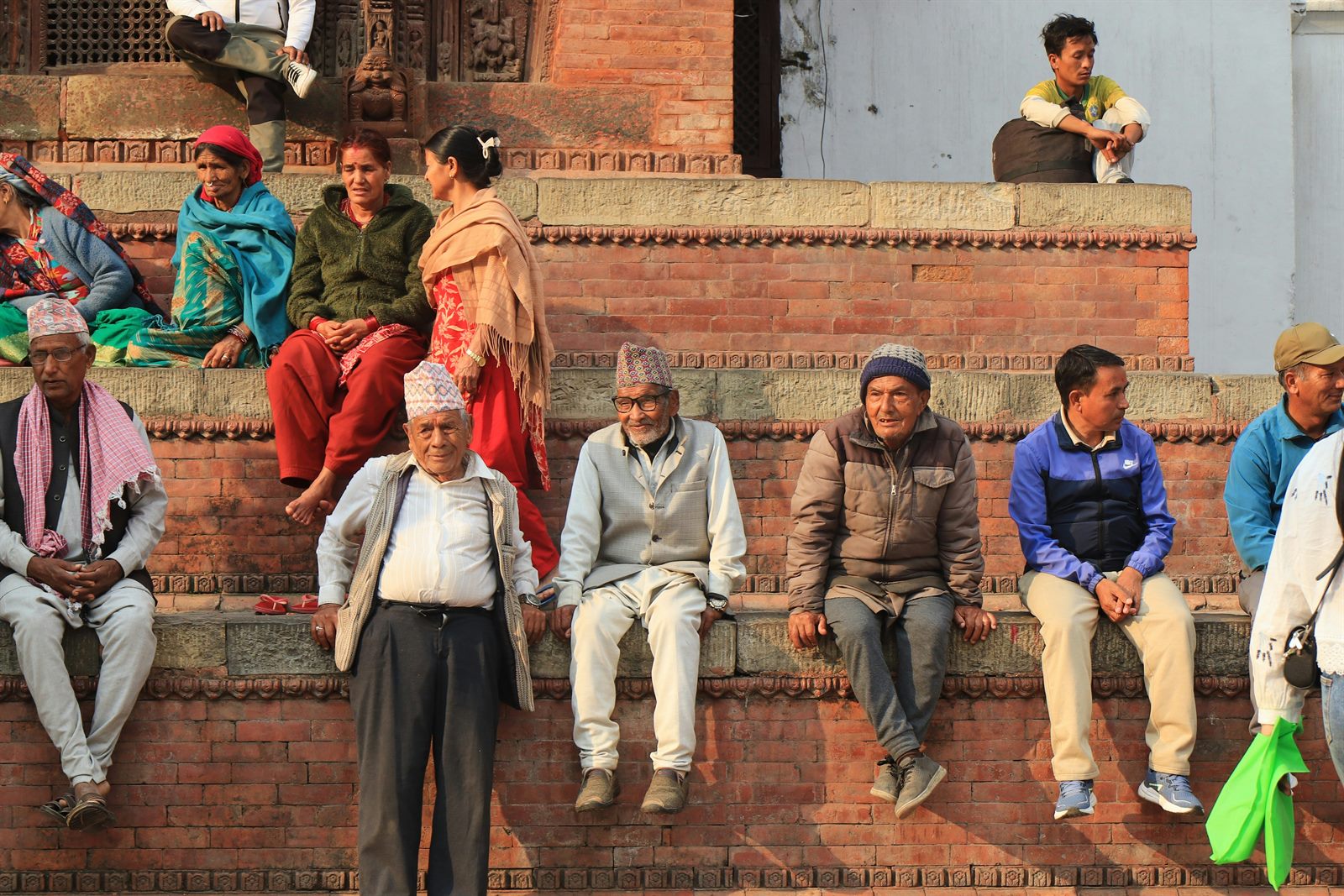
Every population pyramid you were ever shown in school had the same shape: a broad base of children narrowing to a thin peak of the elderly. That triangle was the signature of the human species — always more young than old, always growing. Within our lifetimes, that ancient shape is inverting into something closer to a column, and in the oldest countries, a top-heavy pillar. The global median age, which sat around 20 in the mid-20th century, has already climbed past 30 and keeps rising.
The question is what it means when, for the first time ever, most people on Earth are past their twenties — and headed toward a world where the over-60s outnumber young children. This is not a distant abstraction. It is already reshaping economies, elections, pension systems, housing, and the balance of power between generations. The young planet that built the modern world — expanding workforces, growing markets, cities swelling with newcomers — is being replaced by an older, slower-growing, and eventually shrinking one. This is a forecast about the single most predictable revolution of our century.
What the Evidence Shows
Demography is the most reliable of forecasts, because the people who will be adults in a decade have already been born. Global fertility has fallen dramatically, from around five children per woman in 1960 to roughly 2.3 today, hovering near the replacement level below which populations eventually shrink. Two-thirds of humanity now lives in countries with fertility below replacement. At the same time, life expectancy has risen steeply almost everywhere, so people not only have fewer children but live far longer alongside them.
The combined effect is a rapid rise in median age. In much of East Asia and Europe, the median is already in the mid-40s; Japan, Italy, and South Korea are further along the curve than anyone has ever been. The global figure crossed 30 in the early 2020s and continues to climb. The number of people aged 65 and over is projected to more than double by the middle of the century, at which point older adults will outnumber children under five for good — a crossover with no precedent in human history.
"We spent all of human history worrying about too many babies. The defining demographic story of the next fifty years is the opposite: too few, and a world growing old faster than any society was built to handle."
— United Nations Population Division — World Population Prospects, 2024Only one region bucks the trend for now. Sub-Saharan Africa remains young and growing, and it will supply most of the world's population increase and much of its future workforce. But even there, fertility is falling. The global picture is not uniform — a young Africa alongside an ageing everywhere-else — yet the weighted average is unmistakable. The share of humanity over 30 is rising steadily and, barring a reversal in fertility that no country has managed to engineer, will pass half within roughly a decade.
"The population pyramid is becoming a pillar. The species that was always young is growing old together."
Why This Is Happening
Fertility fell almost everywhere, and stayed down. As incomes rose, children survived, women gained education and careers, and the cost of raising a child climbed, families chose to have fewer. This transition has repeated in country after country and has proven nearly impossible to reverse; no society that reached very low fertility has reliably pushed it back up, even with generous incentives. Fewer births today mechanically means an older population tomorrow.
People are living dramatically longer. Medicine, sanitation, nutrition, and safer work have added decades to the average life. That is a triumph — but it also means the top of the age pyramid keeps thickening. More people are surviving into their 80s and 90s than ever before, and the fastest-growing age group on the planet is the very old.
The momentum is locked in. Because tomorrow's adults are already born and today's smaller generations of children cannot suddenly become large, the ageing trend has enormous inertia. Even a surprise baby boom would take decades to shift the median age, and none is in sight. Demographers can see this future more clearly than almost any other because its raw material — living people — already exists.
What Could Happen
Median age rises steadily, most of humanity moves past 30, and societies reorganise around older populations: later retirement, pension reform, healthcare expansion, and fierce competition for younger workers. Migration from still-young regions becomes a central economic strategy for ageing nations, and generational politics grows sharper as older voters dominate.
The oldest societies hit acute labour shortages and strained pension and care systems sooner than planned, forcing rapid, disruptive change. Some economies stagnate under the weight of care costs and shrinking workforces, while others offset it through automation and immigration, producing a widening gap between adapters and laggards.
Advances in health that extend not just lifespan but working, healthy years, combined with automation filling labour gaps, make an older world far more productive than feared. Ageing becomes a manageable adjustment rather than a crisis, and the pillar-shaped population proves compatible with continued prosperity.
What Can We Do

An ageing world is not a catastrophe, but it rewards those who prepare. The choices made now — personally and collectively — decide whether longer lives are a burden or a gift.
Plan for a longer life than your parents assumed. If you may live into your 90s, decisions about savings, health, skills, and retirement age all change. Treat your later decades as active years to be funded and filled, not an afterthought. The people who fare best in an ageing world are those who planned for longevity rather than being surprised by it.
Back reforms that keep older people included. Rigid retirement ages, age discrimination, and care systems designed for a younger society waste the talents of a vast and growing group. Support flexible working, lifelong learning, and dignified care, so that longer lives add to society rather than straining it. An economy that sidelines its over-60s is throwing away its fastest-growing resource.
Value the young generations that remain. With fewer children born, each one matters more. Investment in education, family support, and opportunities for the young is not competition with the old — it is what sustains the smaller workforces that will carry everyone. A humane ageing society protects both ends of the pyramid at once.
Think of migration as demography, not just politics. Young regions and ageing ones need each other. Well-managed movement of people can balance labour shortages against surplus youth to mutual benefit. Supporting orderly, fair migration is one of the most powerful tools we have for smoothing the great age transition ahead.
- United Nations Population Division — World Population Prospects, 2024
- Our World in Data — Global Fertility and Ageing Datasets, 2025
- World Health Organization — World Report on Ageing, 2024
- Institute for Health Metrics and Evaluation — Population Forecasts, 2024
- Pew Research Center — The Ageing of the World's Population, 2025
- Forecast The World Research Desk — 800+ data sources