The Question
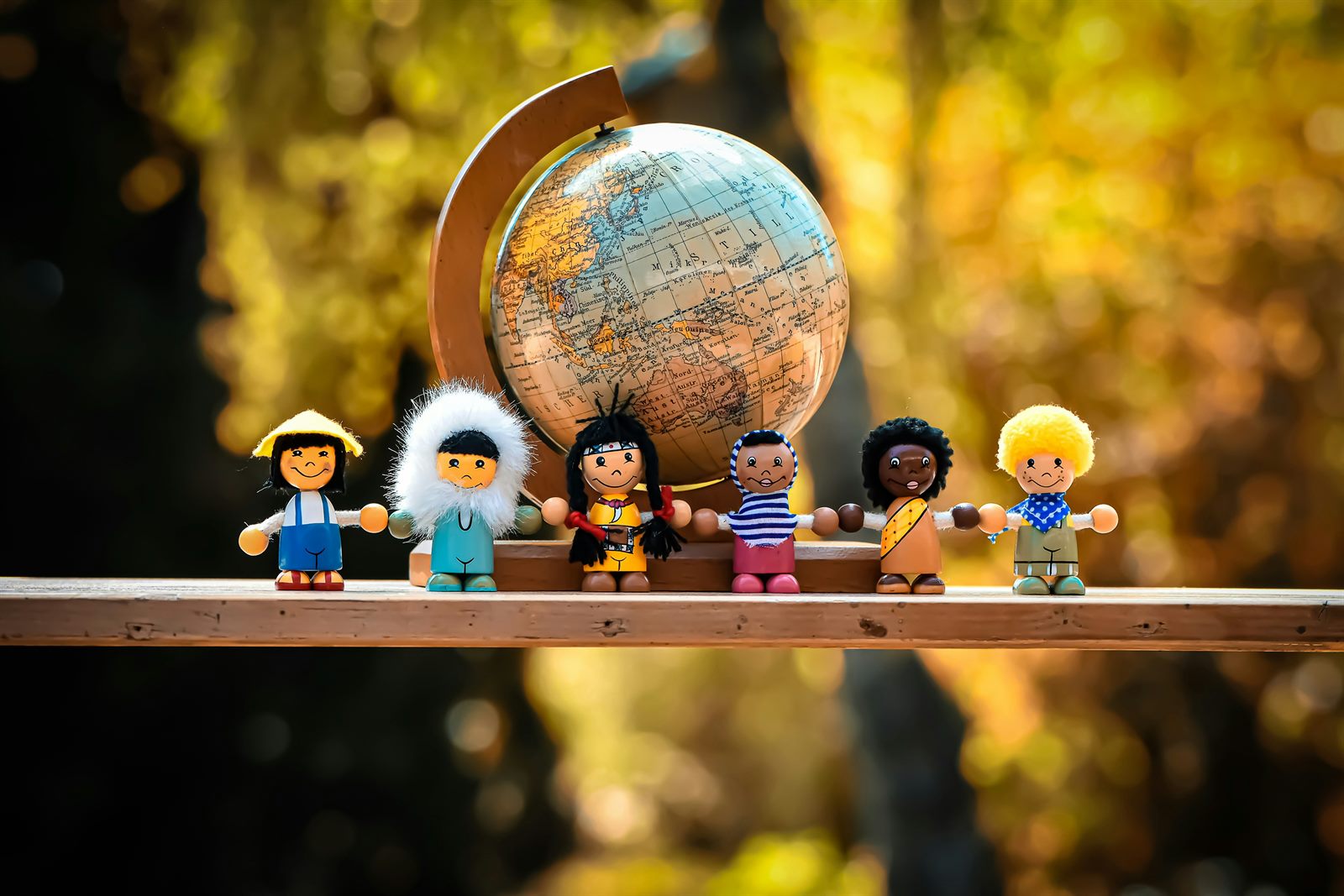
Every generation before this one grew up inside a mostly local world. Their music came from national radio, their news from national broadcasters, their heroes and jokes and fears shaped by the country they happened to be born in. A child in one nation and a child in another might as well have inhabited separate planets of reference. Culture travelled, but slowly, and it arrived translated, delayed, and diluted by distance.
The children born after roughly 2010 are the first to grow up with something different in their pockets from the very start: a single, planet-spanning stream of content, delivered by the same few platforms, in real time, everywhere at once. They watch the same viral clips within hours, adopt the same slang, follow the same creators, and dance to the same tracks. The question is whether this shared surface is deep enough to produce something genuinely new — the first truly global generation, whose identity is shaped as much by a worldwide culture as by the flag on their passport.
What the Evidence Shows
The infrastructure is already in place and astonishingly concentrated. A handful of platforms now reach billions of users across nearly every country, pushing the same short videos, songs, and trends through algorithms that pay little attention to borders. When a track breaks out or a dance goes viral, it spreads across continents in days, not decades. Streaming has done the same for film and television: a South Korean drama or a Nigerian afrobeats single can top charts on the other side of the world almost overnight.
Surveys of young people repeatedly find that their online reference points — favourite creators, games, memes, and music — overlap far more across countries than those of their parents ever did. English, reinforced by the internet and increasingly by instant translation, functions as a shared second tongue for a huge share of the world's youth. Global fandoms, from gaming communities to music movements, now organise millions of teenagers around identities that have nothing to do with nationality and everything to do with taste.
"For the first time, a generation is being raised inside a single cultural bloodstream. What trends in one hemisphere is already old news in the other by the weekend."
— Pew Research Center — Global Youth & Connectivity Study, 2025Yet the evidence cuts both ways, which is why this is a coin-flip rather than a certainty. The same platforms that unite also fragment: algorithms sort users into ever-narrower niches, and national governments increasingly wall off, filter, or ban global services. Language, religion, and local politics remain powerful. A shared meme is not the same as a shared worldview, and plenty of young people consume global content while holding fiercely local identities. The surface is global; the depth is contested.
"They may all know the same song. Whether they come to feel like the same people is the harder question."
Why This Is Happening
Connectivity reached the young first and hardest. Smartphones and cheap data have spread faster than almost any technology in history, and children adopt them earliest. For those born into it, the global feed is not a novelty layered onto local life — it is the default environment in which their tastes and friendships form. That early, total immersion is what makes this cohort different from every one before it.
The economics of content now reward global reach. Platforms and creators make money by crossing borders, so their algorithms are built to surface whatever travels. A song, a format, or a joke that works everywhere is worth more than one that works in a single market, and the whole system is tuned to find and amplify exactly that. Global culture is not an accident; it is the business model.
Instant translation is quietly demolishing the last wall. As real-time translation matures through the 2030s, the language barrier that once fragmented youth culture into national silos keeps thinning. A creator in one country can reach fans in fifty, subtitled and dubbed on the fly. Each advance makes the shared culture a little less English-centric and a little more genuinely planetary.
What Could Happen
By the 2030s, the cohort now in their teens carries a common layer of references, humour, and values that sits alongside national identity. They coordinate across borders as easily as across town, and marketers, politicians, and educators start treating "global youth" as a real audience. Nationality matters, but it shares the stage with a worldwide sense of belonging.
Young people everywhere share the same apps and trends yet remain deeply anchored in local language, faith, and community. The global culture is a thin, entertaining veneer over identities that stay national at their core. Connection is real but shallow, and belonging still runs along old lines.
Rising censorship, rival platform ecosystems, and geopolitical walls carve the internet into regional blocs. Youth cultures diverge again as teenagers in different regions grow up on entirely separate networks. The brief window of a single global feed closes before a true global generation can consolidate.
What Can We Do
A global generation is not something to simply wait for or resist — it is something families, educators, and young people themselves can shape for the better.
Raise children to be curious about the world, not just consumers of it. Shared feeds can broaden a young person's horizons or trap them in a shallow, algorithm-picked loop. Encourage real engagement with other cultures — languages, histories, friendships across borders — so that global connection becomes understanding rather than passive scrolling.
Protect local roots alongside the global reach. A worldwide culture is richest when it is fed by strong local ones. Help young people value their own language, community, and heritage, so the global generation adds to their identity instead of flattening it into sameness.
Push for an open, humane internet. The shared culture depends on networks staying open and safe. Support policies that resist both censorship and the toxic, addictive designs that turn connection into harm. The version of the global generation we get depends heavily on the platforms we allow to shape it.
Build the skills a borderless generation will need. The young people coming of age now will work, organise, and love across borders. Equip them with digital literacy, cross-cultural fluency, and the judgement to tell a genuine connection from a manufactured trend. Those are the abilities that turn a global feed into a global citizen.
- Pew Research Center — Global Youth & Connectivity Study, 2025
- UNESCO — Youth, Culture and Digital Belonging Report, 2024
- GSMA — State of Mobile Internet Connectivity, 2025
- Ipsos — Global Trends: Generation & Identity, 2025
- Reuters Institute — Digital News & Youth Media Report, 2025
- Forecast The World Research Desk — 800+ data sources