The Question

For most of the industrial age, work had an address. You went to it, and where you lived was decided by where the job was. That link — the single most powerful force shaping where humans settle — has been quietly cut for a growing slice of the workforce. A software developer can now bill a company in one country while living in a second and holding citizenship in a third, moving on when the visa, the weather, or the mood changes.
The question is whether this is a fad that fades as offices reassert themselves, or the early shape of a permanent new category of person: the location-independent worker, legally recognised, economically significant, and numerous enough to reshape the towns they pass through. Governments have already answered with their wallets, launching dozens of dedicated visas to court these mobile earners. This is a forecast about whether the digital nomad becomes as ordinary a fixture of the 21st century as the commuter was of the 20th.
What the Evidence Shows
The infrastructure of nomadism is now fully built. High-speed internet reaches once-remote corners of the world, satellite connectivity fills the gaps, and cloud tools mean a team can collaborate across continents as if they shared a room. Remote and hybrid work, forced into the mainstream during the pandemic, did not fully retreat afterward; a substantial share of knowledge work remains location-flexible, and an entire generation entered the workforce treating that flexibility as normal rather than exceptional.
Crucially, states have moved from tolerating nomads to actively recruiting them. More than fifty countries now offer some form of digital nomad visa, from Portugal and Estonia to Indonesia, the UAE, and a string of Caribbean nations. These are not gimmicks: they are deliberate economic policy, designed to import spending power without importing competition for local jobs. Whole ecosystems — co-working spaces, co-living buildings, nomad insurance, community networks — have grown up to serve the class, a sign that the market considers it permanent.
"We are watching the birth of a genuinely new social category: people whose economic life is anchored to the internet rather than to any single nation. The law is racing to catch up with a reality that already exists."
— OECD — Working Paper on Remote Work and Cross-Border Mobility, 2025The frictions are real but shrinking. Taxation across borders remains a tangle, healthcare and pensions travel poorly, and host communities sometimes push back as nomads drive up local rents. Yet each of these problems is generating its own solution — bilateral tax clarifications, portable benefit schemes, purpose-built housing — precisely because there is now enough money and enough people involved to make solving them worthwhile. Trends that attract that kind of institutional problem-solving rarely evaporate.
"The office decided where people lived for two centuries. For a growing class, that spell is now broken."
Why This Is Happening
The technology made place optional for knowledge work. Once the tools to do a job well from anywhere became cheap and universal, the only thing tying a worker to a city was habit and law. Habit broke during the pandemic; law is now bending to follow. For the large and growing share of work that is essentially information moving between screens, physical location has become a preference rather than a requirement.
Countries compete for mobile spending, not just mobile labour. A digital nomad earning a rich-world salary and spending it in a lower-cost country is, to that country, a walking export market. Governments have grasped this and are engineering their visa regimes to attract exactly this profile. Competition between destinations to be the most welcoming keeps expanding the legal room in which nomads can operate.
A generation now treats mobility as a baseline expectation. Younger workers increasingly view a fixed office and a fixed city as one option among many rather than the default. Employers competing for talent accommodate this, and as remote-native companies grow, the share of jobs that assume a location shrinks. The cultural norm is shifting from "where do you work" to "where are you working from this month."
What Could Happen
Nomad visas mature into stable, widespread legal categories, portable benefits and clearer cross-border tax rules emerge, and the lifestyle becomes a normal option within many careers. The class is millions strong, economically courted by dozens of nations, and woven into the tourism and housing strategies of destination towns worldwide.
Remote work deepens and the number of location-independent workers surges past current projections, transforming whole towns and even small countries into nomad hubs. Local economies reorganise around mobile residents, prompting both booming service sectors and serious tension over housing and identity.
A durable corporate push back to physical offices, tightening visa politics, or sustained local hostility over rising rents curbs the trend. Nomadism survives as a niche for freelancers and founders rather than a broad class, and the grander projections quietly deflate.
What Can We Do
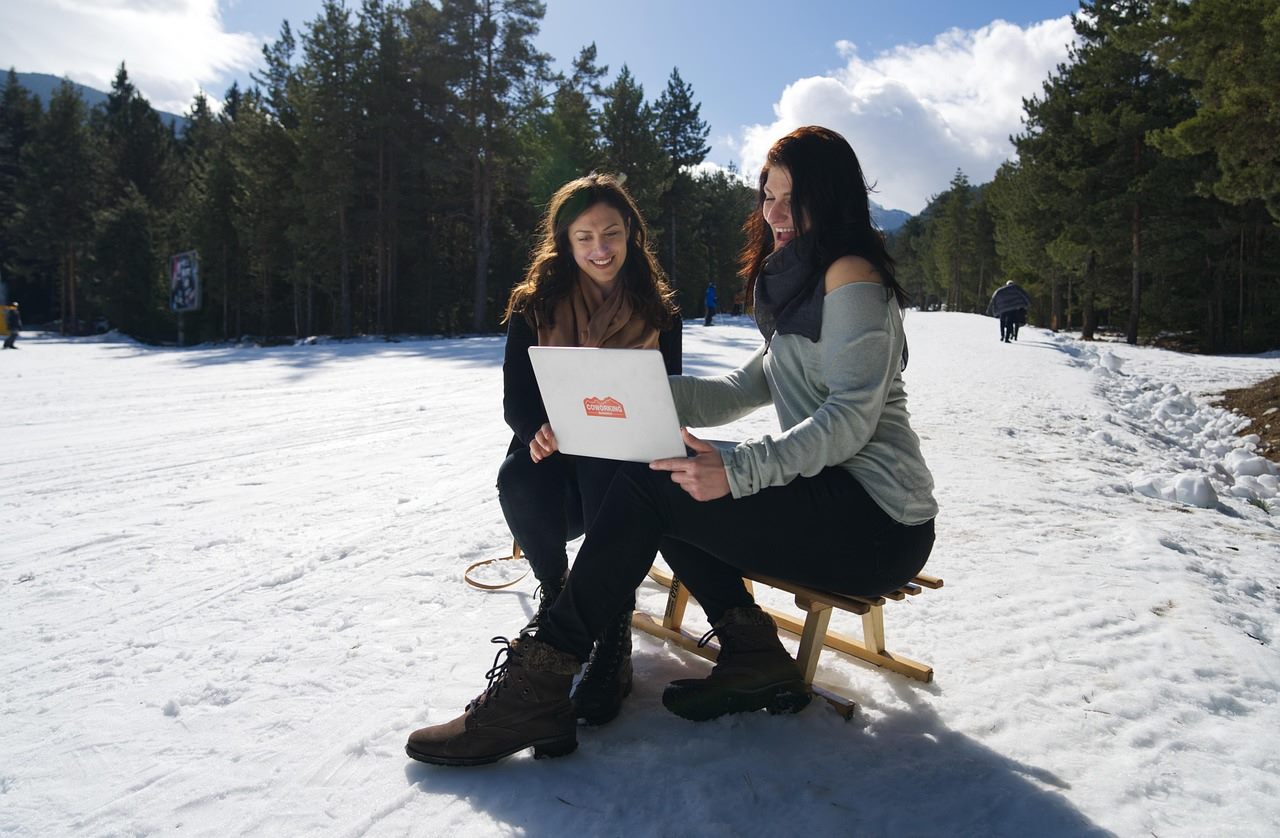
Whether you might join this class, host it, or simply live alongside it, there are sensible ways to prepare for a world where work and place are increasingly unbundled.
If you are tempted, plan the boring parts first. The freedom is real, but tax residency, health cover, and pension continuity are where nomad dreams quietly unravel. Research the visa rules of your destinations, understand where you owe tax, and arrange portable insurance before you go. The people who sustain this life for years are the ones who treated the admin as seriously as the adventure.
Build skills that travel. Location independence rests entirely on doing work that can be done from anywhere and sold across borders. Investing in digital, remote-friendly expertise — and in a network that is not tied to one city — is what turns mobility from a gamble into a durable option, whether or not you ever pack a bag.
If you host nomads, protect your community too. Local governments courting mobile spenders should pair that welcome with housing policy, so that incoming earners do not price out residents. The destinations that thrive long term will be those that captured the economic upside without hollowing out the neighbourhoods that made them attractive in the first place.
Push for fair cross-border rules. The current tangle of taxation and benefits benefits no one. Support clearer international frameworks that let mobile workers contribute properly where they live and earn, rather than slipping between systems. A well-governed nomad class strengthens the places it touches; an ungoverned one breeds resentment.
- OECD — Working Paper on Remote Work and Cross-Border Mobility, 2025
- World Bank — Digital Economy and Labour Flexibility Review, 2024
- MBO Partners — State of Independence in the Workforce, 2025
- Eurostat — Remote Work and Migration Statistics, 2024
- International Labour Organization — Future of Work Brief, 2025
- Forecast The World Research Desk — 800+ data sources