The Question
In July 1969, human beings flew a quarter of a million miles, landed on the Moon, and came home, guided by a computer with roughly 4 kilobytes of working memory and a processor running at about 0.043 megahertz. That machine filled a box the size of a briefcase and was, at the time, a miracle of miniaturisation. It could not hold a single photograph from your phone in its memory.
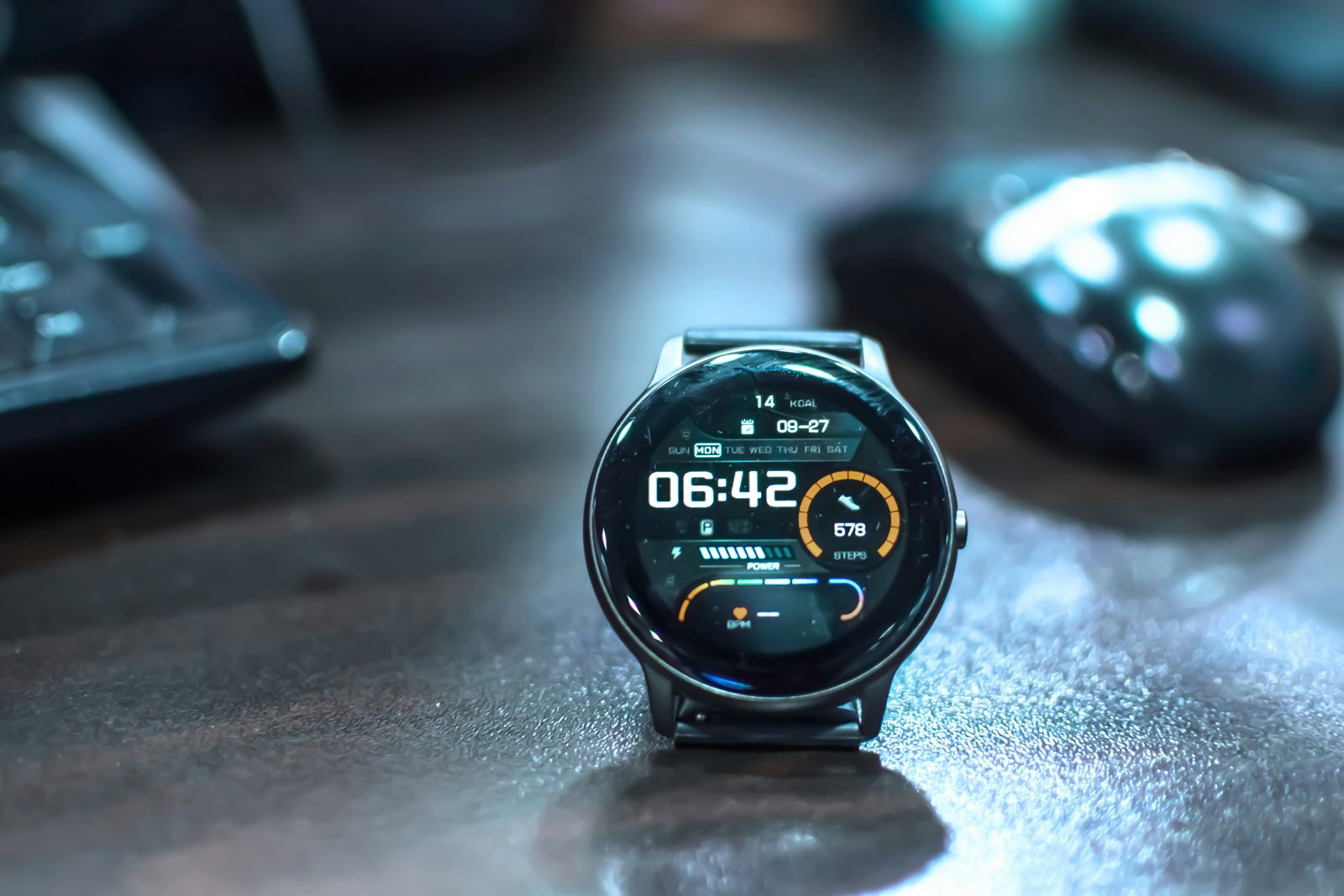
Your phone is not slightly better than that computer. Measured in raw processing power, it is millions of times more powerful, and it fits in a pocket, costs a few hundred dollars, and gets replaced every three years without ceremony. The unbelievable part is not the past — it is that the same curve keeps bending. The chip inside a current smartwatch already performs roughly as well as the flagship smartphones of eight to ten years ago. So the question writes itself: if the pocket caught up with mission control, how long before the wrist catches up with the pocket — and what happens to the phone when it does?
What the Evidence Shows
The historical pattern is one of the most reliable in all of technology. For half a century, the number of transistors that engineers could fit on a chip doubled roughly every two years — the trend known as Moore's law. That doubling is what moved computing from machines that filled rooms, to boxes on desks, to laptops, to phones. Each step took the full power of the previous generation and shrank it into something smaller, cheaper, and battery-powered. The wrist is simply the next stop on a journey that has never once reversed direction.
It is true that Moore's law is slowing. Transistors are now only a few dozen atoms wide, and shrinking them further gets harder and more expensive every year. But the industry has already changed tactics rather than stopped. Instead of simply making transistors smaller, chip designers now stack layers of silicon on top of each other in three dimensions, and build specialised processors — dedicated engines for graphics, photography, and artificial intelligence — that do far more work per watt than general-purpose chips ever could. The result: performance per unit of energy keeps climbing even as the old shrinking game winds down. For a device strapped to a wrist, performance per watt is the only number that matters.
"The question is no longer whether a watch can be as powerful as a phone. Silicon will get there. The question is whether the battery, the antenna, and the human eye will let it replace one."
— IEEE Spectrum — The Post-Smartphone Hardware Report, 2025Look at where watches already are. Today's smartwatches run full app stores, take calls over their own cellular connections, pay for groceries, navigate cities, and record medical-grade heart rhythms. Their processors are within striking distance of the phones people happily carried in the mid-2010s. Meanwhile the wearables market has grown from a curiosity into an industry shipping over half a billion devices a year, which guarantees the investment needed to keep improving them. The genuine bottleneck is not the chip — it is the battery. Battery energy density improves only a few percent a year, nothing like the pace of silicon. That is the constraint any honest forecast has to respect, and it is why our probability is 74% rather than 95%.
"Computing moved from the room to the desk to the lap to the pocket. It has never stopped one station early."
Why This Is Happening
Specialised chips changed the rules of the game. When general-purpose processors stopped getting dramatically faster, designers began building small, dedicated engines for specific jobs — most importantly, on-device artificial intelligence. An AI chip the size of a fingernail can now transcribe speech, translate languages, and interpret what a camera sees without contacting the internet at all. Those are exactly the tasks a screen-poor device like a watch needs, because you talk to a watch far more than you type on it.
The phone is already dissolving into pieces. Notice what has quietly happened: your earbuds took over calls and listening, your watch took over notifications, payments, and fitness, and smart glasses are beginning to take over the camera and the screen. The phone increasingly acts as a hub for accessories that do the actual work. Once the watch carries phone-class processing and its own fast connection, the hub becomes optional — the same way the landline became optional once the mobile could do everything it did.
Health turned the watch from a gadget into a necessity. A phone sits in a pocket; a watch touches your skin all day. That makes it the only mainstream computer that can continuously read heart rhythm, blood oxygen, sleep, and temperature. As insurers, doctors, and ageing populations lean on that data, the watch stops being the phone's little sibling and becomes the device you genuinely cannot leave home without — which is precisely the status that justifies pouring phone-class hardware into it.
What Could Happen
Steady gains in 3D-stacked chips, specialised AI processors, and modest battery improvements bring wrist hardware to the level of a mid-2020s flagship phone. Paired with earbuds for audio and glasses for a large virtual display, the watch becomes the primary computer for a growing share of people. Phones do not vanish overnight — they linger the way desktop PCs have — but they stop being the centre of digital life.
Chip progress delivers, but battery chemistry does not, leaving a phone-class watch with hours of life instead of days. Meanwhile smart glasses — with more room for batteries and a built-in display — mature faster than expected and become the phone's true successor, with the watch remaining a health-focused companion rather than the main computer.
The hardware arrives on schedule, but people simply keep choosing a large hand-held screen. Typing, reading, watching, and photography stay awkward on a tiny display, glasses stall on price or social acceptance, and the phone in 2040 remains what it is today — the hub — with the watch powerful but permanently in a supporting role.
What Can We Do

No one needs to bet their savings on this shift, but everyone will live inside it. A few practical habits make the transition work for you instead of on you.
Judge devices by ecosystem, not by this year's model. When the watch becomes the hub, what matters is whether your watch, earbuds, glasses, and health records work together. Choosing an ecosystem is becoming a ten-year decision, like choosing a bank. Pick deliberately, and favour platforms that let you export your data and leave.
Treat your health data as the valuable asset it is. A wrist computer worn around the clock will hold the most intimate record of your body ever collected. Before enabling every sensor, check who can see the data — insurers, employers, advertisers — and use the privacy controls. The convenience is real; so is the exposure.
Prepare for a world with fewer screens, not more. Wrist-and-voice computing rewards people who can say what they want clearly and briefly. Getting comfortable with voice assistants and glanceable information now is a useful head start.
Keep some perspective on the Apollo comparison. The machine with 4 kilobytes of memory landed on the Moon; the one with millions of times its power mostly shows us videos. When the next leap arrives on your wrist, the interesting question is not the specification sheet — it is what you choose to do with a mission control strapped to your arm.
- NASA History Office — Apollo Guidance Computer Technical Archive, 2019
- IEEE Spectrum — The Post-Smartphone Hardware Report, 2025
- IDC — Worldwide Wearables Tracker, Q4 2025
- TSMC — 3D Stacking and Advanced Packaging Roadmap Briefing, 2025
- Nature Electronics — Energy Density Trends in Consumer Batteries, 2024
- Forecast The World Research Desk — 800+ data sources