The Question
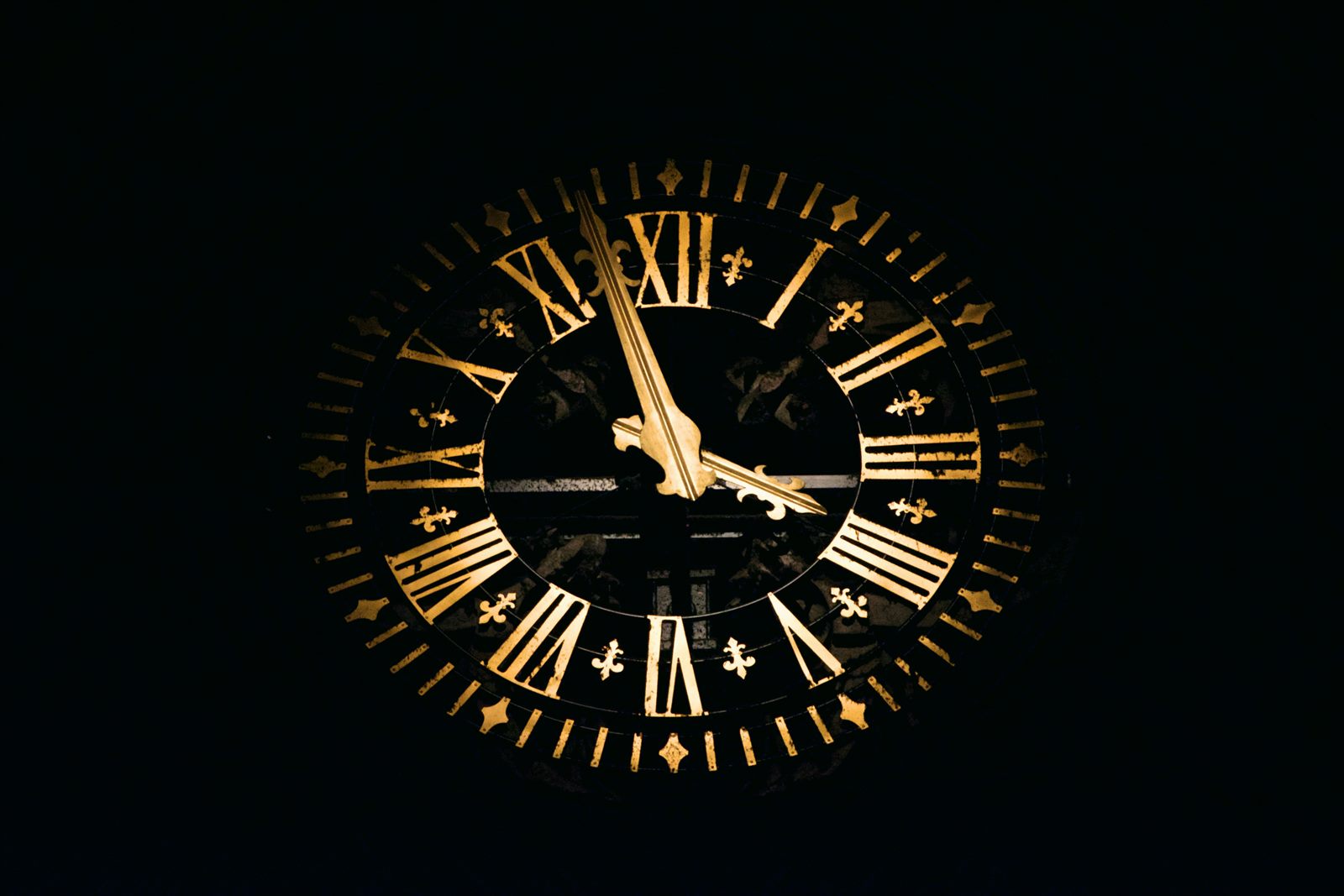
Hold your hand above your head. Now lower it to the floor. For the moment it spent higher up, it aged very slightly faster than the rest of you. This is not a metaphor or a thought puzzle. It is a measurable, repeatable fact of physics, and it follows directly from Einstein's general theory of relativity, published in 1915. That theory says gravity slows the passage of time: the stronger the pull, the slower the clock. Because the Earth's gravity is fractionally weaker as you rise, clocks tick faster with altitude.
The effect is unimaginably tiny in ordinary terms — billionths of a billionth of a second — which is why nobody noticed it for most of human history. The question now facing scientists is not whether it is real, but whether a difference this small can be turned into a practical instrument. If a clock can feel the change in gravity across the height of a coin, it can, in principle, sense the shape of the ground, the water hidden beneath it, and the metal buried inside it. That is the promise physicists are racing to deliver.
What the Evidence Shows
The measurements are already extraordinary. In 2010, researchers at America's National Institute of Standards and Technology, led by physicist Chin-Wen Chou, detected the tick-rate difference between two clocks raised by just 33 centimetres — roughly the height of a stack of books. In 2022, a team at JILA, a joint institute in Colorado, went further still, resolving the effect across a single millimetre within one cloud of atoms. These are optical clocks, which count the vibrations of atoms hit by laser light hundreds of trillions of times per second. They are so stable that, left running since the Big Bang, they would still be accurate to within a second today.
This precision is not a laboratory curiosity; the modern world already depends on the relativity it reveals. The satellites of the Global Positioning System carry atomic clocks in orbit, where gravity is weaker and time runs faster. If engineers did not correct for relativity, GPS clocks would drift ahead by about 38 millionths of a second every day, and the positions your phone reports would degrade by roughly ten kilometres within twenty-four hours. Satellite navigation works only because Einstein's equations are baked into it. The next step is to run that logic in reverse: instead of correcting for time to find position, use ultra-precise time to measure the Earth itself.
"We have reached the point where a clock is a gravity sensor. Move it up by a centimetre and it tells you. That turns the most abstract prediction of relativity into a surveying instrument you can point at the ground."
— Reviews of Modern Physics — "Optical Clocks and Geodesy," 2024The practical name for this is chronometric leveling: measuring height and the shape of the Earth's gravity field by comparing how fast clocks tick at different points. Because underground mass changes the local pull of gravity, a sufficiently sensitive clock passing over a dense ore body, a chamber of magma, or a hidden aquifer would register a faint shift in its rate. Today these clocks fill rooms and need laser laboratories. The open question is engineering, not physics: can they be shrunk, ruggedised, and carried into the field?
"A clock accurate enough to measure the age difference across your body can also weigh the water and rock beneath your feet."
Why This Is Happening
The physics is settled, so the work is now pure engineering. Nobody is trying to prove relativity anymore; that was done decades ago. The entire effort has shifted to miniaturisation — replacing bulky lasers with compact, chip-scale components and packaging fragile atomic setups into boxes that survive a truck ride. That is a far more tractable problem than a scientific breakthrough, and progress in it has been steady and rapid across national laboratories in the United States, Europe, and Japan.
Satellite navigation is dangerously fragile, and clocks are the backstop. GPS and its rivals can be jammed or spoofed with cheap equipment, and outages ripple into aviation, shipping, banking, and power grids that quietly rely on satellite time. A precise clock keeps perfect time on its own, with no signal from the sky. Militaries and infrastructure operators want that independence badly, and their funding is pulling portable optical clocks toward the field.
Mapping the planet from the ground up is worth a fortune. Knowing exactly where water, minerals, and magma sit beneath the surface matters to mining, water security, and disaster warning. Present methods are coarse and expensive. A clock network that can sense buried mass by its gravitational fingerprint offers a fundamentally new way to survey the Earth — one that reads the planet's interior through the rate of time itself.
What Could Happen
Transportable clocks, already demonstrated in vans and shipping containers, mature into robust field units. They first serve as jam-proof timing backups for critical infrastructure and defence, then support pilot geodesy projects that measure elevation and detect underground structures. The tools are specialised and costly, used by agencies and industry rather than consumers — but they work outside the laboratory, which is the threshold that matters.
The clocks conquer the timing market — protecting grids and networks from GPS failure — but turning them into practical geology tools proves harder than hoped. Vibration, temperature, and the messy real world blur the tiny signals that are so clean in the lab. Chronometric leveling remains a promising research programme rather than a fielded service, pushed past 2035.
Quantum gravity sensors based on falling atoms, or dramatically cheaper satellite timing, mature faster and capture the same markets, leaving optical clocks confined to elite metrology labs. This would not make the relativity fact any less true, but it would slow the specific path from bench to field that this forecast describes.
What Can We Do
This is a shift most people will never see directly, yet it underpins the navigation, banking, and power systems everyone relies on. A few sensible responses help both institutions and curious citizens prepare.
Take GPS fragility seriously in anything critical. If you run infrastructure, aviation, or logistics, recognise that satellite timing can vanish, and that independent clocks are becoming an affordable insurance policy. Ask suppliers what their fallback is. The threat is not hypothetical; jamming already disrupts flights in several regions today.
Fund the boring engineering, not just the headline science. The breakthrough here is not another Nobel-worthy discovery but the patient work of shrinking lasers and stabilising atoms in a moving vehicle. Research agencies and companies should back that unglamorous miniaturisation, because that is what carries the physics out of the lab and into use.
Let this reset your intuition about reality. Time is not a fixed backdrop; it flows at different rates depending on where you stand. Understanding that relativity is a working, engineered fact — not abstract theory — makes it easier to grasp why future navigation and mapping tools behave the way they do.
Watch geodesy for early signals. The first practical payoff will likely appear quietly, in surveying and earth-science journals, before it reaches the public. Following how national metrology institutes describe their transportable clocks gives an honest early read on whether the 2035 forecast is on track or slipping.
- Chou et al. — "Optical Clocks and Relativity," Science, 2010
- JILA / NIST — Millimetre-Scale Time Dilation Measurement, Nature, 2022
- Reviews of Modern Physics — "Optical Clocks and Geodesy," 2024
- US GPS Directorate — Relativistic Timing Corrections Technical Report, 2023
- PTB / RIKEN — Transportable Optical Clock Field Trials, 2025
- Forecast The World Research Desk — 800+ data sources