The Question
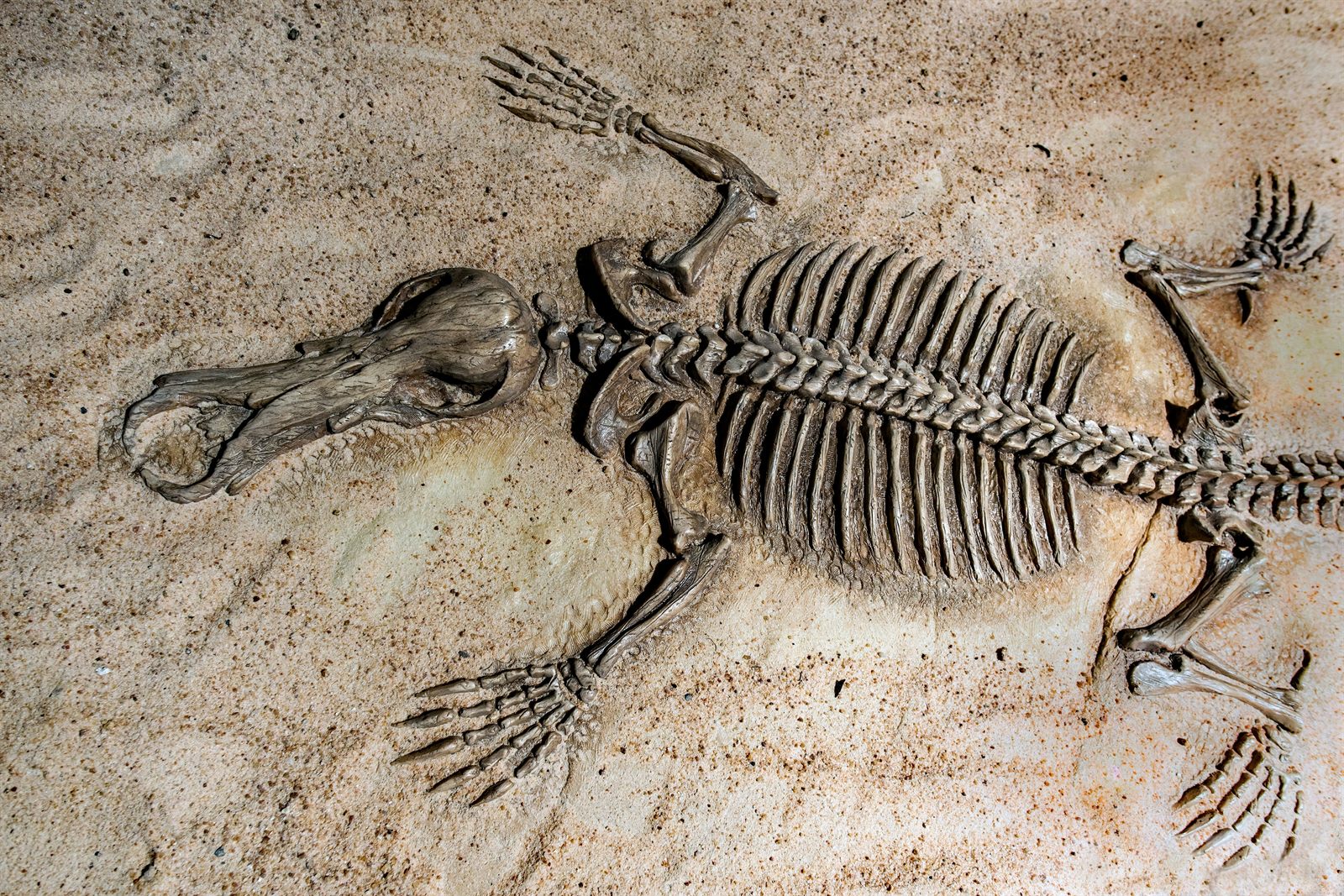
Behind the public halls of the world's great natural history museums are corridors most visitors never see. Miles of steel cabinets, floor to ceiling, each drawer packed with bones, shells, teeth, and rock. Some carry labels written in fountain pen a century ago. Many carry no label at all beyond a field number and a place name. The specimen has waited in the dark, in some cases, since before your grandparents were born.
Here is the fact that stops paleontologists cold. The Smithsonian's National Museum of Natural History holds roughly 40 million fossil specimens — and the overwhelming majority have never been studied in detail by an expert. That pattern repeats in London, Paris, Berlin, and Beijing. The obvious question follows: if the drawers are already full of things no one has properly looked at, where are the great discoveries of the next decade actually hiding? Increasingly, the answer is not a remote badlands cliff. It is a cabinet in a basement.
What the Evidence Shows
This is not a hypothetical. New species are pulled from old collections all the time. Some of the most famous dinosaurs in the world were misfiled for decades. In 2015, a giant statistical study of long-necked dinosaurs concluded that Brontosaurus — long dismissed as the same animal as Apatosaurus — was a distinct beast after all, a finding drawn largely from bones already sitting in collections. In 2007, a nearly complete little dinosaur at the Natural History Museum in London, catalogued long ago, was recognised as a brand-new species. The pattern is so common it has a nickname among researchers: the "specimen described from the collection."
The reason the backlog exists is a money mismatch. Digging fossils out of the ground is glamorous — it wins grants, headlines, and documentary crews. The unglamorous work that follows — cleaning, cataloguing, comparing, and formally naming a specimen — is slow, painstaking, and chronically underfunded. A single fossil can take a specialist weeks to describe. There are only a few thousand working paleontologists on Earth, and tens of millions of specimens. At the current pace, clearing the backlog by hand would take centuries.
"We do not have a shortage of fossils. We have a shortage of eyes and hours. The next dinosaur is probably not under a mountain in Montana — it is in a drawer three floors below a gift shop, waiting for someone to notice."
— Society of Vertebrate Paleontology — Collections Symposium, 2024What changes the math is machine vision — software that can recognise shapes in an image the way a trained eye does. Digitisation projects are racing to photograph and scan the world's collections: the iDigBio network in the United States has already logged well over 100 million natural history records, and London's Natural History Museum has committed to digitising its 80 million-plus specimens. Once a fossil is a high-resolution image or a 3D scan, an algorithm can compare it against thousands of others in seconds — flagging the odd one out, the specimen whose proportions do not match anything named. CT scanning goes further, letting researchers see the fossil still locked inside its rock without ever cracking it open.
"The rarest thing in a natural history museum is not the fossil. It is the person with time to look at it."
Why This Is Happening
Digitisation has quietly reached a tipping point. For two decades, museums photographed and scanned specimens with no single tool able to make sense of the flood. Now that the images exist in the tens of millions, they become training material — a machine can learn what a normal tooth looks like precisely because it has seen a hundred thousand of them. The backlog that made manual study impossible is exactly what makes automated study powerful.
The bottleneck was never the ground; it was the bench. Field expeditions have been finding more than museums can process for over a century. Every dig adds to a queue that already stretches beyond a human lifetime. Software that can triage that queue — sorting the routine from the remarkable — attacks the real constraint. It does not replace the paleontologist; it points them at the drawer worth opening.
Citizen science multiplies the workforce for free. Platforms that let volunteers transcribe old labels, measure bones from photos, and flag oddities have already processed millions of records. Combined with machine sorting, a global crowd plus an algorithm can pre-screen a collection that a handful of curators could never finish. The discovery is then confirmed by an expert — but the expert is arriving at the right shelf years sooner.
What Could Happen
AI-assisted cataloguing sweeps the major collections, and a wave of new species — dinosaurs, ancient mammals, marine reptiles — is named from specimens dug up decades ago. Museums reorganise around "collections mining," and the phrase "found in the field" starts to mean the drawer, not the desert. Field expeditions continue, but the cheapest, fastest discoveries come from indoors.
Algorithms flag anomalies but generate too many false alarms to trust alone, so the real gain is speed rather than volume. Curators still make every formal identification, but they reach the important specimens far faster. Discoveries rise sharply without ever fully shifting the balance away from traditional fieldwork.
Digitisation is expensive, and cash-strapped museums cannot scan fast enough. Collections stay dark, access rules keep data siloed between institutions, and the promised wave never fully arrives. The technology works, but the drawers stay closed for want of budget — a delay, not a dead end.
What Can We Do
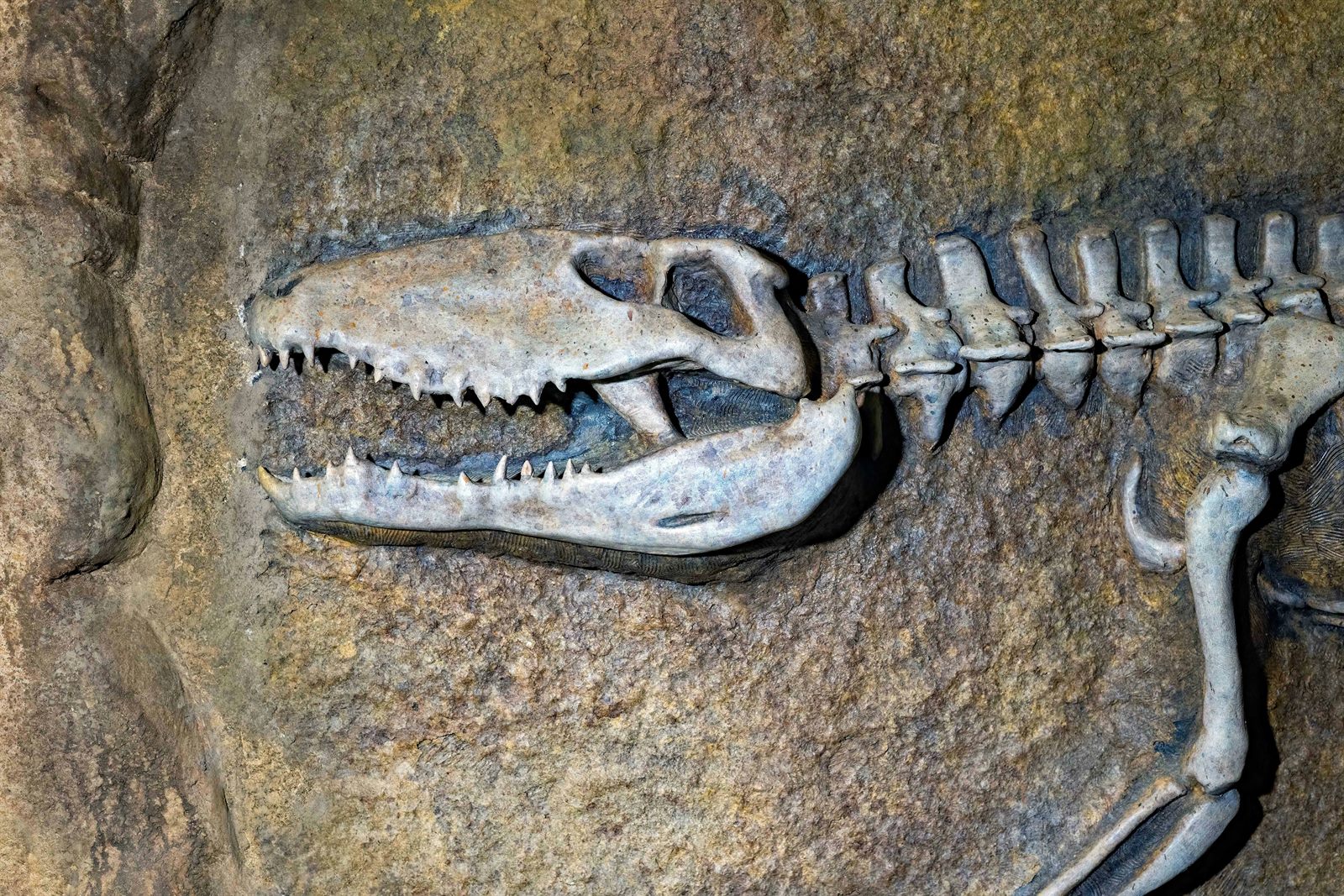
You do not need a doctorate to help open the drawers. Some of this work is being done, right now, by ordinary people at home — and the discoveries belong to everyone.
Join a digitisation project as a volunteer. Platforms run by museums let anyone transcribe old specimen labels, measure bones from photographs, or classify images. It is genuine science: the data you enter feeds the same databases the algorithms learn from. An afternoon of transcribing might be the reason a new species surfaces two years earlier.
Support museum collections funding, not just exhibits. When you donate or vote on cultural budgets, remember that the flashy public gallery is a fraction of the institution. The storerooms — where the science lives — are chronically starved. Ask your local museum how its collections are funded, and make the unglamorous back rooms part of the conversation.
Push for open, shared specimen data. A discovery is only possible if the images and scans are available to compare. Encourage institutions and funders to make digitised collections freely accessible across borders. Locked data helps no one; open data lets a researcher in one country spot the oddity in another country's drawer.
Visit, and ask what is behind the wall. Curiosity funds curiosity. When you tour a natural history museum, ask staff about the collection behind the scenes and the backlog waiting to be studied. Public interest is what keeps the lights on in the corridors the public never sees — and those corridors hold the next decade of headlines.
- Smithsonian National Museum of Natural History — Collections Overview, 2024
- Natural History Museum London — Digitisation Programme Report, 2025
- iDigBio — Integrated Digitized Biocollections Data Portal, 2025
- Society of Vertebrate Paleontology — Collections Symposium Proceedings, 2024
- Tschopp et al. — "A Specimen-Level Phylogeny of Diplodocid Dinosaurs," 2015
- Forecast The World Research Desk — 800+ data sources