The Question
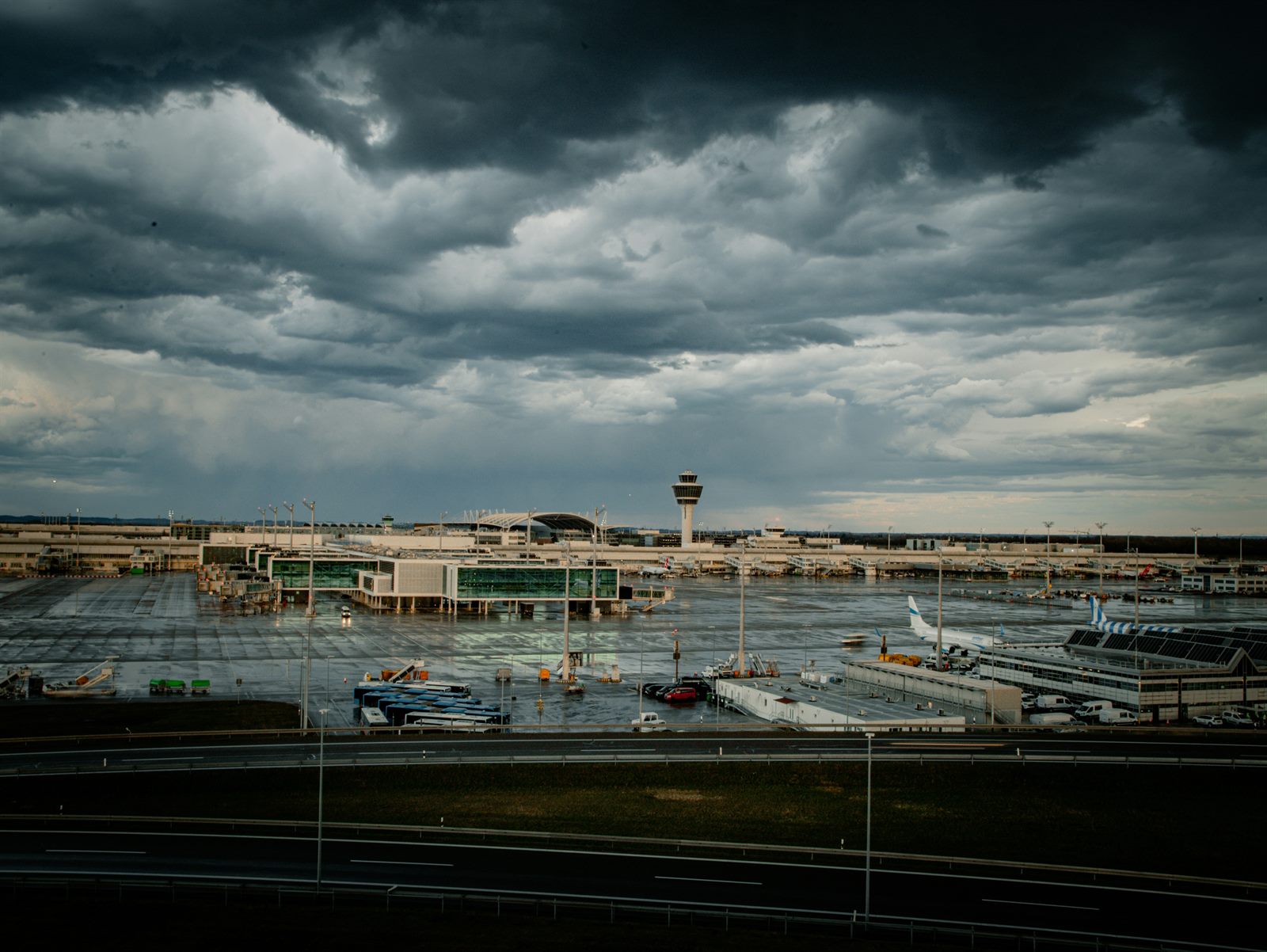
In 2018, an Iranian general stood at a podium and accused Israel of stealing Iran's clouds. The claim was scientifically shaky — Iran's own meteorologists winced — but the instinct behind it was ahead of its time. Because upwind of every thirsty country, someone now really is flying planes into clouds and squeezing them for rain. The technology is called cloud seeding: aircraft or ground generators release tiny particles, usually silver iodide, that give water vapour something to cling to, so droplets grow heavy enough to fall. It does not create weather from nothing. It redirects what was already in the sky — and the sky does not stop at borders.
When Dubai flooded in April 2024 — a year and a half of rain in a day — the first global question was not about climate change. It was: did the seeding planes do this? The UAE said no, and most scientists agreed the storm was natural. But the fact that the question was asked, instantly and everywhere, tells you where we are heading. The question our forecast addresses is when the first formal international fight over engineered weather lands in front of a global institution — and the answer looks uncomfortably close.
What the Evidence Shows
The scale is no longer experimental. China's "Sky River" program aims to industrialise rain-making across the Tibetan plateau, and Beijing has announced plans to extend weather modification coverage across an area larger than India — including seeding operations before major public events to guarantee blue skies. The UAE runs one of the world's most aggressive programs, flying more than 300 seeding missions in a typical year. In the American West, Utah, Idaho, and Texas fund seeding to fatten winter snowpack, with Utah's legislature increasing its budget as the Colorado River shrinks.
The legal architecture, meanwhile, is a museum piece. The only binding treaty is ENMOD, signed in 1977, which bans using environmental modification as a weapon of war. It has never been tested in court, says nothing about peacetime "rain competition" between neighbours, and predates every technology now in use. There is no international rule that stops one country seeding a weather system before it crosses into the next country — and no agreed science for proving harm if it does.
"We have entered an era in which states are actively intervening in a shared atmosphere with no rules, no referee, and no way to prove innocence. The first serious drought that coincides with a neighbour's seeding program will become an international incident. The only question is which border it happens on."
— International Environmental Law Review — "Governing the Modified Sky," 2025And the accusations have already begun. Iran's cloud-theft claims against Israel and Turkey were dismissed as bluster, but they were followed by quieter, more procedural complaints between Central Asian states over seeding near shared watersheds. The pattern is familiar from the history of river disputes: first rhetoric, then lawyers. Rivers took centuries to acquire treaties. The clouds are rivers that move at forty miles an hour.
"For all of human history, the rain fell on whoever it fell on. That era is ending — and nobody signed anything."
Why This Is Happening
Water scarcity is turning the atmosphere into contested territory. The coming decades are forecast to put billions of people under water stress. When the river is empty, the only water left is the water in the sky — and unlike rivers, atmospheric moisture has no treaties, no gauging stations, and no history of shared management. Desperation plus capability is how every resource conflict starts.
The technology is cheap enough for everyone. A cloud seeding program costs millions, not billions — a rounding error for any government facing drought. That is why over 50 countries run programs. Low cost means wide adoption; wide adoption means overlapping operations on shared weather systems; overlap means disputes.
Something much bigger is coming up behind it. Cloud seeding is the modest cousin of solar geoengineering — schemes to cool the whole planet by spraying reflective particles into the upper atmosphere. A startup called Make Sunsets has already launched unauthorised sulphur balloons, prompting Mexico to ban solar geoengineering outright. Once private actors and lone states can touch the global thermostat, the pressure for international governance becomes irresistible — and cloud seeding disputes are the natural first case to force the issue.
What Could Happen
A drought-stricken state formally accuses an upwind neighbour of moisture theft and files a complaint — at the UN, the International Court of Justice, or through the World Meteorological Organization. The science of attribution proves murky, the case drags, but it forces the first real negotiation over atmospheric water rights, the way early river disputes forced watershed treaties. Expect the flashpoint in Central Asia, the Middle East, or the Colorado River's airshed.
Governments see the litigation coming and pre-empt it: regional seeding notification agreements, WMO codes of conduct, data-sharing pacts. The disputes continue but are managed bilaterally, the way most water tensions are. A global case is deferred into the late 2030s — until solar geoengineering, a much harder problem, forces the issue instead.
Rigorous studies conclude cloud seeding adds only single-digit percentages of precipitation — too little to steal, too little to fight over. Programs persist as political theatre and drought insurance, but "rain theft" claims collapse under peer review, and the first great weather lawsuit waits for technologies that actually work at scale.
What Can We Do
Weather modification sounds like a problem for foreign ministries, but its consequences — water prices, food prices, insurance, regional stability — will reach every household. Awareness now is leverage later.
Learn what your own region is doing to its sky. If you live in the American West, your state may already fund seeding; Utah publishes its program openly. Knowing whether your snowpack is partly engineered changes how you read every drought headline — and every neighbouring state's complaint.
Support attribution science, the unglamorous key to everything. The ability to measure what seeding actually does is the difference between paranoia and policy. Public funding for atmospheric research — and open data requirements on national programs — deserves the same civic support as any water infrastructure.
Push for transparency rules before the first crisis. A simple international registry — who is seeding, where, when — would defuse most accusations before they become incidents. Citizens' groups pressing for notification agreements now will look prescient by 2033.
Watch the geoengineering debate with clear eyes. The cloud seeding disputes are the rehearsal. When solar geoengineering proposals reach parliaments — and they will — the governance frameworks built or neglected in the seeding era will decide whether humanity manages its thermostat deliberately or chaotically. Vote accordingly.
- World Meteorological Organization — Global Weather Modification Programs Survey, 2024
- UAE National Center of Meteorology — Rain Enhancement Program Mission Data, 2024
- China State Council — Weather Modification Development Plan Documents, 2020–2025
- United Nations — ENMOD Convention Text and Review Conference Records, 1977–2023
- International Environmental Law Review — "Governing the Modified Sky," 2025
- Forecast The World Research Desk — 800+ data sources