The Question
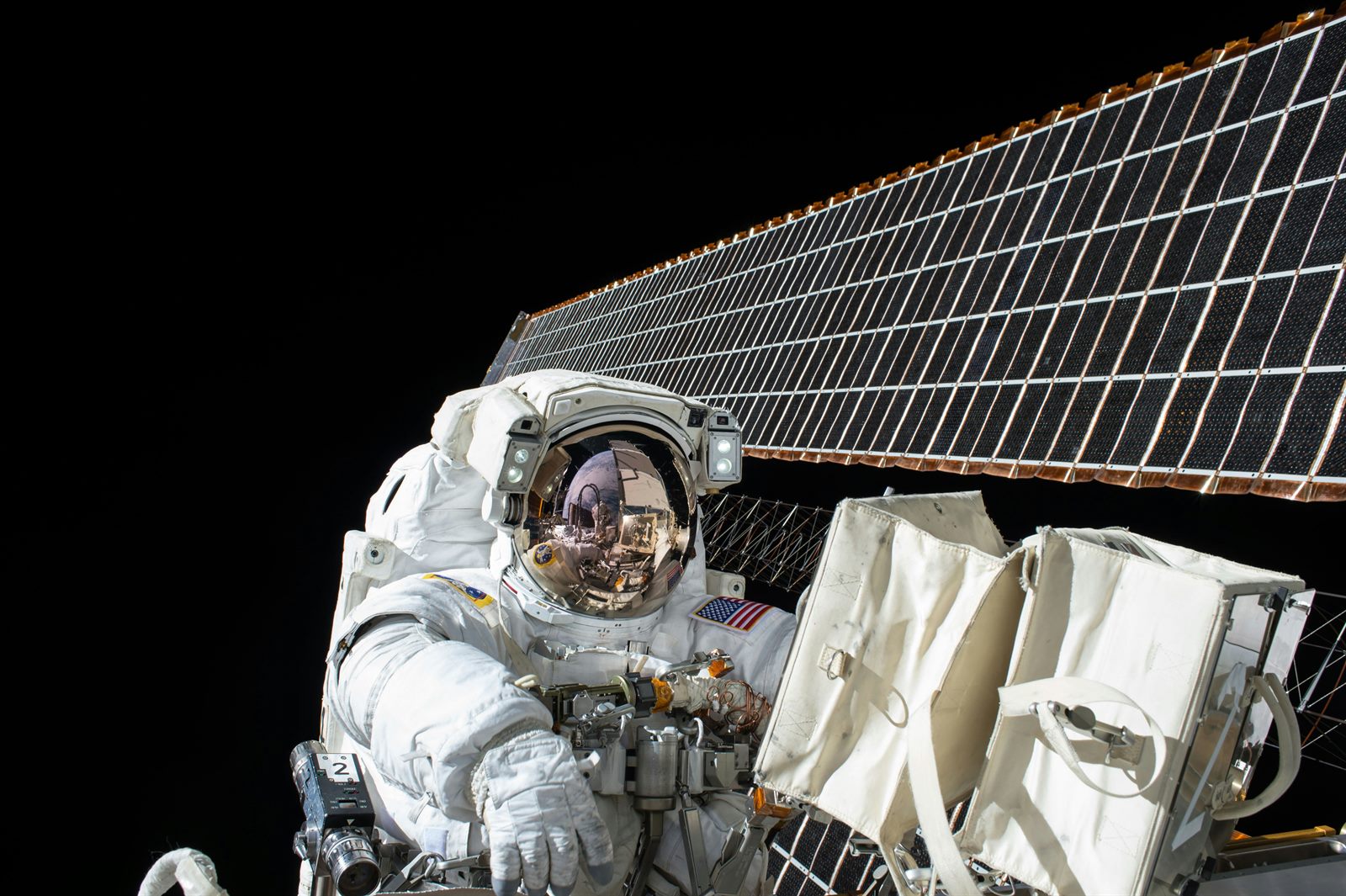
Every solar panel on Earth spends most of its life doing nothing. Night takes half its hours. Clouds, winter, and dawn haze eat into the rest. Now imagine a solar panel where the sun never sets — parked 36,000 kilometers up in geostationary orbit, the altitude where a satellite hovers over the same spot on Earth forever. It would harvest sunlight more than 24 times as effectively as the same panel on the ground in Britain, and it would do so at 3 a.m. on a stormy February night.
The catch has always been the extension cord. You cannot run a cable from orbit, so the electricity must be converted into microwaves — the same kind of radio energy that carries phone signals — beamed down through the atmosphere, and caught by a receiving antenna on the ground called a rectenna, which turns it back into electricity. The idea has been in the textbooks since 1968. The question is whether it finally leaves the textbooks this decade, and whether your kettle boils on orbital sunshine by 2035.
What the Evidence Shows
In January 2023, a Caltech spacecraft called SSPD-1 rode a SpaceX rocket to orbit carrying an experiment named MAPLE. Months later, MAPLE did something never done before: it beamed detectable microwave power from space to a receiver on the roof of a Pasadena laboratory. The amount was tiny — enough to light an LED — but the physics was the whole point. Wireless power transmission from orbit works, with lightweight, flexible hardware of the kind a full station would use.
The rest of the world is treating that proof seriously. Japan's space agency JAXA has pursued power beaming for two decades and has demonstrated kilowatt-scale microwave transmission on the ground, with an orbital demonstration on its roadmap. China has built a dedicated ground receiving station at Bishan and has published plans for megawatt-class orbital tests in the 2030s. The European Space Agency's Solaris program is funding feasibility studies for gigawatt-scale stations, and the UK Space Energy Initiative has mapped a path to an orbital demonstrator within a decade. Four major space powers, one target.
"Launch cost was always the assumption that killed space solar power in every study since the 1970s. That assumption is now dead. The question has changed from 'can we afford to build it' to 'who builds it first.'"
— UK Space Energy Initiative — Technical Feasibility AssessmentWhy now? Because launch costs have collapsed by roughly 90% in two decades, and SpaceX's Starship — designed to haul 100-plus tons to orbit per flight, reusably — promises another order-of-magnitude drop. Every space solar study from the 1970s onward died on launch economics. That obstacle is dissolving in real time. What remains is scale: a station delivering a gigawatt, the output of a nuclear plant, would need to be kilometers wide and weigh thousands of tons — the largest structure humans have ever assembled in space, by a factor of a hundred.
"There is a power plant that never sees night, never sees clouds, and never needs land. It is 36,000 kilometers from your toaster."
Why This Is Happening
The safety fear is a myth, and regulators know it. "Beaming power from space" sounds like a weapon, but the beam is deliberately spread wide: at the rectenna, its intensity is comparable to ordinary sunlight — a bird can fly through it, and planes can too. The rectenna is a field of mesh antennas that crops can grow beneath. A beam that drifts off target simply becomes harmless radio noise. This is not a death ray; it is a very tall power line without the pole.
Militaries want it first, and militaries pay early. The hardest customers to supply with electricity are remote bases and disaster zones, where diesel arrives by convoy at enormous cost and risk. The US Naval Research Laboratory has already flown a power-beaming experiment on the X-37B spaceplane, and defense agencies on three continents are funding the technology. Military demand has midwifed GPS, the internet, and jet engines into civilian life. It may do the same here — a niche military market can pay the unaffordable early prices that drive costs down for everyone.
Clean grids have a hole that only fires at night. Ground solar and batteries are getting cheap at astonishing speed — they are this technology's fiercest competitor — but a fully renewable grid still struggles with long winter lulls and weeks of overcast calm. Space solar delivers constant, dispatchable clean power, the same service as a nuclear plant, without the decade of construction on the ground. For nations short on land or sun, that gap is worth billions.
What Could Happen
One player — most plausibly China or a US military program — orbits a megawatt-class demonstrator around 2032–2035 and delivers power to a real grid or base, roughly enough for a city block or a small town. It is commercial in name and strategic in truth, losing money but proving the chain end to end. Utilities begin signing options on future capacity, and the 2040s become the scale-up decade — much as offshore wind spent the 2000s proving itself before conquering the 2010s.
Ground solar plus storage keeps halving in cost, and by the early 2030s an all-Earth clean grid looks cheaper than any orbital station. Space solar survives only where wires cannot go: military outposts, disaster relief, lunar bases. The technology works, but so did supersonic passenger flight — economics, not physics, decides which marvels get built twice.
Starship-class launch never reaches the promised price, or a high-profile assembly failure — thousands of tons of hardware requiring hundreds of robotic construction flights — sours investors and agencies. Studies continue, demonstrations shrink, and the field returns to its historical rhythm: a serious revival every 20 years. The 1970s generation of space solar engineers would recognize the pattern immediately.
What Can We Do
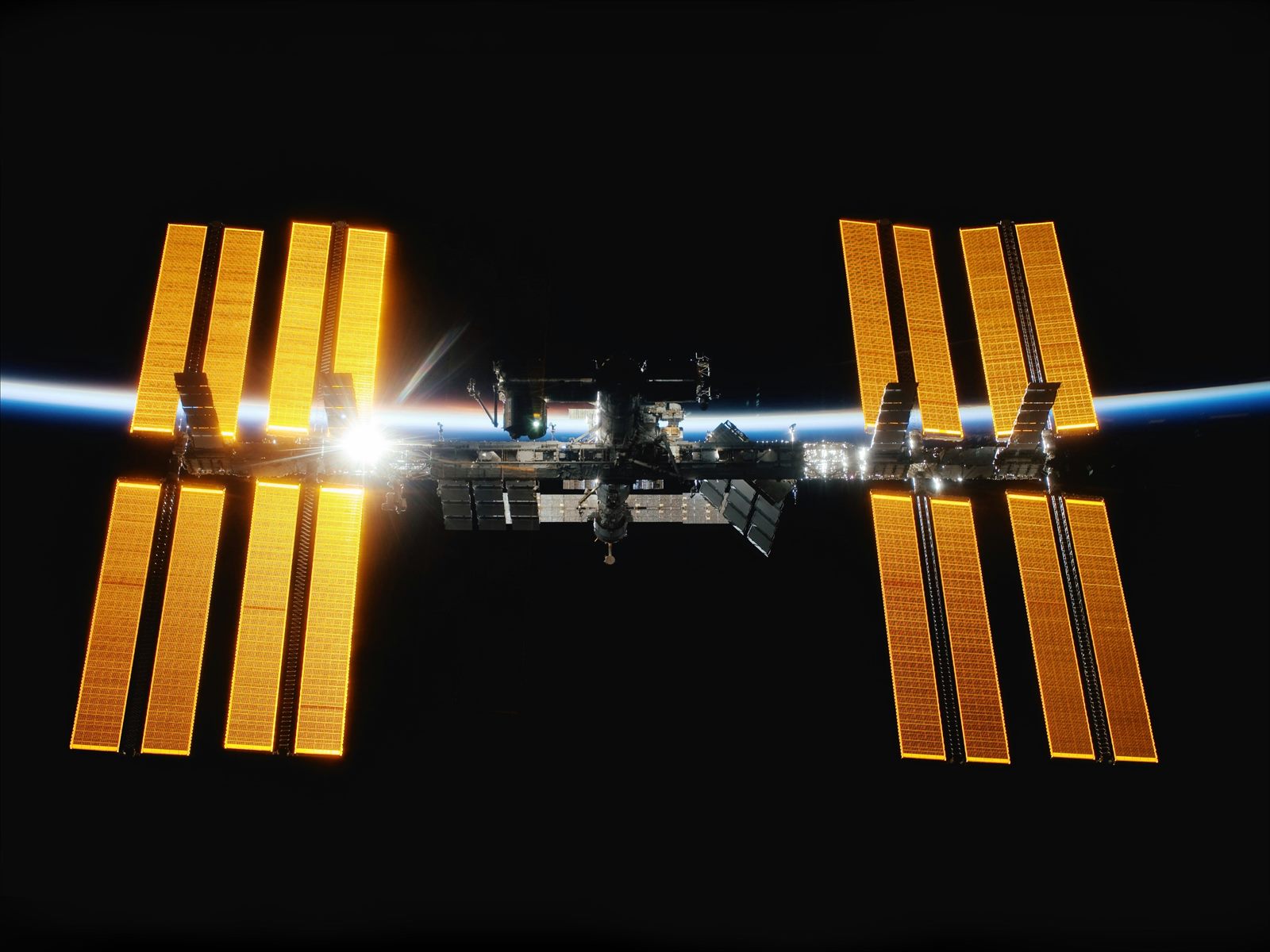
Space solar will be decided by engineers and energy ministries — but public understanding, investment choices, and local decisions will shape how fast it lands, and where.
Learn the safety facts before the scare campaign arrives. When the first rectenna is proposed near a real town, opposition will come armed with the phrase "microwave beam from space." The accurate reply fits in one sentence: the beam at ground level is about as intense as sunlight, and birds fly through it unharmed. Communities that understand this will host the receiving stations — and collect the jobs and land-lease payments that come with them.
Watch two numbers: launch price and battery price. This entire forecast is a race between them. If Starship-class launch reaches a few hundred dollars per kilogram while grid storage plateaus, space solar wins big markets. If storage keeps plunging, it stays a niche. Both numbers are public; you can track this race from your sofa, quarterly.
Support demonstration funding, not gigawatt promises. The sensible public ask is modest: fund the megawatt-class orbital demos that settle the engineering questions, through programs like ESA's Solaris. Be skeptical of any company selling gigawatt stations by 2030 — and of any pundit declaring the idea dead. Both are ahead of the evidence.
If you are choosing a career, this field is hiring its founders now. Orbital robotics, wireless power engineering, and in-space assembly barely exist as professions yet — which means the people who will run the first commercial station in the late 2030s are students today. The same was true of offshore wind in 1995. Ask those engineers how it worked out.
- Caltech Space Solar Power Project — SSPD-1 / MAPLE Mission Results, 2023
- ESA — Solaris Programme Feasibility Studies, 2023–2025
- JAXA — Space Solar Power Systems Research Roadmap
- UK Space Energy Initiative / Frazer-Nash — Space-Based Solar Power Engineering Assessment
- US Naval Research Laboratory — PRAM Power-Beaming Experiment, X-37B
- Forecast The World Research Desk — 800+ data sources