The Question
The wheelchair rolls up to gate B14 by itself. Its passenger, an 84-year-old widow flying to see her grandchildren, didn't push a joystick once — the chair navigated the terminal on its own, dodging luggage carts, while she watched the departures board. It is a WHILL autonomous wheelchair, and it already operates in airports from Tokyo to Dallas. When she gets home, a radar sensor on the ceiling — no camera, nothing watching, just radio waves — will notice if she falls at 3 a.m. A robot on the kitchen counter will remind her, gently and repeatedly, to take the blue pill before breakfast.
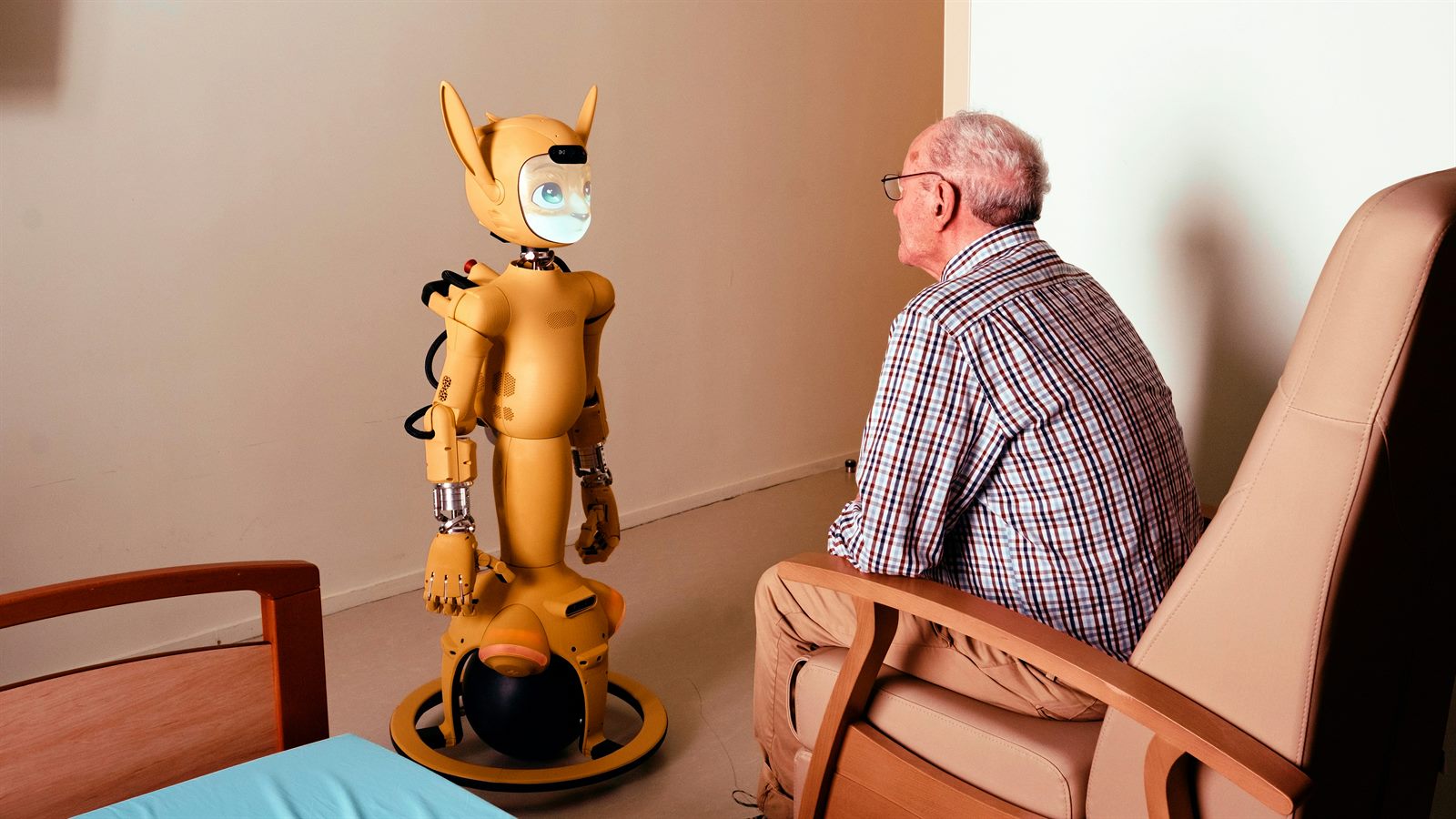
For decades, science fiction promised robots that would raise our children. That future never arrived — parents wouldn't allow it. But at the other end of life, where the need is desperate and the humans are simply missing, the robots are being welcomed through the front door. The question is no longer whether machines will help care for the old. It is whether we will build that future with dignity — or just with logistics.
What the Evidence Shows
Japan, the world's oldest large society, is the laboratory. Its government has spent over a decade subsidizing care robotics: PARO, a fluffy robotic seal used in more than 30 countries, measurably calms dementia patients who cannot be soothed by medication alone. Robear, an experimental bear-faced machine, demonstrated lifting patients from bed to wheelchair — the single task that injures more care workers than any other. Less photogenic but more practical, powered exoskeletons — wearable frames that take the load off a caregiver's back — are now standard equipment in hundreds of Japanese facilities, and studies show they meaningfully cut back injuries among staff.
The West is following through the loneliness door. New York State's Office for the Aging has distributed ElliQ — a talking desktop companion robot — to thousands of isolated seniors, and reports users interacting with it dozens of times a day, with a large majority reporting reduced loneliness. Fall-detection radar systems now watch bedrooms in assisted-living facilities without cameras, alerting staff in seconds instead of hours. Medication-dispensing robots lock, sort, and dispense pills on schedule and alert a family member when a dose is missed. None of this is a prototype; all of it is for sale.
"We are not choosing between human care and robot care. We are choosing between robot-assisted care and no care at all. The workforce arithmetic permits no third option, and every developed country's demographic projection says the same thing."
— The Lancet Healthy Longevity — "The Care Workforce Cliff," 2025The arithmetic is brutal. Japan projects a shortfall of roughly 690,000 care workers by the late 2020s. The United States will need to fill millions of direct-care job openings this decade — a workforce that is already the fastest-turnover, lowest-paid tier of healthcare. Meanwhile the number of people over 80 in developed countries is set to nearly double by 2040. There is no immigration policy, wage increase, or recruitment campaign in any government's plans that closes those gaps with humans alone. The machines are not replacing caregivers. They are being drafted to fill chairs that were always going to be empty.
"Is a robot bath better than no bath? Aging societies are about to answer that question the hard way — millions of times a day."
Why This Is Happening
The demographics are locked in. Everyone who will be 85 in 2033 is alive today, and everyone who could care for them has already been born. Falling birth rates mean fewer working-age adults per retiree in every developed country — Japan first, then South Korea, Italy, Germany, and eventually the United States. Unlike most forecasts, this one has no surprise scenario: the customers of 2033's care system are already booked.
The technology finally matches the tasks. Elder care robotics doesn't require humanoid science fiction. It requires narrow, solved problems: navigating a hallway (self-driving wheelchairs), detecting a fall (radar), lifting safely (exoskeletons), remembering medication (dispensers), and holding a conversation (AI companions). Each is commercially available today, and prices are falling the way all electronics fall — ElliQ costs less per month than a single hour of home nursing.
Governments are paying for it. Japan subsidizes care-robot purchases outright. US Medicaid programs and the Veterans Health Administration have begun covering companion robots and remote monitoring. Insurers have noticed that a fall detected in seconds costs a fraction of a fall discovered the next morning — and that keeping seniors at home for one extra year is vastly cheaper than a nursing-home bed. When the payer, the family, and the labor market all point the same direction, adoption stops being optional.
What Could Happen
Fall-detection sensors, medication robots, self-driving mobility, caregiver exoskeletons, and AI companions become as routine in care facilities and aging-in-place homes as hospital beds and grab rails are today. Human caregivers remain — but supported by machines that handle lifting, monitoring, and reminding, freeing their hours for the conversation and touch only humans provide. Aging at home stretches years longer than it does now.
Rich facilities and affluent families deploy full robotic suites while underfunded homes and poorer households get nothing, widening the care gap the technology promised to close. Cultural divides deepen too: societies comfortable with robots, like Japan, race ahead, while countries where filial duty or unions resist machine care adopt slowly and unevenly. The technology succeeds; the distribution fails.
High-profile failures — a fatal fall a sensor missed, an exposé on seniors "warehoused" with machines instead of visitors — trigger regulation and public revulsion. Physical assistance robots survive scrutiny, but emotional companion robots are restricted or stigmatized as synthetic affection sold to cover family absence. Adoption continues, but quietly, and a decade behind schedule.
What Can We Do
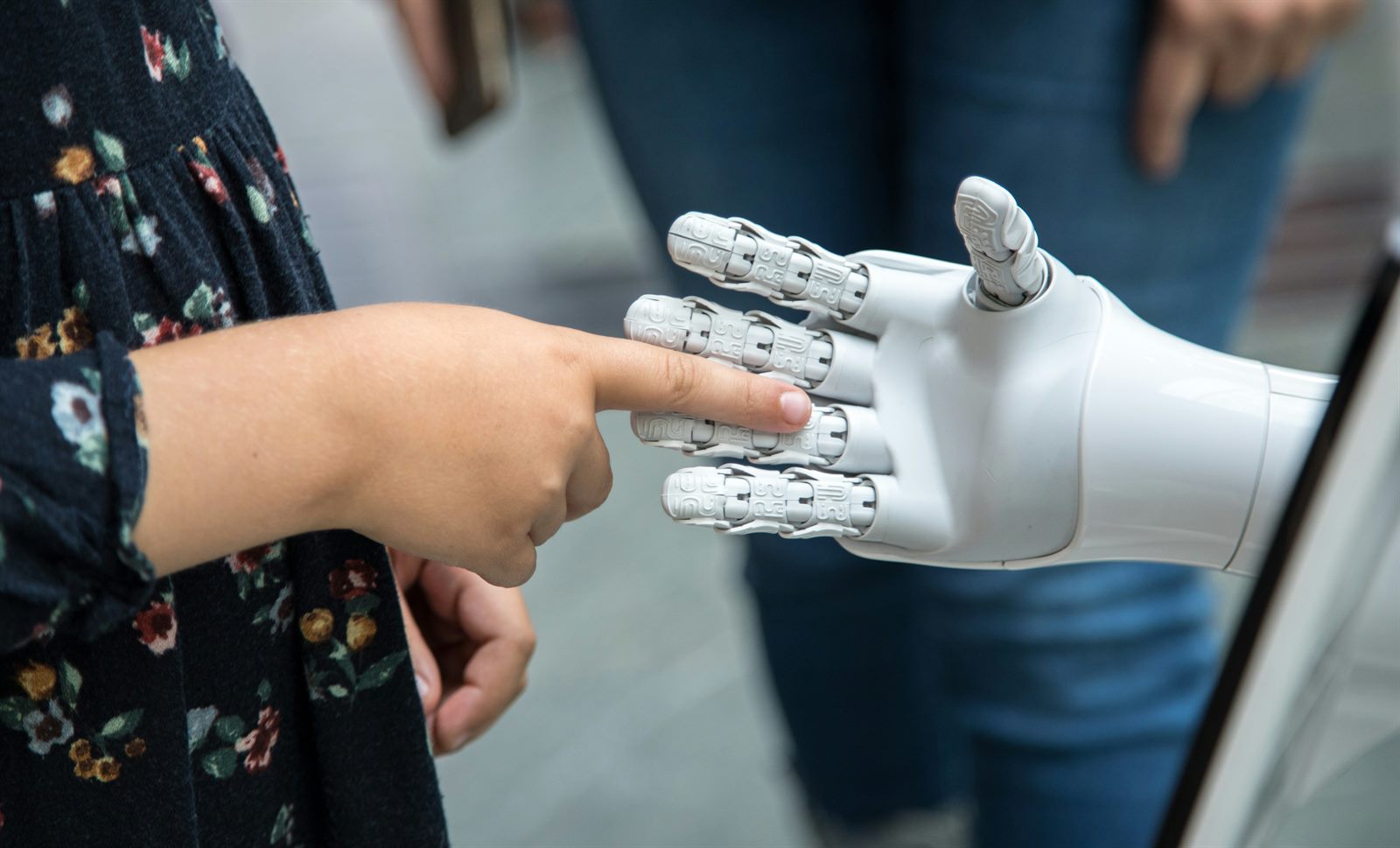
This future concerns everyone who has a parent — or plans to become old. The decisions you make in the next few years will shape whether the robots arrive as helpers or as replacements.
Start with the boring machines, not the cute ones. If you are caring for an aging parent, the highest-value technology today is unglamorous: a radar or wearable fall detector, an automatic medication dispenser, and stove and door sensors. These prevent the two catastrophes — falls and medication errors — that most often end independent living. Install them before the crisis, not after.
Treat companion robots as an addition to visits, never a substitute. The evidence says devices like ElliQ genuinely reduce loneliness — and the same evidence says nothing replaces human contact. Set a family rule: the robot buys peace of mind between visits; it never buys out of them. Guilt is not a reason to reject a tool, and a tool is not an answer to guilt.
Ask facilities the robot question before you need one. When touring care homes, ask what monitoring, lifting equipment, and staffing-support technology they use — and how they use the staff time it frees. A home that uses exoskeletons and sensors to give carers more face-to-face minutes is a different institution from one that uses them to cut headcount. The question itself signals what families expect.
Push for standards while the industry is young. Elder-care robotics currently has weaker safety and privacy rules than children's toys in some jurisdictions. Support regulation requiring failure alerts, data protection for in-home sensors, and mandatory human-care minimums in facilities that deploy robots. The window to write dignity into the specification is now — before the machines are everywhere and the rules are whatever shipped.
- Japan Ministry of Health, Labour and Welfare — Care Worker Supply-Demand Projections, 2024
- New York State Office for the Aging — ElliQ Companion Robot Program Outcomes, 2024
- The Lancet Healthy Longevity — "The Care Workforce Cliff," 2025
- AIST Japan — PARO Therapeutic Robot Clinical Evidence Review, 2023
- WHILL Inc. — Autonomous Mobility Airport Deployment Reports, 2024
- Forecast The World Research Desk — 800+ data sources