The Question
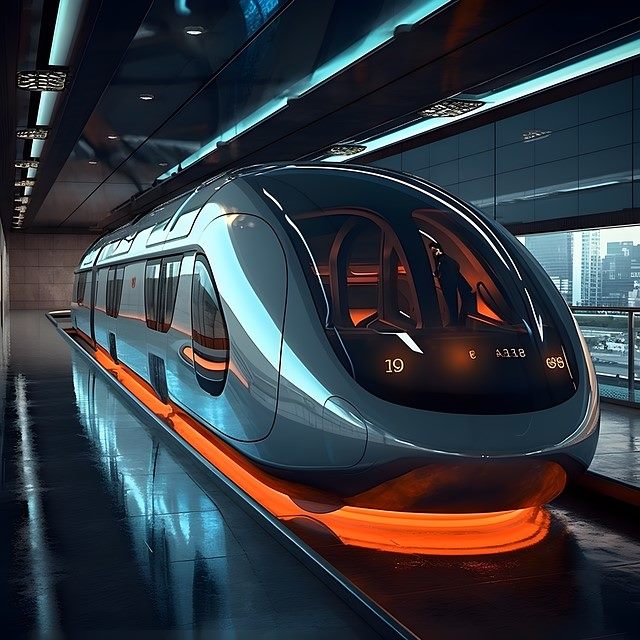
In 2013, Elon Musk published a 58-page white paper promising Los Angeles to San Francisco in 35 minutes. The idea was seductive in its simplicity: put a passenger pod inside a giant tube, pump out the air so there is almost nothing to push against, and let the pod glide at airliner speeds just above the ground. He called it hyperloop, said he was too busy to build it, and invited the world to try.
The world tried. A decade later, the flagship — Hyperloop One, once backed by Richard Branson's Virgin — was dead, shut down in 2023 after burning through roughly $450 million without carrying a single paying customer. Virgin had already stripped its name off. To most observers, that was the obituary. But obituaries for transport ideas are often premature: the technology did not fail so much as the business plan did. The real question is what survives the wreckage — and whether it reaches commercial service by 2035.
What the Evidence Shows
Start with why hyperloop died. Keeping hundreds of kilometers of steel tube at near-vacuum — emptier than the air at 50 kilometers altitude — is brutally expensive. Steel tubes expand and contract with temperature, so every kilometer needs engineering to keep it from buckling in the sun. Buying a straight ribbon of land between two major cities costs billions before a single pod moves. And safety regulators had one unanswerable question: how do you evacuate passengers from a sealed vacuum tube in an emergency?
Now look at what survived. In the Netherlands, Hardt Hyperloop runs the European Hyperloop Center in Groningen, a 420-meter test tube where pods have already completed vehicle runs — including Europe's first lane-switch inside a tube, the maneuver that would let pods change routes like cars changing highways. Switzerland's Swisspod is testing on a circular track and targeting freight. In China, the state aerospace giant CASIC claims its T-Flight vehicle reached 623 kilometers per hour in a low-vacuum tube test — faster than any train has ever run in commercial service. And the proven cousin keeps advancing: magnetic levitation trains, which float on magnets without a vacuum tube. Shanghai's maglev has carried passengers at 431 kilometers per hour for over twenty years. Japan is building the Chuo Shinkansen, a 500-kilometer-per-hour maglev line between Tokyo and Nagoya, right now.
"The mistake was promising passengers first. A tube full of parcels needs no life support, no windows, no seats, and no one inside to be afraid. Freight is where this technology earns the right to carry humans."
— European Hyperloop Center — Technology Assessment Briefing, 2025That last insight is the pivot. Hyperloop One's final act before dying was a switch to cargo. A Nevada test program explored freight pods, and nearly every surviving company now leads with logistics. A cargo tube can be narrower, slower, and cheaper — and if a pod fails, you lose a shipment of phone chargers, not fifty lives.
"Revolutions in transport rarely arrive as revolutions. They arrive as upgrades that nobody argues about."
Why This Is Happening
The economics of cargo tubes actually close. A passenger system must be certified safe for humans, climate-controlled, comfortable, and reassuring — each requirement multiplying cost. A freight tube needs none of it. E-commerce warehouses to ports, ports to distribution hubs: these are short, fixed, high-volume routes where land is industrial and cheap. Analysts who modelled hyperloop economics consistently found freight corridors profitable years before any passenger line. The surviving companies read the same spreadsheets.
Maglev proved the physics decades ago — the tube is just the next efficiency step. Magnetic levitation is not speculative: Shanghai has operated it commercially since 2004, and Japan's under-construction line has hit 603 kilometers per hour in tests. The vacuum tube simply removes air resistance, the main thing stopping maglev from going faster. That makes hyperloop's successor an incremental engineering upgrade to a proven system, not a leap of faith — and incremental upgrades are what infrastructure funding agencies will actually pay for.
China can brute-force what the West cannot finance. The hardest hyperloop problems are land acquisition and patient capital — precisely the two things a centralized state has in abundance. China built 40,000 kilometers of high-speed rail in two decades, a feat no democracy matched. If CASIC's T-Flight program continues at its current pace, the first commercial tube line will more likely open near Wuhan than near Los Angeles, and the West will find itself racing to catch up with an idea it invented and abandoned.
What Could Happen
A short commercial freight tube opens on an industrial corridor — most plausibly in China or the Netherlands — moving parcels and light cargo at several hundred kilometers per hour. Japan's Chuo Shinkansen maglev opens to passengers. Your online order crosses a region in an hour inside a depressurized tube; you, meanwhile, still ride a train with windows. The hyperloop dream survives, wearing a freight uniform.
CASIC converts its T-Flight tests into a short intercity passenger route in the early 2030s, state-financed and state-insured. The demonstration effect is enormous: Gulf states and Southeast Asia commission their own lines, and Western regulators scramble to write rules for a technology already carrying passengers abroad — the same pattern that played out with high-speed rail half a century ago.
Test tracks keep producing press releases but no line closes its financing. Cheap batteries make trucks and short-haul electric aviation good enough, squeezing the business case from both sides. By 2035 hyperloop's descendants remain where hyperloop itself spent a decade: forever five years away. Even then, maglev keeps advancing — the tube may die, but speed does not.
What Can We Do
You will not build a vacuum tube in your backyard. But whether this technology reaches your region — and whether public money backs the right version of it — is being decided in the next few years.
Judge projects by the freight test. When a hyperloop-style project appears in your local news, ask one question: does it start with cargo on a short industrial corridor, or does it promise passengers between two megacities? The first is a business; the second, on current evidence, is a fundraising pitch. Public officials weighing subsidies deserve to hear that distinction from constituents.
Support the boring upgrade: high-speed rail and maglev. The direct beneficiary of every hyperloop lesson is conventional fast rail, which is available today. If your country is debating a high-speed line, that debate is the realistic version of this technology's future — and every kilometer built creates the corridors, expertise, and supply chains that tube transport would later ride on.
Watch three bellwethers. The opening date of Japan's Chuo Shinkansen, independently verified T-Flight speed runs in China, and Hardt's first contract for a commercial freight route. Any one of these moves the field from demonstration to deployment — and tells you the 2035 scenario is arriving on schedule.
Plan your life around the realistic timeline. Do not delay a house move or a job decision waiting for a 30-minute tube commute; that is a 2040s prospect at best. But if you work in logistics, ports, or e-commerce, cargo tubes could reshape your industry within a decade — the people who understood containerization early did very well. Read the freight studies, not the passenger renders.
- SpaceX — "Hyperloop Alpha" White Paper, 2013
- Bloomberg — "Hyperloop One to Shut Down After Raising $450 Million," December 2023
- European Hyperloop Center / Hardt — Groningen Test Campaign Results, 2024–2025
- CASIC — T-Flight High-Speed Flyer Low-Vacuum Test Announcements, 2024
- Central Japan Railway — Chuo Shinkansen Maglev Construction Progress Reports
- Forecast The World Research Desk — 800+ data sources