The Question
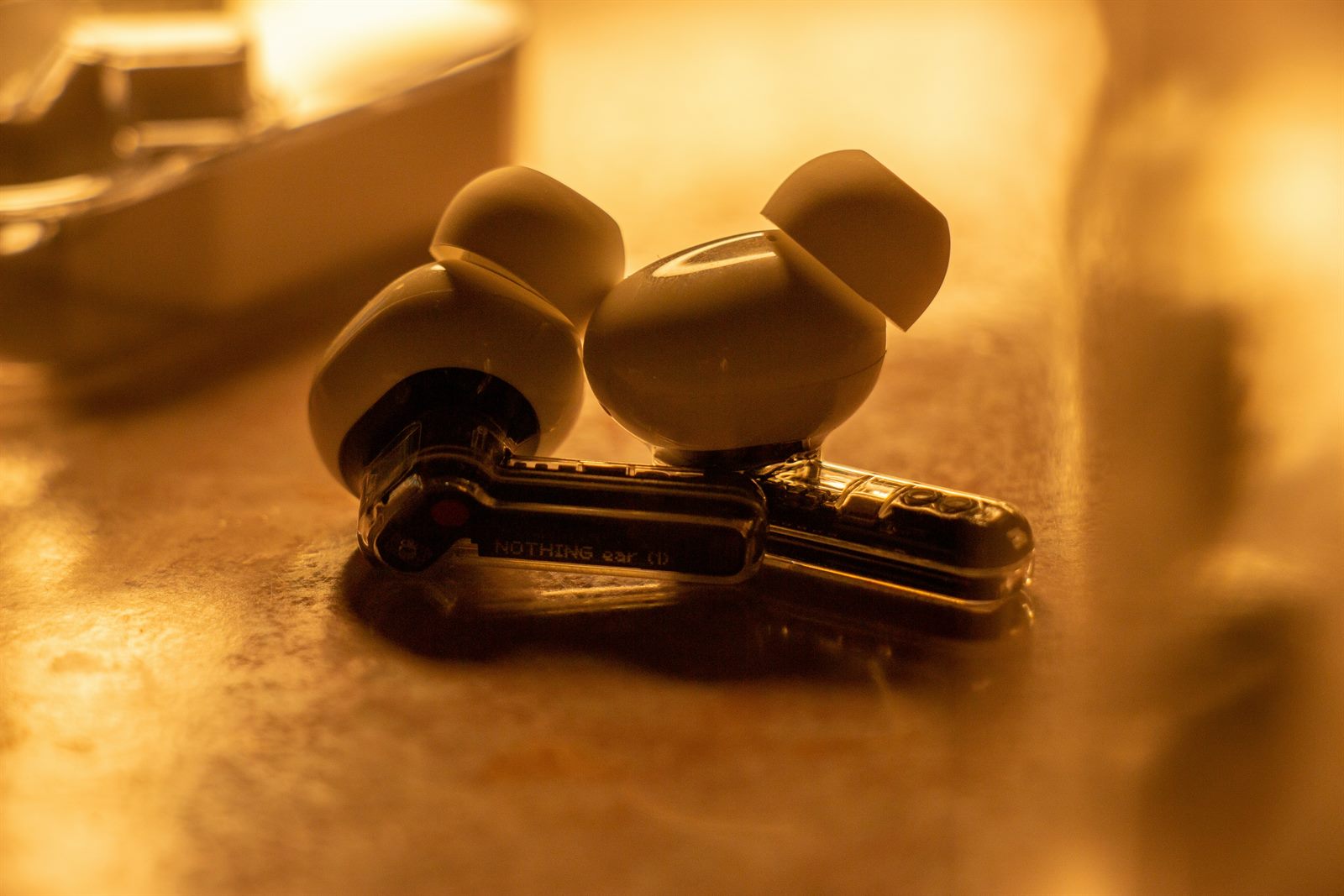
Picture a dinner party in 2031. The restaurant is loud — clattering plates, a birthday table, a bad playlist. Across from you, your friend is telling a story, and you hear every word, crisp and close, as if the room had gone quiet just for the two of you. You are not straining. You are wearing two small earbuds, and they are doing something no human ear has ever done: choosing what you hear.
Nobody at the table thinks you have a disability. Half of them are wearing earbuds too. One is muting the birthday table. One is boosting the frequencies that four decades of headphones stole. One is listening to her Portuguese-speaking date in English, translated in her ear a heartbeat behind his lips. The device we used to whisper about — the hearing aid — is becoming the most intimate computer we own. The question is not whether the technology arrives. It is how quickly "hearing aid" stops meaning medical device and starts meaning superpower.
What the Evidence Shows
Two regulatory decisions cracked this market open. In 2022, the US Food and Drug Administration finalised its over-the-counter hearing aid rule, ending the requirement to see a specialist and collapsing prices from an average of $4,700 a pair toward a few hundred dollars. Then in 2024, the FDA authorised Apple to turn AirPods Pro 2 — earbuds already sitting in tens of millions of pockets — into clinical-grade hearing aids via a free software update, complete with a self-administered hearing test. Overnight, the world's largest hearing-aid company was a phone maker.
Meanwhile the underlying science solved a problem audiologists once called unsolvable: the "cocktail party problem," the human struggle to follow one voice in a noisy crowd. Modern earbuds attack it with beamforming — using multiple microphones to point hearing like a flashlight — and with neural networks, software modelled loosely on the brain, trained to separate voices from noise. Lab systems can now isolate a single speaker by detecting which voice the wearer's own brainwaves are tracking. Translation arrived in parallel: Google, Samsung, and a wave of startups ship earbuds that interpret dozens of languages in near real time.
"Hearing loss is the largest modifiable risk factor for dementia in midlife. Treating it is not cosmetic — it may be one of the most powerful brain-protection interventions we have."
— The Lancet Commission on Dementia Prevention — 2024 UpdateThe health stakes give the trend gravity. The Lancet Commission ranks untreated hearing loss among the largest modifiable risk factors for dementia, and a landmark 2023 trial found hearing aids cut cognitive decline nearly in half among high-risk older adults over three years. Yet historically, fewer than one in five people who needed hearing aids wore them — stigma and price kept them in the drawer. Both barriers are now collapsing at once, and the hearables market has become one of the fastest-growing categories in consumer electronics, with hundreds of millions of units shipping annually.
"Glasses went from disability to fashion statement in one generation. Ears are next — and this time the upgrade comes with volume control for reality."
Why This Is Happening
The stigma is dying because the hardware became desirable. Eyeglasses made the journey from medical shame to fashion accessory; hearing tech is making the same trip a hundred times faster, because it hitched a ride on the most popular gadget of the decade. Nobody can tell whether the white bud in your ear is playing a podcast, taking a call, or amplifying speech — and that ambiguity is the stigma's solvent.
Enhancement is a bigger market than treatment. Roughly 1.5 billion people have some hearing loss, but everyone has been unable to hear a friend in a bar. Tuning out a crying baby on a flight, sharpening a mumbling colleague in a meeting, boosting the high frequencies that age quietly steals from every ear after forty — these are products for eight billion ears, not a medical niche. Companies price and design accordingly.
The dementia evidence turned hearing tech into preventive medicine. Health systems and insurers increasingly treat hearing intervention as brain protection. That reframing — from luxury gadget to cognitive seatbelt — pulls doctors, employers, and public-health campaigns onto the same side as the marketing departments.
What Could Happen
Earbuds with medical-grade amplification, voice isolation, and live translation become as ordinary as prescription glasses. A quarter or more of adults in wealthy countries wear enhancement daily — most with clinically normal hearing. Traditional hearing-aid makers pivot to premium medical care and implants, while the phone giants own the mass market. "Did you get your ears done?" means a software upgrade.
Under-40s embrace augmented hearing as naturally as they adopted wireless earbuds, but older adults — the people with the most to gain — remain slow to convert, deterred by fiddly apps and lingering stigma. The category is huge but skews young and recreational, and the public-health windfall on dementia arrives a decade late.
Constant selective hearing corrodes something basic: the shared sound of a room. Schools and workplaces restrict earbuds, "bud-free" dinners become etiquette, and recording-capable ears provoke privacy laws. Enhancement survives, but as a tool people visibly remove — closer to sunglasses indoors than to spectacles.
What Can We Do
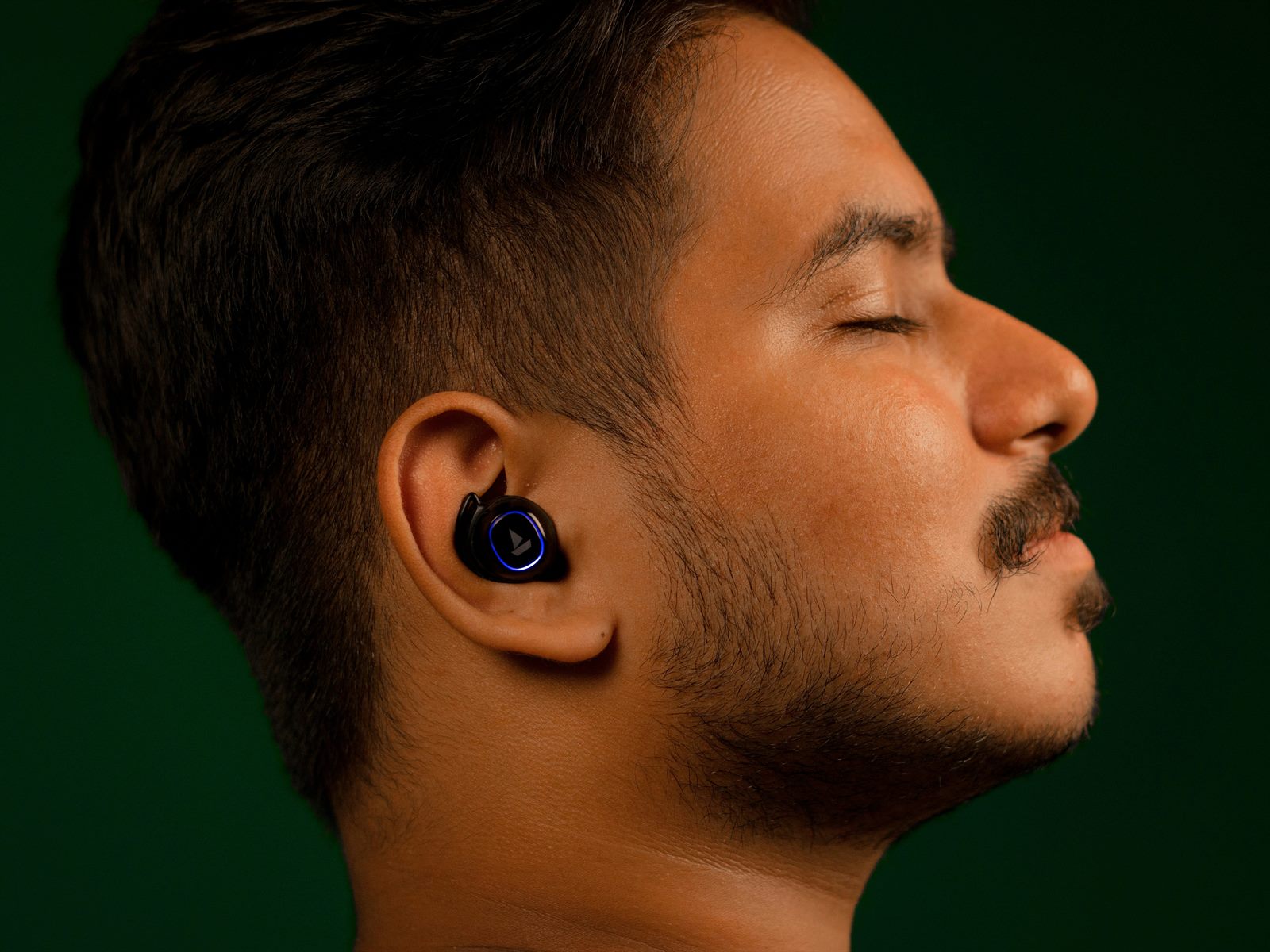
This future is unusually easy to prepare for, because much of it is already sitting on store shelves — and possibly in your pocket.
Test your hearing this week — it takes five minutes. Free, validated hearing checks are built into AirPods and available as phone apps. Most people lose hearing so gradually they never notice the world going quiet. A baseline now means you will actually see the change later.
If someone you love has hearing loss, treat it as brain care, not vanity. The dementia link makes untreated hearing loss a genuine medical risk. Over-the-counter options start around $200, and if AirPods are already in the house, the hearing-aid feature is free. The excuses are gone; the conversation is worth having.
Protect the hearing you plan to enhance. Enhancement works best on ears that still work. Modern earbuds can warn you when volume is damaging your ears — turn that feature on, and use noise cancellation instead of volume in loud places. The frequencies you save are the ones you'd otherwise pay to simulate.
Set your own rules for selective hearing before it sets them for you. The power to mute people is intoxicating and slightly corrosive. Decide early where the buds come out — dinner tables, bedtime, arguments. The superpower is choosing what you hear; the discipline is choosing when not to.
- FDA — Over-the-Counter Hearing Aid Final Rule, 2022
- FDA — Hearing Aid Feature Authorisation, Apple AirPods Pro 2, 2024
- The Lancet — Commission on Dementia Prevention, Intervention, and Care, 2024 Update
- The Lancet — ACHIEVE Trial: Hearing Intervention and Cognitive Decline, 2023
- IEEE Spectrum — "Solving the Cocktail Party Problem with Neural Beamforming," 2025
- Forecast The World Research Desk — 800+ data sources