The Question
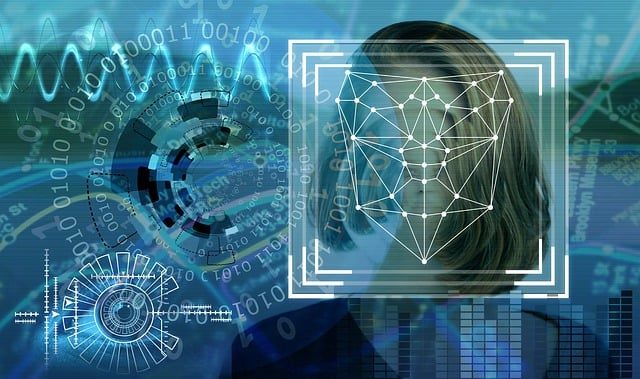
Picture your next grocery run, a few years from now. You fill your basket, walk to the till, and look at a small screen for about one second. It smiles back — payment approved. No wallet. No phone. No card. Your face was the card, matched in an instant against a template you registered with your bank. You are out the door before the person behind you has found their PIN.
This is not a concept video. In China, Alipay's "Smile to Pay" system and its rival from WeChat Pay have been running in convenience stores, supermarkets, and vending machines since 2017, processing payments for hundreds of millions of registered users. The question facing the rest of the world is no longer whether the technology works — China settled that — but whether shoppers in New York, London, and São Paulo will hand their faces to the payment networks. The networks are betting heavily that we will.
What the Evidence Shows
The world's biggest payment companies are all building the same thing at once. Mastercard launched its Biometric Checkout Program in 2022, starting with supermarket pilots in São Paulo, Brazil, and expanding trials across Asia; shoppers enroll once through an app, then pay with a face or a wave of the hand. Amazon One, which reads the unique vein pattern in your palm, is installed across Whole Foods stores in the United States and at stadiums, airports, and Panera Bread locations — more than 500 sites and counting. JPMorgan, the largest US bank, has run its own biometric checkout pilots with retailers, explicitly positioning face and palm payment as the next stage after tap-to-pay.
The performance argument is simple: speed and fraud. A chip card transaction takes seconds plus fumbling; a face match takes under a second. And because the "credential" is attached to your living body, it is far harder to steal at the point of sale than a card number. Industry analysts project biometric payments will be used by well over a billion people worldwide by the end of the decade, driven first by Asia and then by sports venues and airports in the West — places where lines cost money and identity checks already happen.
"The card was a token that proved you had an account. The phone was a token that proved you had the card. Biometrics remove the token entirely — the account simply recognises its owner. Every intermediate step in payments history has eventually been deleted, and the plastic card is next."
— Journal of Payments Strategy — "The Post-Card Era," 2025The counterweight is real and it is serious. A password can be reset; a face cannot. If a database of facial templates leaks — and payment databases leak constantly — the damage is permanent. Researchers have already demonstrated "spoofing" attacks using high-resolution photos, 3D-printed masks, and deepfake video, which is why modern systems use depth cameras and "liveness detection" — checks that the face in front of the lens is a living person, not a picture. Illinois' Biometric Information Privacy Act, the toughest such law in America, has already produced nine-figure settlements against companies that collected face data without proper consent. The technology is sprinting; the law is jogging behind it, writing tickets.
"You can cancel a stolen credit card in one phone call. Nobody has ever cancelled their own face."
Why This Is Happening
Checkout friction is a multi-billion-dollar problem, and faces delete it. Retailers lose sales every time a line stalls, and payment networks earn fees on every transaction that does happen. A face payment takes roughly one second and works when your hands are full, your phone is dead, and your wallet is at home. In Chinese vending machines and canteens, face payment won not because it was futuristic but because it was simply the laziest option available — and the laziest option almost always wins in consumer technology.
Fraud is exploding, and biometrics are the strongest lock available. Card fraud costs the global economy tens of billions of dollars a year. A stolen card number is useless at a terminal that demands a matching, living face. Banks are not adopting biometrics because they are trendy; they are adopting them because every percentage point of fraud eliminated flows straight to the bottom line. That is why JPMorgan and Mastercard — not startups — are leading the charge.
The infrastructure is already being installed for other reasons. Airports are rolling out face-scanning gates for boarding. Stadiums use face entry for ticketing. Once a camera that can verify your identity is bolted to every doorway and till for security purposes, turning it into a payment terminal is a software update, not a construction project. There is also a quieter upside: the roughly 1.4 billion adults worldwide with no bank account can be enrolled in payment systems with nothing but their own face — no card, no smartphone required.
What Could Happen
Asia leads, Latin America and the Gulf states follow fast, and the US and Europe arrive last but arrive. Face and palm checkout becomes a standard option — alongside cards and phones, not instead of them — at major supermarket chains, stadiums, fast food restaurants, and transit systems. Enrollment is voluntary, handled through your bank's app, and adoption follows the same curve contactless cards did: mocked, then tolerated, then default.
The EU's AI and data-protection rules, plus US state laws modeled on Illinois' BIPA, make face payment legally radioactive in some jurisdictions. Palm scanning — which feels less like surveillance — becomes the Western compromise, while face payment dominates Asia. The result is a patchwork: your face works at checkout in Singapore and São Paulo but not in Chicago or Berlin.
A major provider suffers a leak of raw facial templates, or a deepfake-driven fraud wave defeats liveness detection at scale. Regulators impose moratoriums, consumers revolt, and biometric checkout retreats to high-security niches like airports. This scenario requires both a technical failure and a political reaction — possible, but the industry's shift to storing encrypted mathematical templates rather than actual photos makes the worst version harder to pull off.
What Can We Do
Pay-by-face is coming whether you enroll or not. What you control is when you opt in, who holds your template, and how loudly you demand rules before the cameras go live everywhere.
Treat your face like the unchangeable password it is. Before enrolling in any biometric payment system, check one thing: does the company store your actual image, or an encrypted mathematical template that cannot be reversed into a photo? Reputable systems do the latter. If the answer is unclear in the privacy policy, that is your answer — walk away.
Enroll with banks, not with random retailers. Your bank is regulated, audited, and liable for fraud; a startup loyalty app is none of those things. If you want the convenience, get it through the most accountable institution available, and enable every alert and spending notification they offer so a spoofed transaction surfaces within minutes.
Support strong biometric privacy laws now, before the rollout finishes. Illinois' BIPA proves that a simple rule — get written consent, disclose retention, face real penalties — changes corporate behavior overnight. Tell your representatives you want consent requirements, deletion rights, and breach liability written into law. The window for setting the rules is the next three to four years.
Keep a non-biometric fallback alive. Convenience systems fail — cameras misread darker skin tones at higher rates, twins confuse matchers, and outages happen. Insist that every store and transit system offering face payment also keeps card and cash lanes open. A future where your face is your only accepted key is a future where being unrecognised means being locked out.
- Mastercard — Biometric Checkout Program, Global Pilot Reports, 2022–2025
- Goode Intelligence — "Biometric Payments Forecast 2026–2031," 2025
- Ant Group — Alipay "Smile to Pay" Deployment Data, 2024
- Journal of Payments Strategy — "The Post-Card Era," 2025
- Illinois General Assembly — Biometric Information Privacy Act Litigation Review, 2024
- Forecast The World Research Desk — 800+ data sources