The Question
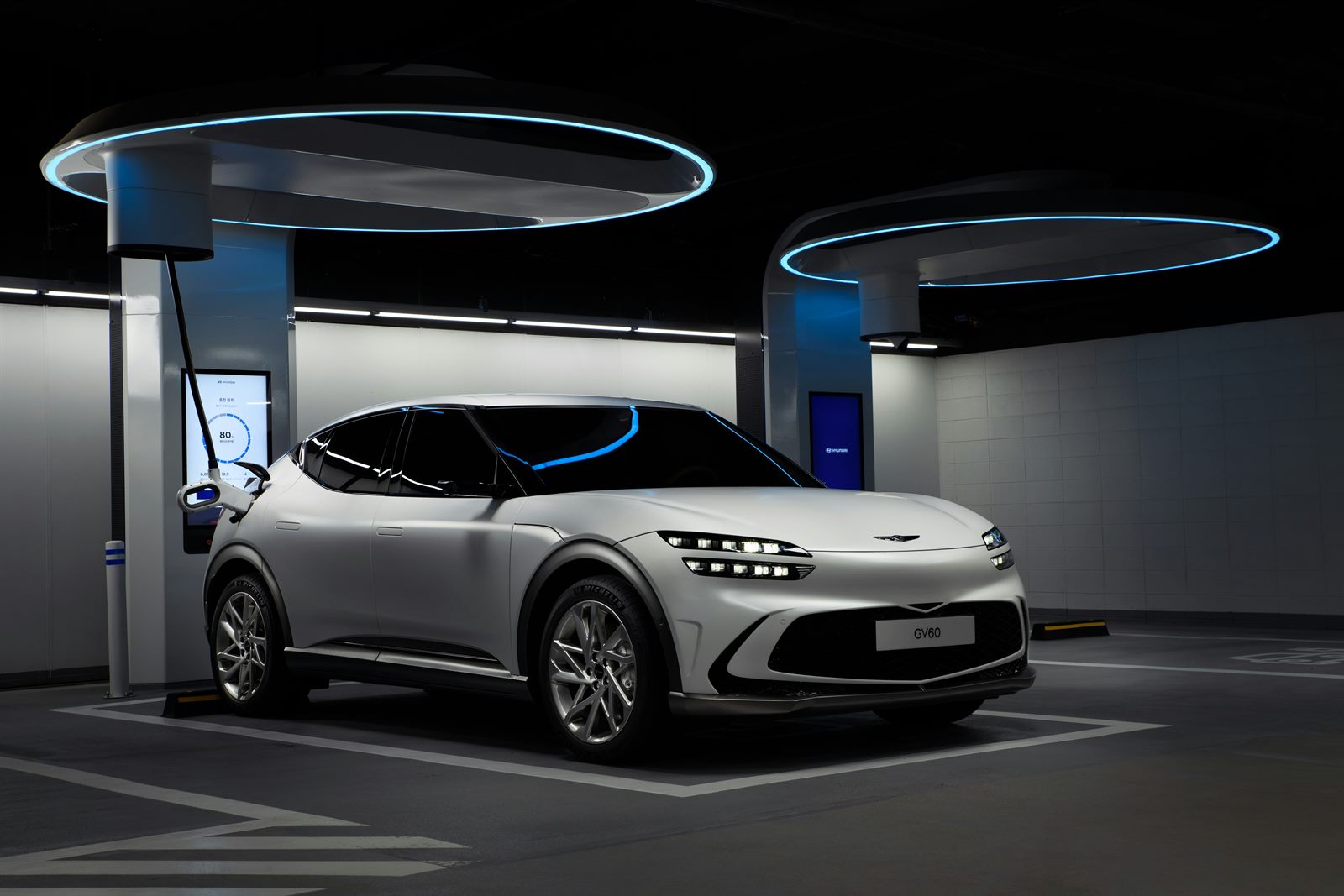
Remember the last time your phone hit 3% at the worst possible moment? Now imagine this instead: you plug it in while you find your shoes, and by the time you've tied the laces, it's full. Not 50%. Full. Or picture the road-trip version: you pull off the highway with an empty electric car, tap a card, and before you've finished paying for snacks, the dashboard reads 100% and you have 400 kilometers of range.
For twenty years, charging speed has been the great broken promise of battery technology — every year a lab announcement, every year the same slow overnight trickle in real life. That era is ending, and it is ending fast. The question is no longer whether near-instant charging is possible. Cars you can buy in China today already gulp electricity at rates that would have melted a battery five years ago. The question is when the sixty-second charge — or something close enough that you stop thinking about charging at all — reaches the device in your pocket and the car in your driveway.
What the Evidence Shows
First, the thirty-second chemistry lesson. A lithium-ion battery — the kind in your phone and every electric car — works by shuttling charged lithium particles between two layers through a liquid. Charging pushes them one way; using the battery lets them flow back. Charge too fast and two bad things happen: the battery overheats, and lithium piles up in sharp metallic spikes that shorten its life or, in the worst case, cause fires. Every fast-charging breakthrough is really a way of cheating those two failure modes.
The cheats are now shipping. CATL, the world's largest battery maker, launched its Shenxing battery in 2023: a mass-produced cell that adds roughly 400 kilometers of range in 10 minutes, now in dozens of vehicle models. In 2025, BYD unveiled a charging platform operating at a full megawatt — about 1,000 times the power of a phone charger — demonstrating 400 kilometers of range added in around five minutes, with a network of flash-charging stations being built across China. Meanwhile the next wave is forming: Toyota has promised solid-state batteries — which replace the flammable liquid inside with a solid material that tolerates much faster charging — in vehicles around 2027–28, with QuantumScape and Samsung SDI racing along the same path. And companies like Group14 and Sila are already selling silicon anode materials, which let batteries absorb lithium faster than the graphite used today; they are inside consumer devices now.
"Charging time, not range, was always the real barrier to electrification. A five-minute charge makes the battery disappear as a concern — and once the battery disappears as a concern, the gasoline car has no remaining argument."
— Nature Energy — "The End of Range Anxiety," 2025So why does your phone still take an hour? Partly heat: a phone has no room for the cooling systems a car battery pack enjoys. Partly protectiveness: manufacturers throttle charging speed to keep your battery healthy for years of daily cycles. And partly the grid: a megawatt charger draws as much power as a small neighborhood, so ultra-fast stations need their own buffer batteries — giant packs that sip from the grid slowly and then blast your car quickly. That buffering trick, borrowed from supercapacitors' playbook of storing energy for sudden bursts, is what makes flash charging deployable without rebuilding the electrical grid.
"The last time refueling took five minutes, the machine was called a gasoline car. The successor has finally matched its only remaining trick."
Why This Is Happening
China turned charging speed into a competitive weapon. CATL and BYD are locked in a public arms race — each announcement of faster charging forces the rival to answer within months. Because these two companies supply batteries for most of the world's electric cars, their domestic knife-fight sets the global pace. Western automakers now specify fast-charge capability because their customers can read Chinese spec sheets.
Materials science delivered three breakthroughs at once. Silicon anodes, new fast-transport electrolyte liquids, and solid-state designs each attack the speed limit from a different angle — and they stack. A cell combining silicon-rich electrodes with advanced electrolytes charges several times faster than a 2020 battery of the same size, without the fire risk that killed earlier attempts.
The infrastructure finally has a business model. A charging station that serves a car in five minutes earns ten times the revenue per plug of one that takes an hour. That arithmetic is unleashing capital: BYD's megawatt network, Tesla's next-generation Superchargers, and grid-buffer battery installations are all being funded not as green gestures but as high-turnover retail — gas stations with better margins.
What Could Happen
Flash-charging vehicles spread from China to global markets, and solid-state cells enter premium cars around 2028–30. Sub-five-minute empty-to-full becomes a standard mid-market feature. True 60-second charging appears first in small devices — earbuds, wearables, then phones with graphene-enhanced or supercapacitor-hybrid cells — where the energy involved is small enough for home hardware to deliver.
Cells capable of five-minute charging become common, but outside China the charger build-out stalls on permits, grid connections, and cost. Drivers own cars that could flash-charge but rarely meet a station that can feed them — the pattern repeats phone fast-charging, where cables and adapters limited real-world speed for years. The capability exists everywhere; the experience exists in showcase corridors.
Real-world data shows routinely flash-charged packs aging dramatically faster or failing dangerously, triggering warranty crises and regulatory limits on charging power. Manufacturers quietly throttle speeds by software update, and the industry settles at 15–20 minutes as the safe plateau. Early evidence from CATL's fielded fleets argues against this, but batteries have humbled forecasters before.
What Can We Do
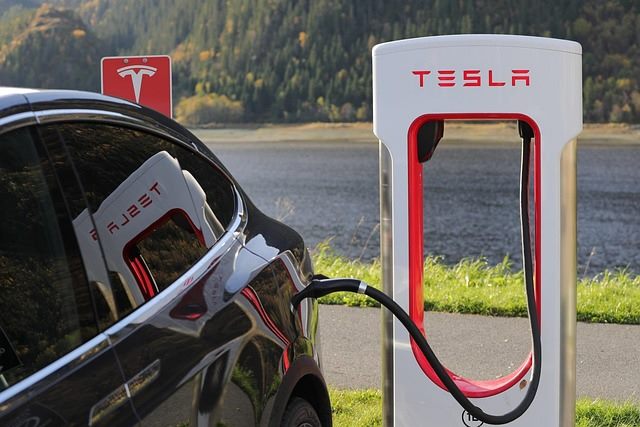
You do not need to do anything for fast charging to reach you — it is coming on its own. But a few smart moves let you benefit early and avoid paying for yesterday's technology.
Buy batteries by charge speed, not just capacity. When your next phone or EV purchase comes, look past the battery size number to the charging spec — watts for phones, kilowatts and "10–80% time" for cars. A smaller battery that refills in minutes beats a bigger one that ties you down overnight, and resale values will increasingly reflect that.
Don't overpay for range you won't need. The giant-battery premium — thousands of dollars for extra kilometers — exists mainly because charging is slow. As five-minute stations spread along highways, a modest-range EV plus fast charging covers the same trips for less money. Ask where the fast chargers are on your actual routes before paying for the long-range trim.
Protect today's battery while you wait. Current lithium-ion cells age fastest when kept at 100% or drained to zero and when charged fast while hot. Keeping daily charging between roughly 20% and 80% — most phones and EVs now have a setting for this — can meaningfully extend battery life until the degradation-proof generation arrives.
Watch for the second-order changes. Ultra-fast charging plus cheap grid-buffer batteries means neighborhoods gain large energy storage as a side effect — storage that can soak up solar power at noon and release it at dinner. If your utility offers programs linking home or vehicle batteries to the grid, joining early positions you to be paid for capacity you already own.
- CATL — Shenxing Superfast Charging Battery Technical Launch Materials, 2023–2025
- BYD — Megawatt Flash Charging Platform Announcement, 2025
- Nature Energy — "The End of Range Anxiety: Extreme Fast Charging in Commercial Cells," 2025
- Toyota Motor Corporation — Solid-State Battery Commercialization Roadmap, 2024
- US Department of Energy — Extreme Fast Charging and Grid Integration Study, 2024
- Forecast The World Research Desk — 800+ data sources