The Question
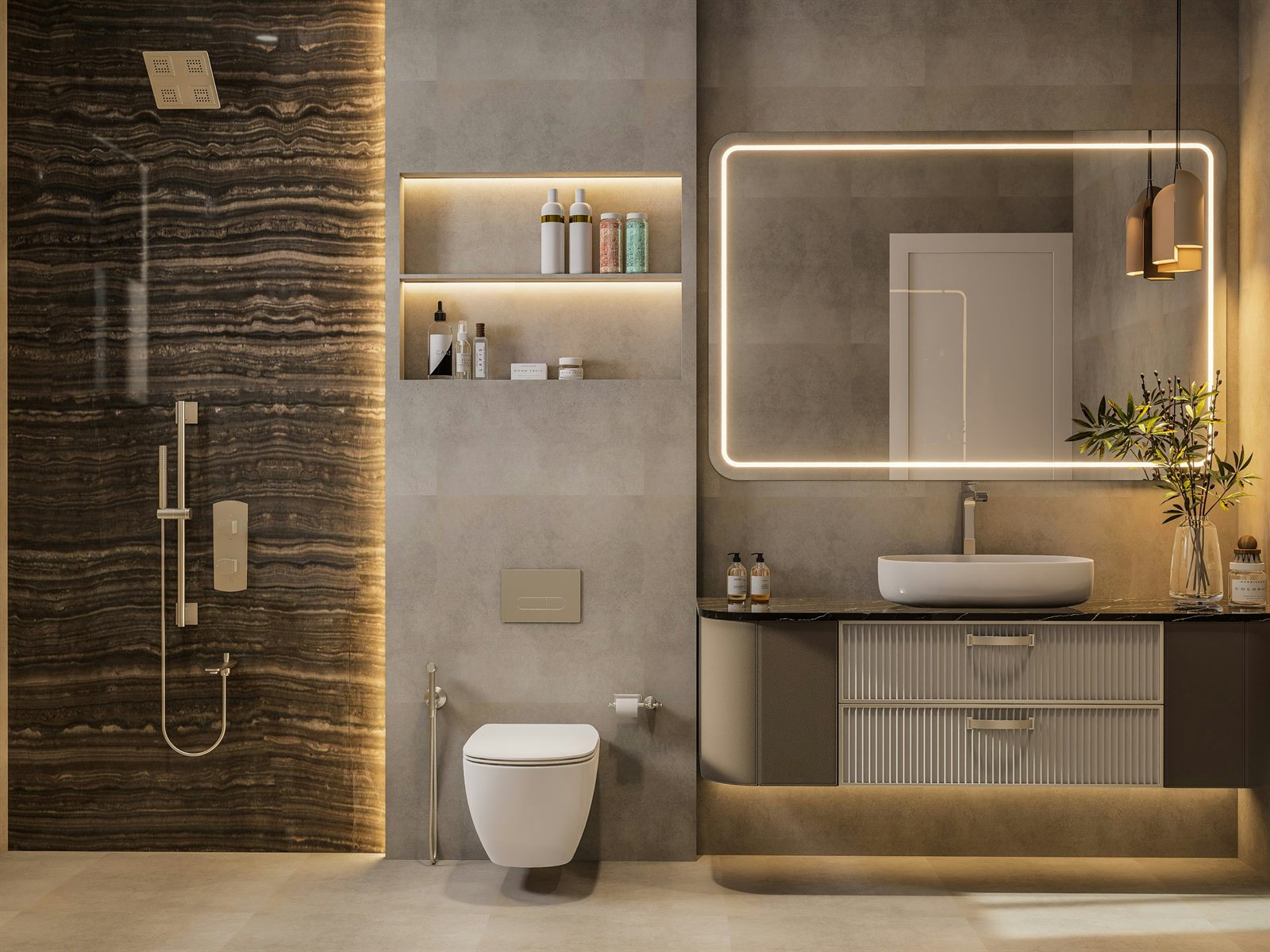
A morning in 2033. You shuffle into the bathroom half-asleep. The toilet notes that your hydration is low and your kidneys are filtering normally. The mirror — reading the tiny colour changes in your face as blood pulses under the skin — logs your heart rate and flags that your blood pressure trend has crept up three weeks running. The scale adds body composition. You have done nothing except be a human in a bathroom. By the time you brush your teeth, your morning has produced more medical data than last year's physical.
None of this requires inventing anything. Withings already sells U-Scan, a hockey-puck sensor that sits inside the toilet bowl and analyses urine at home. Toto, the Japanese toilet giant, has shown its Wellness Toilet concept for years. Stanford researchers built a smart toilet that detects disease markers — and identifies users by, among other things, their unique "analprint." Yes, really. The question is whether the bathroom becomes medicine's front line, and who gets to read the most intimate data stream imaginable.
What the Evidence Shows
The toilet is the obvious star, because urine and stool are the body's daily written report. Withings' U-Scan, launched in Europe, reads hydration and nutrition markers from urine and syncs them to your phone; medical cartridges for kidney and metabolic monitoring are in development. The Stanford Precision Health smart toilet, described in Nature Biomedical Engineering in 2020, analysed urine flow and content and screened stool — the raw material for detecting dehydration, urinary infections, diabetes markers such as glucose in urine, kidney trouble, and, eventually, the blood traces that flag colon cancer. Pregnancy detection from a toilet is chemically trivial; it is the same test sold in pharmacies, minus the awkward aim.
The mirror is the quiet second act. A technique called photoplethysmography — a mouthful that simply means using light to watch blood pulse through skin — lets an ordinary camera measure heart rate, and increasingly rhythm irregularities and blood-pressure trends, from your face. It is the same trick a smartwatch performs on your wrist, done from across the sink. Add skin analysis (dermatology AIs already grade moles and rashes from photos) and the mirror becomes a daily, silent screening tool. Smart scales complete the trio, tracking not just weight but body fat, muscle, and fluid — fluid shifts being an early-warning sign of heart failure that hospitals already monitor by weight.
"The annual physical is a single frame from a year-long film. Continuous passive monitoring gives us the whole movie — and most serious disease announces itself in the plot, not in any single frame."
— Nature Biomedical Engineering — "The Case for Passive Health Monitoring," 2024That is the core argument: the checkup problem. Slow-building killers — kidney disease, diabetes, hypertension, colon cancer — develop over years, drifting gradually across thresholds. An annual snapshot routinely misses the drift; a daily reading cannot. Studies of home blood-pressure monitoring already show it predicts heart attacks and strokes better than office measurements. The bathroom simply automates what compliance-dependent home monitoring asks people to remember.
"You will never remember to test yourself every day. You will never forget to use the toilet."
Why This Is Happening
The bathroom is the only room that guarantees a daily, private, biological sample. Health tech's great enemy is human forgetfulness — devices end up in drawers. But everyone visits the bathroom every day, alone, and involuntarily produces exactly the fluids laboratories charge to collect. No behaviour change, no needles, no appointment. Passive beats diligent, every time, for everyone.
The sensors became cheap while healthcare became expensive. The chemistry in a urine test strip costs pennies; camera sensors and light-based heart monitoring ride the smartphone cost curve. Meanwhile a single missed kidney-disease diagnosis can cost six figures in dialysis. Insurers and overloaded health systems have every incentive to move screening from the $300 clinic visit to the $3 sensor read.
Aging populations demand monitoring that doesn't feel like monitoring. The fastest-growing demand comes from adult children of aging parents. A bathroom that quietly notices dehydration, sudden weight loss, or worsening kidneys — without cameras in the bedroom or a pendant Grandma refuses to wear — is elder care with dignity intact. Japan, oldest nation on earth and home of Toto, is not developing wellness toilets by coincidence.
What Could Happen
Urine-analysis toilets and attachments, health-reading mirrors, and smart scales become standard in new premium homes and common retrofits, the way video doorbells spread in the 2020s. Doctors receive trend summaries, not daily noise, and early catches — kidney decline, hypertension, diabetes drift — become routine anecdotes. By 2033 the annual physical still exists, but for millions it confirms what the bathroom already knew.
Regulatory caution keeps most bathroom devices in the fuzzy "wellness" category, unable to make medical claims, and mass-market buyers shrug. Adoption concentrates where the case is undeniable: aging-in-place households, chronic kidney and heart patients, and high-end housing. The population-level screening revolution waits for insurers to subsidise hardware, pushing mainstream arrival toward 2038.
A breach or data-sale scandal — toilet data used in insurance pricing, a pregnancy inferred and leaked, employer wellness programs demanding access — triggers a consumer revolt against "surveillance plumbing." Legislatures respond with strict biodata laws, and the industry retreats to devices that process everything locally and share nothing by default. The technology survives, but adoption is set back years and trust must be rebuilt device by device.
What Can We Do

The bathroom checkup will arrive one gadget at a time, and you get to decide which gadgets — and whose rules — you let in.
Start with the boring devices that already work. A validated home blood-pressure cuff and a decent smart scale deliver much of the passive-monitoring benefit today for under $150. Hypertension is the world's biggest silent killer, and weekly home readings beat the annual office measurement by every clinical standard. The futuristic toilet can wait; the cuff should not.
Before buying any bathroom health device, ask where the data lives. The only question that matters: is it processed on the device, or uploaded to a company server? Prefer local-first products, read the deletion policy, and assume anything uploaded can someday be subpoenaed, sold, or breached. Your urine chemistry deserves at least the scrutiny you give a banking app.
Loop in your doctor, not just your phone. A trend line is only useful if someone medically literate sees it. Bring home readings to appointments; many clinics now accept device data directly. A doctor watching your twelve-month trend is the difference between data and diagnosis.
Support laws that treat biological data like medical records. In most countries, data from wellness devices is not protected by medical-privacy law — your hospital chart is sacred, but your toilet's opinion of your kidneys is fair game. Legislation extending medical-grade protection to consumer biodata, and banning its use in insurance and employment decisions, is what makes this future safe to want.
- Nature Biomedical Engineering — "A Mountable Toilet System for Personalized Health Monitoring," Stanford, 2020
- Nature Biomedical Engineering — "The Case for Passive Health Monitoring," 2024
- Withings — U-Scan In-Toilet Urine Analysis, Product and Clinical Documentation, 2023–2025
- JAMA — Home vs. Office Blood Pressure Measurement and Cardiovascular Outcomes, 2023
- IEEE Transactions on Biomedical Engineering — "Camera-Based Photoplethysmography: A Review," 2024
- Forecast The World Research Desk — 800+ data sources