The Question
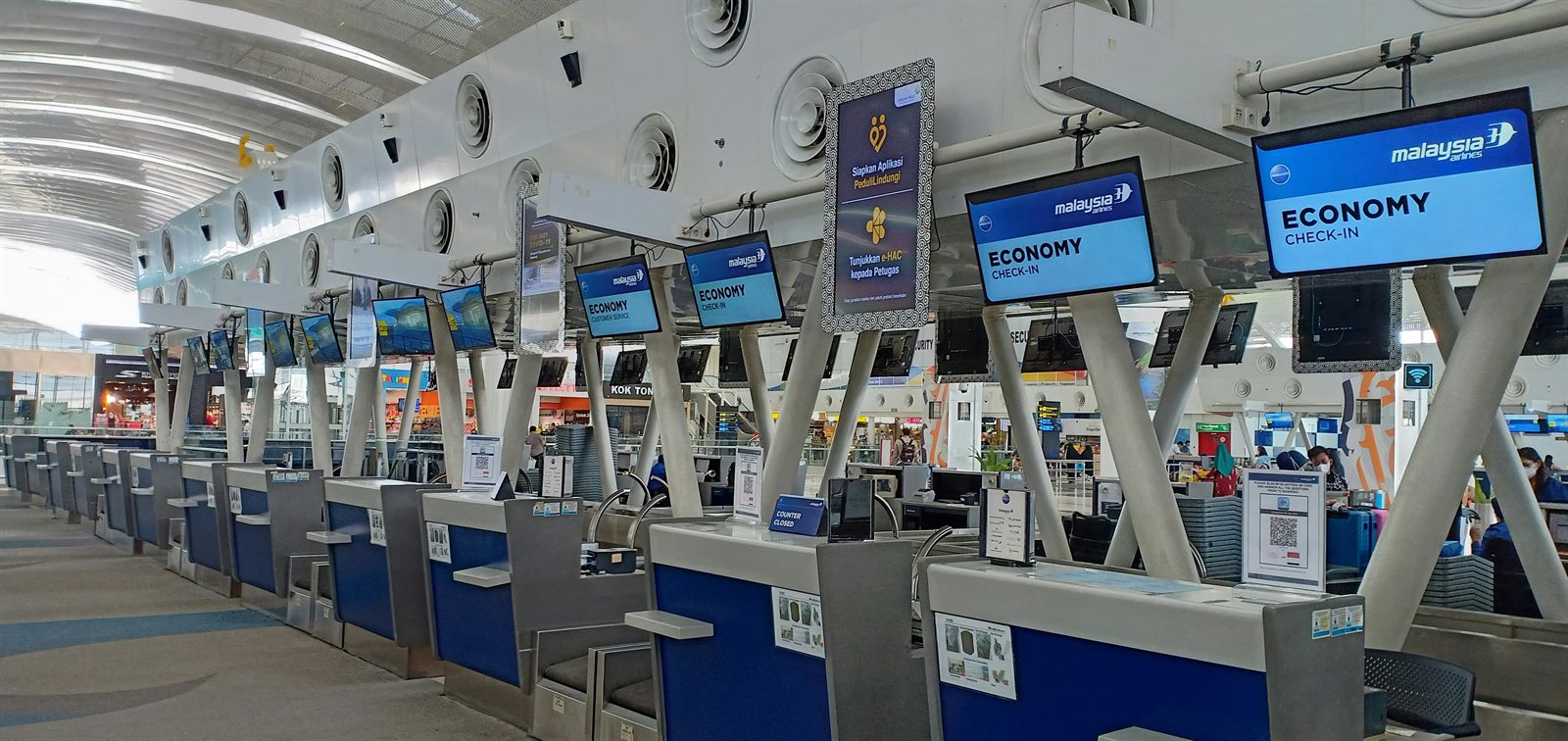
It is 2032, and you are late for a flight. At today's airport, that story ends badly: the snaking line, the gray bins, the belt, the shoes, the laptop, the little bag of liquids, the beep, the pat-down. At the 2032 airport, it barely counts as a scene. You walk from the curb toward the gate at full stride. A camera matches your face to your passport records as you pass. Sensors in the corridor scan your bag and your body while you keep moving. No line, no bins, no stopping. Total time from door to gate: minutes. The checkpoint didn't disappear — you just never noticed you went through it.
Every piece of that walk already exists somewhere on Earth. The question is not whether the technology works, but how fast it spreads from showcase airports in Singapore, Amsterdam, and Dubai to the hub where you catch your Tuesday flight — and what we trade for the privilege of never standing in line again.
What the Evidence Shows
The ritual is being dismantled piece by piece, in public. In July 2025, the TSA ended the shoes-off rule — a policy born from one failed attack in 2001 — at US checkpoints. The liquids rule is next: new CT scanners, which take a 3D X-ray of your bag the way a hospital scanner images a body, let screeners rotate and inspect the contents digitally. Amsterdam's Schiphol and London City Airport have run CT lanes for years, letting passengers keep liquids and laptops in their bags, and US and UK hubs are rolling out the same machines checkpoint by checkpoint.
Identity is going the same way. Delta's Digital ID lets enrolled passengers move from bag drop to boarding gate on face recognition alone — no boarding pass, no physical ID. Dubai International's "smart gates" clear passport control in seconds with a glance at a camera. Singapore's Changi has made biometric clearance standard for departures. The TSA's PreCheck Touchless ID pilot verifies identity by face at a growing list of US airports, and in Las Vegas the TSA has trialed self-screening pods — think supermarket self-checkout, but for security — where passengers screen themselves with remote officers watching only the exceptions. Walk-through body scanners that screen people in motion, without the arms-up pose, are in active testing.
"The checkpoint of the future is not a place you stop. It is a corridor you walk through, where identity, baggage, and threat screening happen simultaneously and invisibly. Every technology required for this already exists; what remains is integration, certification, and public consent."
— International Air Transport Association — "One ID and the Seamless Journey," 2025The pressure to build it is arithmetic. Global passenger traffic is projected to nearly double by 2040, and no major hub has room to double its checkpoint floor space. Airports either move people faster through the same square footage or watch the lines stretch out the door. That is why the industry's own roadmap — IATA's "One ID" program — envisions a fully document-free journey, with your face as the single token from booking to boarding.
"The security line will not be abolished. It will be dissolved — and the price of walking through at full speed is that the airport knows exactly who is walking."
Why This Is Happening
Better sensors mean fewer rituals. Most checkpoint theater exists because old X-ray machines produced flat, ambiguous images that required humans to separate everything. CT scanners and AI image analysis can spot a threat inside a packed bag automatically, flagging only genuine anomalies. When the machine can see through your bag, there is no reason to unpack it — the shoe rule's death in 2025 was the first official admission that the rituals can be retired.
Biometrics remove the slowest component: checking who you are. A human agent squinting at a passport photo takes ten seconds and makes mistakes; face matching takes under one second and, at modern accuracy rates, makes fewer. Once identity checks are instant and automatic, they can happen while you walk — which is exactly what Dubai's gates and Delta's Digital ID already do.
Airports compete on experience, and lines are the product's worst feature. Changi and Schiphol treat short security times as a marketing weapon, and hubs compete for lucrative connecting traffic partly on connection speed. Surveys consistently rank security as the most hated part of flying. The first major US hub to advertise "no lines, shoes on, liquids in your bag" will take passengers from its rivals — and every airport executive knows it.
What Could Happen
The leaders — Changi, Schiphol, Dubai, and the top US and European hubs — deploy integrated biometric corridors with CT and walk-through screening for enrolled travelers. The experience splits into tiers: registered passengers walk through at full speed, while unenrolled travelers use traditional lanes that shrink year by year. Smaller airports follow a decade behind, as they did with e-gates.
Certification backlogs, airport funding fights, and privacy litigation slow the rollout. The machines exist but sit in pilot programs for years — the fate of many TSA innovations. By 2032 you keep shoes on and liquids in your bag, but you still stop, still queue, and the walk-through corridor remains a Changi showpiece rather than a global standard.
Aviation security has always been reactive — the shoe rule and liquids rule were each born from a single plot. One serious incident exploiting a gap in automated screening would trigger instant re-regulation, adding new stops and checks and freezing walk-through deployment for years. The technology would survive, but the politics of speed-over-scrutiny would not.
What Can We Do
The frictionless airport is being assembled around you on every trip you take. You can claim the speed early, protect your data while doing it, and help decide the rules before they harden.
Enroll in the fast lanes that already exist. TSA PreCheck, Global Entry, and their equivalents abroad are the on-ramp to every touchless program coming — PreCheck members get new conveniences first, as the shoe rule's end showed. If you fly even a few times a year, the enrollment fee buys back hours of your life annually, starting now.
Know that biometric screening is optional — for now. At US airports, you can decline the face photo and request manual ID verification; airlines and the TSA are required to accommodate you. Exercising that right keeps the opt-out alive. If you do use face recognition, prefer programs that state your image is deleted within hours rather than retained.
Pack for the machines you'll actually meet. During the transition, rules differ lane by lane and airport by airport — one terminal has CT scanners and lets liquids stay packed, the next does not. Check your specific airport's current rules before you fly, and keep the liquids bag accessible until the old rules are formally dead everywhere you travel.
Demand privacy rules with teeth while the system is young. The face-as-boarding-pass model is being standardized right now by IATA, the TSA, and the EU. Public comments, congressional oversight, and press scrutiny in the next few years decide whether images are deleted in 24 hours or warehoused for decades. Speed and surveillance are being sold as a package — insisting they be separable is the traveler's real fight.
- US Department of Homeland Security — End of Shoes-Off Screening Policy Announcement, 2025
- IATA — "One ID and the Seamless Journey" Roadmap, 2025
- Royal Schiphol Group — CT Screening and Seamless Flow Program Reports, 2024
- TSA — PreCheck Touchless ID and Self-Screening Pilot Evaluations, 2024–2025
- Airports Council International — Global Passenger Traffic Forecast 2024–2042
- Forecast The World Research Desk — 800+ data sources