The Question

It is 2032, and your kid is begging for concert tickets. The artist has 40 million followers, a chart-topping album, and a sold-out arena tour. The artist also does not exist. No birthday, no hometown, no body — just a rendered face, a synthesized voice, and a writing room full of producers and engineers. Your kid does not care. The lights go down, the avatar appears in a blaze of holographic glory, 15,000 people scream, and the show is — this is the strange part — genuinely magical.
The question is not whether virtual performers can draw crowds. That was settled years ago in Tokyo. The question is whether a fully virtual artist can conquer the global mainstream: a top-10 hit on worldwide charts and an arena tour that sells out on the act's own name. The machinery to make it happen is already assembled and generating profits.
What the Evidence Shows
Start with the pioneer. Hatsune Miku — a turquoise-haired vocaloid whose voice is entirely synthesized — has been packing arenas since the early 2010s, headlining her own world tours and opening for Lady Gaga in 2014. Fans buy tickets knowing exactly what she is, and they keep coming back. Gorillaz proved the concept even earlier in analog form: Damon Albarn's cartoon band sold millions of records behind animated frontmen. The West laughed, then bought the albums.
Now look at Korea, where the future usually arrives early. PLAVE, a five-member virtual boy band animated in real time by motion-capture performers, has topped Korean charts, won trophies on major music shows against flesh-and-blood idols, and sold out fan concerts. K-pop giant SM Entertainment gave girl group aespa four virtual counterpart members; MAVE: debuted as an entirely AI-generated girl group. In 2023, an anonymous producer called Ghostwriter released "Heart on My Sleeve" with AI-cloned Drake and The Weeknd vocals — it racked up millions of streams before takedowns, proving a synthetic voice could pass as the real thing at global scale. And virtual influencer Lil Miquela has been collecting brand deals from Prada and Calvin Klein since 2016.
"The audience does not fall in love with a body. It falls in love with a story, a voice, and a feeling of being seen. Once you accept that, the question of whether the star is made of cells or code becomes an engineering detail."
— International Journal of Popular Music Studies — "Parasocial Bonds and Synthetic Performers," 2025The commercial logic is brutal and simple. An agency that owns a virtual star owns everything: no scandals, no burnout, no contract renegotiations, no aging, no 2 a.m. posts that vaporize a brand. The idol industry — which already manufactures stars through years of training and tight image control — sees virtual artists as the logical endpoint of its own methods. That is the dream, and also, critics note, the dystopia: a pop star with no labor rights because there is no laborer. Human artists are pushing back, and lawmakers are drafting AI-labeling rules for music platforms. Yet fans of PLAVE, asked why they love a band that is not real, tend to answer the same way: the members feel more sincere than the humans.
"The first pop star who can never disappoint you is also the first who can never refuse the label anything. Which part excites you says everything."
Why This Is Happening
Parasocial bonds never required a body. Fans already love stars they will never meet, through screens, at a distance, mediated by teams of handlers. Research on fan psychology consistently shows the attachment forms around narrative and perceived intimacy — livestreams, replies, lore — all of which virtual artists can supply endlessly and on schedule. PLAVE's members stream, joke, and blush. The feelings they generate are not fake, even if the faces are.
The technology crossed the believability line. Real-time motion capture makes avatars move like people. AI voice synthesis passed the casual-listener test in 2023 — Ghostwriter demonstrated that anyone with software could conjure a convincing Drake. Rendering that once demanded a Pixar budget now runs live on a game engine. The gap between "animated gimmick" and "artist you forget is not human" has functionally closed.
The economics favor the avatar. A virtual star never cancels a tour, never demands a bigger cut, and can perform in Seoul, São Paulo, and Stockholm on the same night. Agencies in Japan and Korea have already built profitable businesses on this model, and Western labels — watching streaming margins shrink and star scandals explode — are investing quietly. When the pilot markets keep printing money, the mainstream follows. It always does.
What Could Happen
The breakthrough act probably comes out of Korea or Japan with a Western label partnership — a PLAVE-style group whose single crosses over via TikTok, followed by a holographic arena tour across Asia, the US, and Europe. Streaming platforms label the act as virtual, fans do not care, and the music industry quietly reorganizes around a new category it can own outright.
Virtual acts keep growing but stay a devoted niche — huge in Asia, cult-sized in the West, like anime a generation ago. Top-10 hits remain human territory because radio, award shows, and older listeners resist. The arena tours still sell out; the crossover single stalls at number 23.
A voice-cloning scandal involving a beloved human artist triggers aggressive AI-music legislation, streaming platforms demote synthetic performers, and a "human-made" certification becomes a badge fans rally around. Virtual acts retreat to Japan and Korea's established scenes. This requires coordinated global rule-making that music regulation has historically never achieved.
What Can We Do
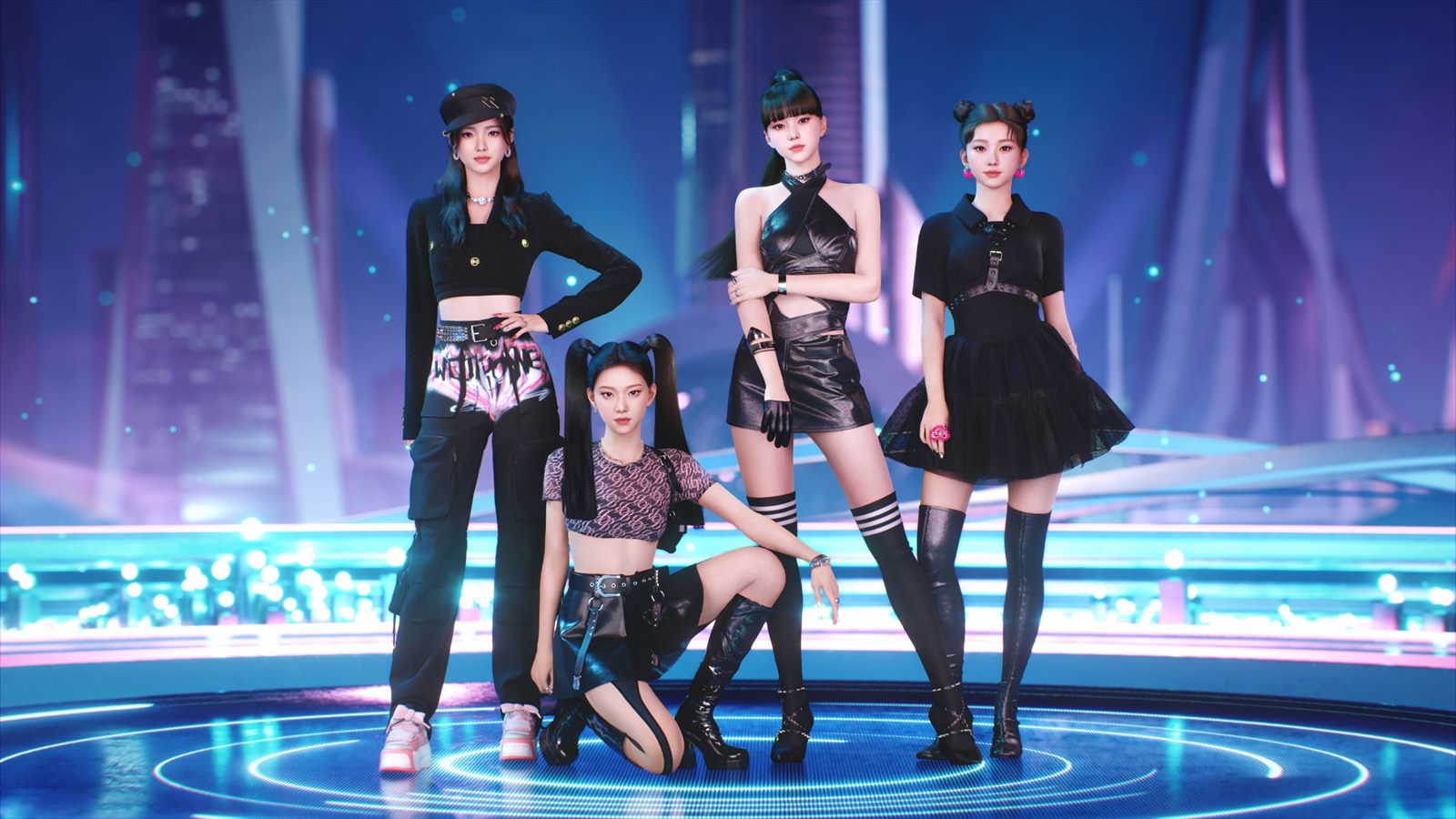
You cannot stop the avatars, and honestly, some of the shows will be spectacular. What you can do is stay a clear-eyed fan — and make sure the humans in the machine get paid.
Ask who is behind the avatar before you spend. Some virtual acts, like PLAVE, are powered by real performers doing real work behind the motion capture. Others are wholly synthetic products. Support the ones that credit and pay their hidden humans — fan money is the only vote that counts in this industry.
Treat the parasocial pull with respect — especially for kids. A virtual idol is engineered to be maximally lovable and永 never log off. Talk with young fans about what the character is: a performance, run by a company, designed to deepen engagement. Enjoying the show is healthy; believing the avatar loves you back deserves a conversation.
Back transparency and voice-rights laws. Rules requiring AI-generated vocals to be labeled, and banning the cloning of a human artist's voice without consent, protect both listeners and musicians. Tennessee's ELVIS Act started the wave; tell your representatives you want it to spread.
Keep buying tickets for humans, too. The surest way to keep flesh-and-blood artists in the game is embarrassingly simple: show up. Streaming pays fractions of pennies, but a ticket and a T-shirt at a small venue pays rent. Let the virtual arena show be your spectacle — and the human club show be your habit.
- Circle Chart Korea — Virtual Artist Chart Performance Data, 2023–2026
- Crypton Future Media — Hatsune Miku Global Tour Attendance Reports, 2010–2025
- International Journal of Popular Music Studies — "Parasocial Bonds and Synthetic Performers," 2025
- MIDiA Research — "Virtual Artists and the Future of Fandom," 2025
- Recording Industry Association of America — AI Voice Cloning Enforcement Briefing, 2024
- Forecast The World Research Desk — 800+ data sources