The Question

Picture deadline day, sometime in the next decade. A number flashes across every screen on Earth, and for a moment the sport pauses to absorb it: two billion dollars, for one human being. It would be more than Tottenham spent building one of the most expensive stadiums ever. A single player would cost more than the ground he plays on. The idea sounds absurd — until you remember the trajectory that got us here.
So the question is not whether transfer fees can climb; they always have. The question is whether they can climb this far, this fast, when the record has been frozen for years. Neymar's €222 million still stands, unbeaten since 2017. Reaching $2 billion means roughly a tenfold leap over the current mark. We put the odds at 44 percent by 2036 — a coin-flip-ish long shot, credible but far from likely.
What the Evidence Shows
Look at the record ladder and one thing jumps out: it stopped climbing. For most of football's modern history, the transfer record broke every few years, then leapt when Neymar shattered it in 2017. Since then — nothing. Nearly a decade with the mark untouched. That stall is the single most important fact in this forecast, and it is why $2 billion is a genuine gamble rather than a foregone conclusion.
Why did fees freeze? Financial Fair Play forced clubs to spend within their means, capping the reckless splurges of the past. COVID gutted matchday and broadcast income. And crucially, the smartest stars learned a trick: run your contract down and leave for free. Kylian Mbappé did exactly that, walking to Real Madrid on a free transfer worth nothing in fees while commanding a colossal salary. When the best players cost zero to sign, the incentive to pay a record fee evaporates — the money moves into wages instead.
"The fee record froze not because football ran out of money, but because the money learned to flow around the transfer market entirely — into salaries, into free agency, into sovereign wealth. To hit two billion, that money has to flood back into a single fee. That takes a very particular collision of circumstances."
— Football Finance Observer — "The Frozen Record," 2025Yet the ceiling is not welded shut. Saudi Arabia's Public Investment Fund poured money into the Pro League, luring Neymar himself on a deal worth around €90 million a year and spending freely on wages. Sovereign buyers do not obey ordinary economics. A generational talent, a state-backed club that simply must have him, a selling club that names an outrageous price, and a TV-rights war inflating everyone's budgets — line those up at once and the frozen record could shatter in a single summer.
"What is a human being worth when a nation, not a club, is doing the buying?"
Why This Is Happening
Sovereign money changed the ceiling's shape. When a club is bankrolled by a national wealth fund, the usual limits — revenue, profit, prudence — stop applying. Saudi Arabia's spending has already reset wage expectations across the sport. A state pursuing prestige and soft power can treat a $2 billion fee as a rounding error in a tourism budget. The old economics assumed clubs paid from earnings; the new ones assume they might not have to.
A legal earthquake could rewrite the entire system. The Diarra ruling in European courts challenged the legality of FIFA's transfer rules, and the outcome cuts both ways. It could gut transfer fees entirely by freeing players to move at will — or it could dismantle restraints and supercharge fees for the players clubs still fight to keep. Combined with multi-club ownership networks that shuffle talent internally, the plumbing of the market is genuinely up for grabs.
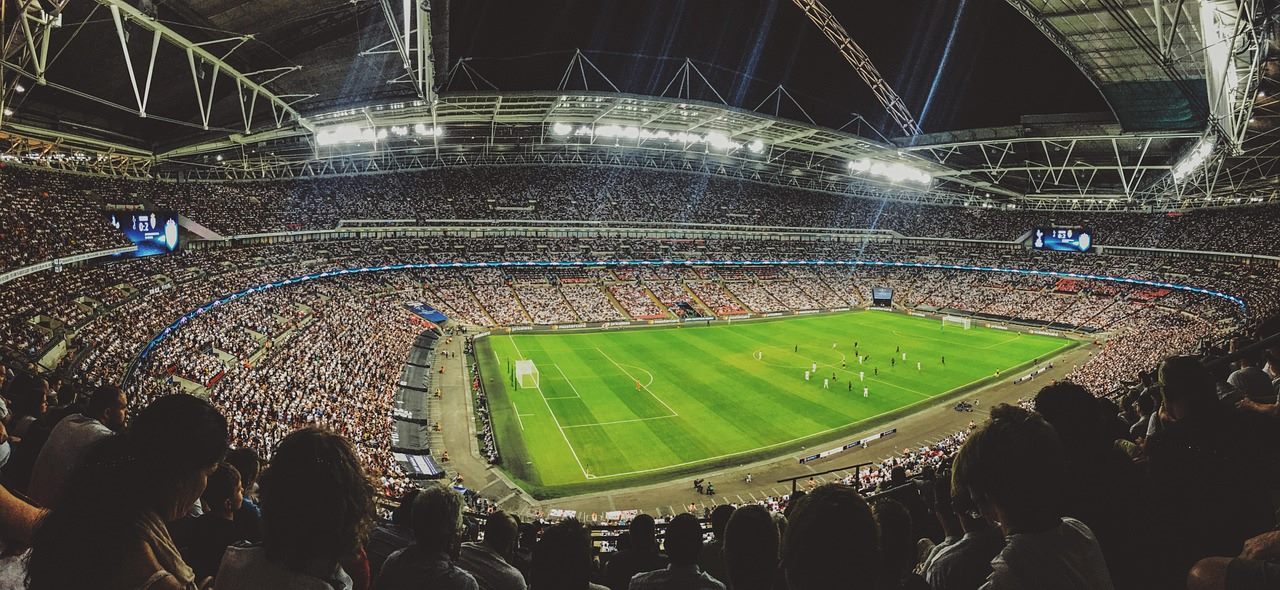
The comparison to stadiums shows how strange this has become. Tottenham's ground cost around £1.2 billion, one of the priciest ever, and most stadiums come in well under $2 billion. A fee at that level would mean a club values one player above the concrete, steel, and seats that house an entire matchday. That is not a normal sporting expense; it is a statement, the kind only a buyer chasing something beyond football would ever make.
What Could Happen
Neymar's mark finally falls, and fees push into the €300–500 million range as broadcast money and sovereign spending grow. But the tenfold leap to $2 billion proves a bridge too far within the window. Free agency keeps siphoning the biggest names away from record fees, and the number that resets football arrives — just later than 2036. The ceiling rises; it does not explode.
A once-in-a-generation teenager, a sovereign-backed club desperate for a global statement, a selling club that names a preposterous price, and a TV-rights boom all land in the same summer. The fee smashes past every prior mark straight to $2 billion, and the sport spends a year arguing about whether football has lost its mind. Improbable, but every piece already exists in isolation.
The Diarra fallout, spreading free agency, and salary-cap experiments push football toward the US model, where stars change teams with little or no fee and the money lives in contracts. The transfer record becomes a historical curiosity, and $2 billion never arrives because the thing being measured has ceased to matter. Fees don't rise — they vanish.
What Can We Do
A $2 billion price tag on a person says as much about money and power as it does about football. Whether you follow the sport for the joy or watch its finances with unease, there are sane ways to hold both.
Follow the money, not just the goals. Modern football is a story of sovereign funds, broadcast wars, and legal battles as much as tactics. Understanding who owns your club and where their money comes from makes you a sharper fan — and a harder one to fool when a record fee is spun as ambition.
Ask what runaway fees do to the game. Astronomical prices widen the gap between the few super-clubs and everyone else. Support the calls for stronger financial rules, redistribution, and protections for smaller clubs, so the sport does not become a two-team playground funded by national treasuries.
Watch the legal fights, because they decide everything. The Diarra ruling and its successors will shape whether fees soar or vanish. These courtroom battles are as consequential as any final. Pay attention to them, because the future of how players move — and what they cost — is being written by judges, not managers.
Keep the human in view. Behind every record number is a young person carrying the weight of a nation's ambition. Enjoy the spectacle of deadline day, but remember that the figure on the screen is attached to a life, not just a balance sheet. The sport is better when we do not forget that.
- Deloitte — Football Money League, 2025
- CIES Football Observatory — Transfer Fee Analysis, 2025
- Reuters — Diarra Ruling and FIFA Transfer Rules, 2024
- The Athletic — Saudi Pro League Spending Report, 2025
- Football Finance Observer — "The Frozen Record," 2025
- Forecast The World Research Desk — 800+ data sources