The Question
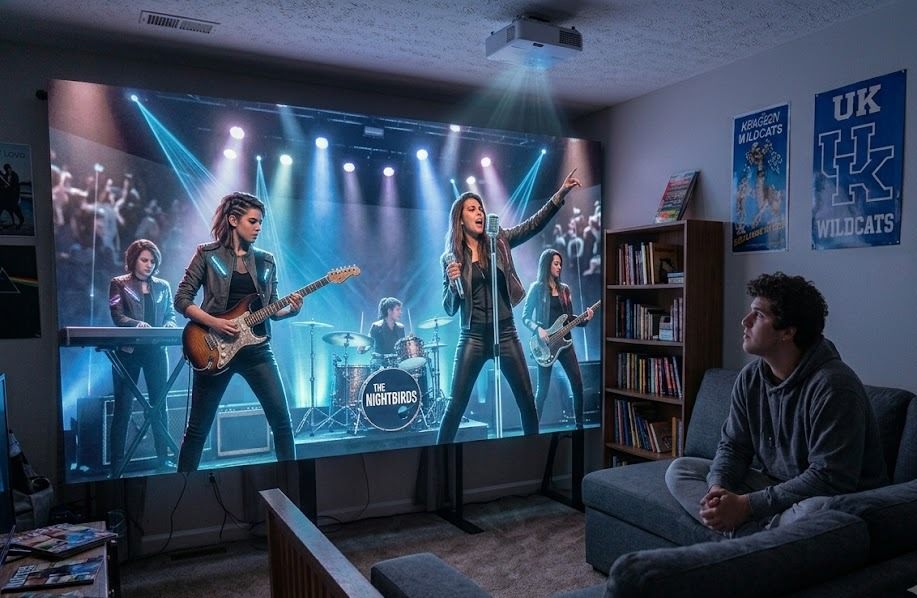
Picture a stadium show in 2032. The artist walks out to 60,000 screaming fans — and to a swarm of drones, rail-mounted cameras, and 8K rigs that outnumber the security staff. The setlist was chosen partly for how it cuts together. The lighting was programmed for lenses, not eyeballs. Because tonight's real audience is not the 60,000 in the seats. It is the six million watching in headsets, on phones, and on living-room screens — and they are paying.
The question is simple and slightly heretical: will the people who are actually in the building stop being the main event? Concerts spent a century as the one thing you had to attend in person. But the money is moving, fast, toward the version of the show that travels through a camera. We are forecasting whether, by 2032, a major tour's remote revenue — paid streams, concert films, virtual-venue performances — routinely exceeds what the physical ticket holders pay.
What the Evidence Shows
The proof of concept already happened, and it was enormous. In 2020, BTS's Bang Bang Con: The Live drew roughly 756,000 paying viewers in a single night — around $20 million from one performance, with no stadium rental, no 60-truck convoy, no capacity limit. Blackpink and the wider K-pop industry turned paid streaming into a standing business line rather than a pandemic stopgap. Then Taylor Swift showed the movie-theater version of the same trick: The Eras Tour concert film grossed more than $260 million worldwide, beating most Hollywood blockbusters that year — revenue from a show that had already sold every physical seat.
The virtual frontier is even bigger. Travis Scott's Astronomical event inside Fortnite drew over 12 million concurrent players; tens of millions more watched replays. Roblox has hosted concerts for artists from Lil Nas X to Twenty One Pilots. Coachella's YouTube livestream has become a global ritual watched by millions who will never touch desert sand. And Las Vegas built the Sphere — a $2.3 billion venue that is, functionally, a camera-ready content machine wrapped around a concert hall. U2's residency there generated more spectacular footage per night than most world tours produce in a year. Venues are now being engineered for capture first.
"A stadium ticket has a hard ceiling: the building holds what it holds. A stream ticket has no ceiling at all. Once an artist can sell the same night to one million remote viewers at fifteen dollars each, the economics of touring invert — the room becomes the studio, and the world becomes the venue."
— International Journal of Live Entertainment Economics — "The Capacity-Free Concert," 2025The counterargument is powerful too: live music's post-pandemic boom has been driven by in-person demand, with record tour grosses and fans paying four figures for floor seats. People crave the room. But look closely and the two trends are not in conflict — they are stratifying. In-person attendance is becoming the luxury tier, priced accordingly. The stream is becoming the mass tier. VR sits in between. The pyramid is being rebuilt, and the wide base is digital.
"The loudest applause of 2032 may come from an audience the artist will never see."
Why This Is Happening
Stream tickets have no capacity limit, and artists have noticed. A sold-out stadium caps revenue at roughly 60,000 tickets minus enormous costs — trucking, crew, insurance, the venue's cut. A paid stream of the same night adds revenue with almost no added cost, and it scales to whatever the fanbase is: one million viewers, five million, ten. For global acts whose fans are spread across 150 countries, most of the audience physically cannot attend anyway. The stream is not cannibalizing the tour; it is monetizing the 99 percent who were never coming.
The camera is already changing the show itself. Drone fleets, rail-cams gliding along the stage lip, and lighting rigs tuned for sensors rather than retinas are standard on top tours. Directors now sit in production trucks with input into setlists, pyro timing, and stage blocking — because the film and the stream are revenue events, not souvenirs. The Sphere made this explicit: a venue designed so every second of the show is broadcast-grade footage. When capture drives design, the livestream is no longer a byproduct. It is the product.
A generation raised on Fortnite thinks virtual attendance is attendance. Twelve million people stood inside Travis Scott's virtual concert and felt they were there — they talk about it the way older fans talk about festivals. For fans under 25, watching Coachella on YouTube with a group chat open is a social event, not a consolation prize. As headsets improve and virtual venues get richer, the middle tier — more immersive than a phone, far cheaper than a flight and a hotel — fills in fast.
What Could Happen
Top-20 global tours routinely bundle paid livestreams, theatrical films, and virtual-venue shows, and the combined remote take exceeds the physical gate. In-person tickets get scarcer and pricier — a luxury product marketed as such — while the stream becomes the default way most fans "attend." Stages, setlists, and lighting are openly designed camera-first.
Remote revenue grows into a massive standing business — every major tour has a stream — but scarcity pricing keeps the physical gate ahead. Artists protect the in-room mystique, releasing films months later and capping stream quality, because the $800 floor seat depends on the feeling that being there is categorically different.
A cultural counter-movement — no-phones shows, unstreamed residencies, "you had to be there" as marketing — pushes top artists away from cameras entirely. Streaming retreats to festivals and K-pop while rock and indie acts sell authenticity. This requires fans to keep paying scarcity prices while refusing cheaper access, which history suggests only a niche will do.
What Can We Do
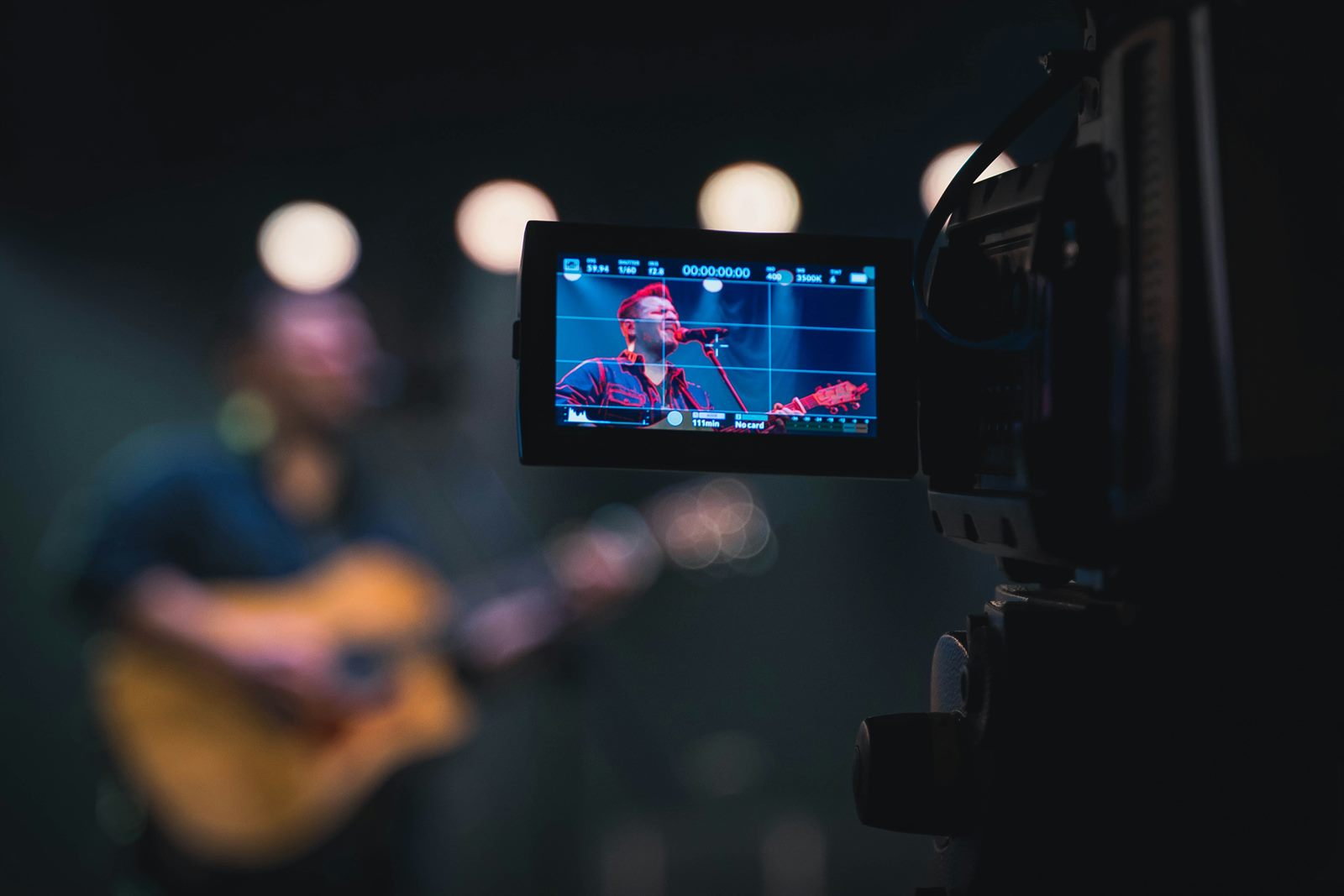
You do not have to pick a side in this — you have to learn to work the tiers. The fans who thrive in 2032 will treat in-person, VR, and stream as three different products with three different prices.
Budget for fewer, better nights in the room. If physical attendance is becoming the luxury tier, buy it like a luxury: pick the one or two shows a year that genuinely matter to you and go all in, rather than spreading money across six mid-tier nights. The irreplaceable thing — the crowd as the show — is exactly what you are paying for.
Try a paid stream before you dismiss it. A well-produced concert stream in 2026 already looks better than most nosebleed seats. Watch one with friends and a good sound system before deciding it does not count. The K-pop playbook — multi-angle feeds, live chat, exclusive backstage cuts — is coming to Western tours, and early adopters get the best of it cheap.
Read the ticket before you buy the capture. If you attend flagship shows, know that you may be scenery. Check whether the event is being filmed, whether your section is a camera lane, and what image rights you grant at the gate. A "filming night" of a residency can be a different experience from an ordinary one — sometimes better, sometimes a two-hour reshoot.
If you are an artist or promoter, build the stream into the deal now. Remote rights — stream, film, virtual venue — are where the growth is, and contracts written today decide who owns that money in 2032. Negotiate them like broadcast rights, because that is exactly what they are.
- Big Hit Entertainment / HYBE — Bang Bang Con: The Live Viewership Reports, 2020–2024
- AMC Theatres & Variety — Taylor Swift: The Eras Tour Box Office Analysis, 2024
- Epic Games — Fortnite Astronomical Event Concurrency Data, 2020
- International Journal of Live Entertainment Economics — "The Capacity-Free Concert," 2025
- Sphere Entertainment Co. — Venue Technology and Residency Disclosures, 2024–2026
- Forecast The World Research Desk — 800+ data sources