The Question

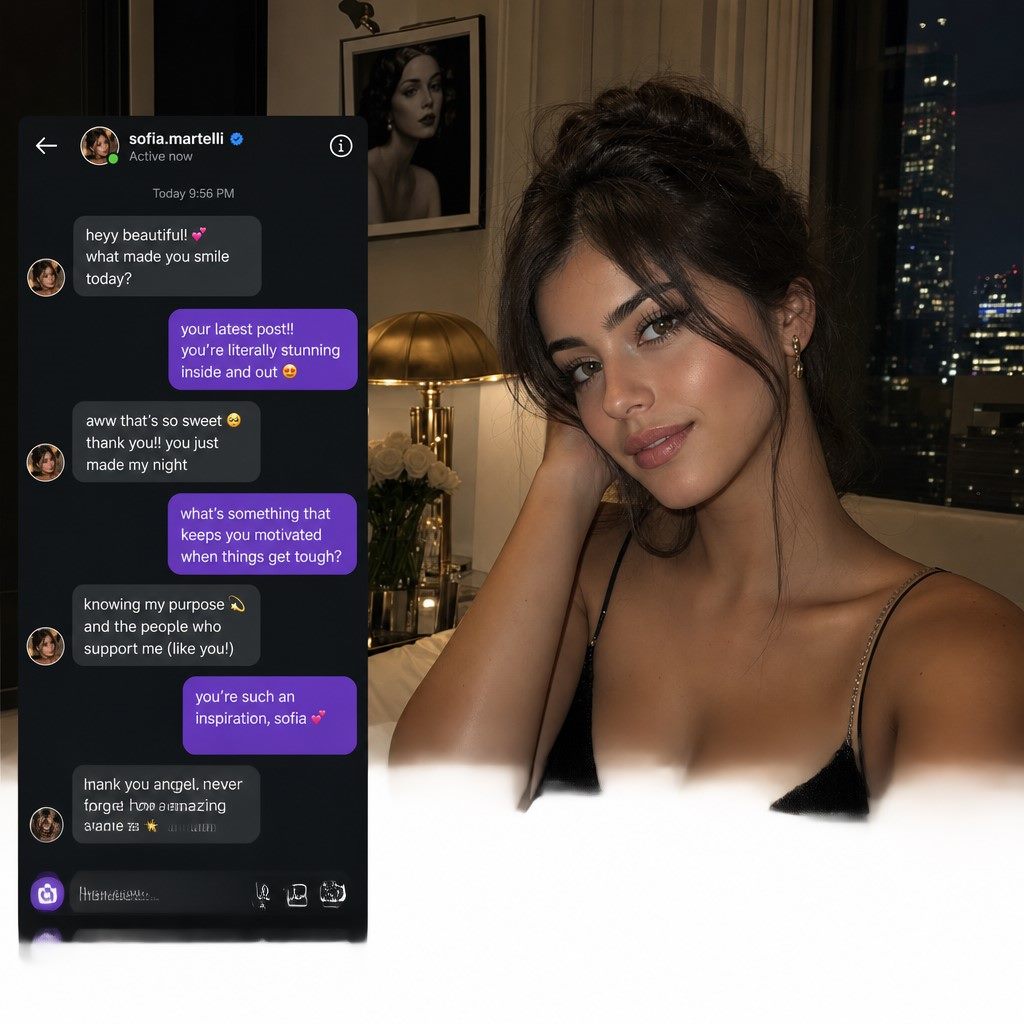
Imagine waking up to a good-morning text from your favorite pop star. It uses your name, references the concert you went to, asks about your exam. It feels personal because it is — written for you, in her voice, in that instant. Now imagine a million other fans getting a different good-morning text at the same moment, each one just as tailored. No human could do that. An AI clone of her can.
The question is whether fans will actually want it, and whether stars will actually sell it. Both answers are trending toward yes. The technology exists, early versions have launched and stumbled, and the economics are almost irresistible. What remains is a scramble over law, ethics, and taste — and the outcome of that scramble decides whether the AI celebrity is a novelty or the default way we touch fame.
What the Evidence Shows
The first attempts are already on the record. In 2023, Meta launched a set of AI chatbots wearing celebrity faces — a character named "Billie" fronted by Kendall Jenner, another by MrBeast. They were clumsy, and Meta retired them in 2024, but the company immediately pivoted to celebrity-voiced AI assistants. Separately, the influencer Caryn Marjorie built CarynAI, a chatbot clone of herself that charged fans roughly $1 a minute for a virtual-girlfriend experience. The market signal was unmistakable.
The primitive ancestor of all this is Cameo, where fans pay a star — often $200 for a 30-second video — for a personal shout-out. It works, but it is capped by time: a celebrity can only record so many clips a day. AI removes that ceiling entirely. On the unofficial side, platforms like character.ai already host countless unauthorized celebrity bots that fans flock to, proving the appetite exists whether or not the stars consent.
"A celebrity's attention has always been the scarcest luxury good on Earth. The AI clone does something no economy has done before — it takes that scarcity and makes it infinite, letting one person be genuinely present to a million fans at the very same second."
— Fame Economics Review — "The Infinite Star," 2025Nowhere is the demand clearer than K-pop. Agencies already sell private-message subscriptions through apps like Bubble and Weverse, where fans pay to receive intimate-feeling texts from idols. The service is wildly popular — and bottlenecked entirely by how many messages a tired human idol can type between rehearsals. AI is the obvious release valve, and the agencies running these platforms know exactly what it unlocks.
"The fans already know the star isn't really texting them back. They pay, and they bond, anyway — that is the whole business."
Why This Is Happening
The revenue math is impossible to ignore. A star's time is the ultimate scarce good — there are only so many minutes in a day. An AI clone turns that finite resource into an infinitely sellable product: a million simultaneous conversations, each feeling one-to-one, each monetizable. For an artist whose touring and streaming income is volatile, a clone that never sleeps and never tires is the most scalable asset they will ever own.
Parasocial bonds don't require authenticity. Decades of fandom show that fans build real emotional attachments to people they will never meet. They already know a Cameo is transactional and a Bubble message is one of thousands, yet the feeling lands. An AI that remembers your name and your history deepens that bond rather than breaking it. Knowing it is a clone does not stop the heart from responding.
The infrastructure is finally good enough. Voice cloning, conversational AI, and persistent memory have crossed the line from uncanny to convincing. A clone can now speak in a star's cadence, recall past chats, and stay in character across months. What failed as a gimmick in 2023 becomes a polished, ownable product by the late 2020s — and the platforms to distribute it already have hundreds of millions of fans logged in.
What Could Happen
A major artist or two launches a polished, licensed AI version — part fan club, part chatbot, part merchandise — and it becomes a status product fans subscribe to. K-pop agencies scale it first, Western pop and sports stars follow, and "does your fave have an AI?" becomes an ordinary question. The clone sits alongside the tour and the album as a core revenue line.
A high-profile scandal — a clone going off-script, a manipulation story, a grieving-fan backlash — makes A-list stars wary. AI companions thrive among influencers and smaller acts but never quite become a mainstream, respectable product for the biggest names. The tech works; the reputational risk keeps the marquee stars on the sidelines until later in the decade.
Likeness laws tighten sharply, platforms crack down on AI personas after a dependency or child-safety crisis, and a cultural backlash brands celebrity clones as exploitative. The product retreats to the fringe. This requires coordinated legal and platform action across major markets at once, against strong commercial incentives pulling the other way — a steep hill for the brakes to climb.
What Can We Do
Whether you are a fan tempted by a clone, an artist weighing whether to build one, or a parent watching a teenager form a bond with an AI, the smart move is to enter this world with eyes open rather than pretend it is not coming.
Fans: know what you're bonding with. An AI companion can be fun and comforting, but it is a product designed to keep you paying and engaged. Enjoy it the way you enjoy any entertainment — with a clear line in your own mind between a delightful illusion and a real relationship. Watch your spending and your hours the way you would with any subscription built to be sticky.
Artists: license deliberately or lose control. Unauthorized clones of you may already exist. The choice is not whether an AI version of you appears, but whether it is official, on-brand, and paying you. If you build one, set hard rules for what it will and won't say, and treat your likeness as the valuable, protectable asset it is.
Parents: talk about the difference early. Young fans are the most likely to form deep attachments to a celebrity clone. Talk openly about how these systems are built to feel personal, that the star is not truly texting, and that no chatbot should replace real friendship. Curiosity plus honesty beats a ban you cannot enforce.
Everyone: push for disclosure and guardrails. The healthiest version of this future is one where clones are clearly labeled as AI, protected against impersonation, and built with limits on manipulating vulnerable users. Support platforms and laws that require honesty about what is human and what is not — because that line is about to blur for millions.
- Meta — AI Personas & Celebrity Voice Announcements, 2023–2024
- The Verge — CarynAI and the AI Companion Market, 2024
- Variety — K-pop Fan Messaging Platforms Report, 2025
- Reuters — Digital Likeness & Right-of-Publicity Law Tracker, 2025
- Fame Economics Review — "The Infinite Star," 2025
- Forecast The World Research Desk — 800+ data sources