The Question
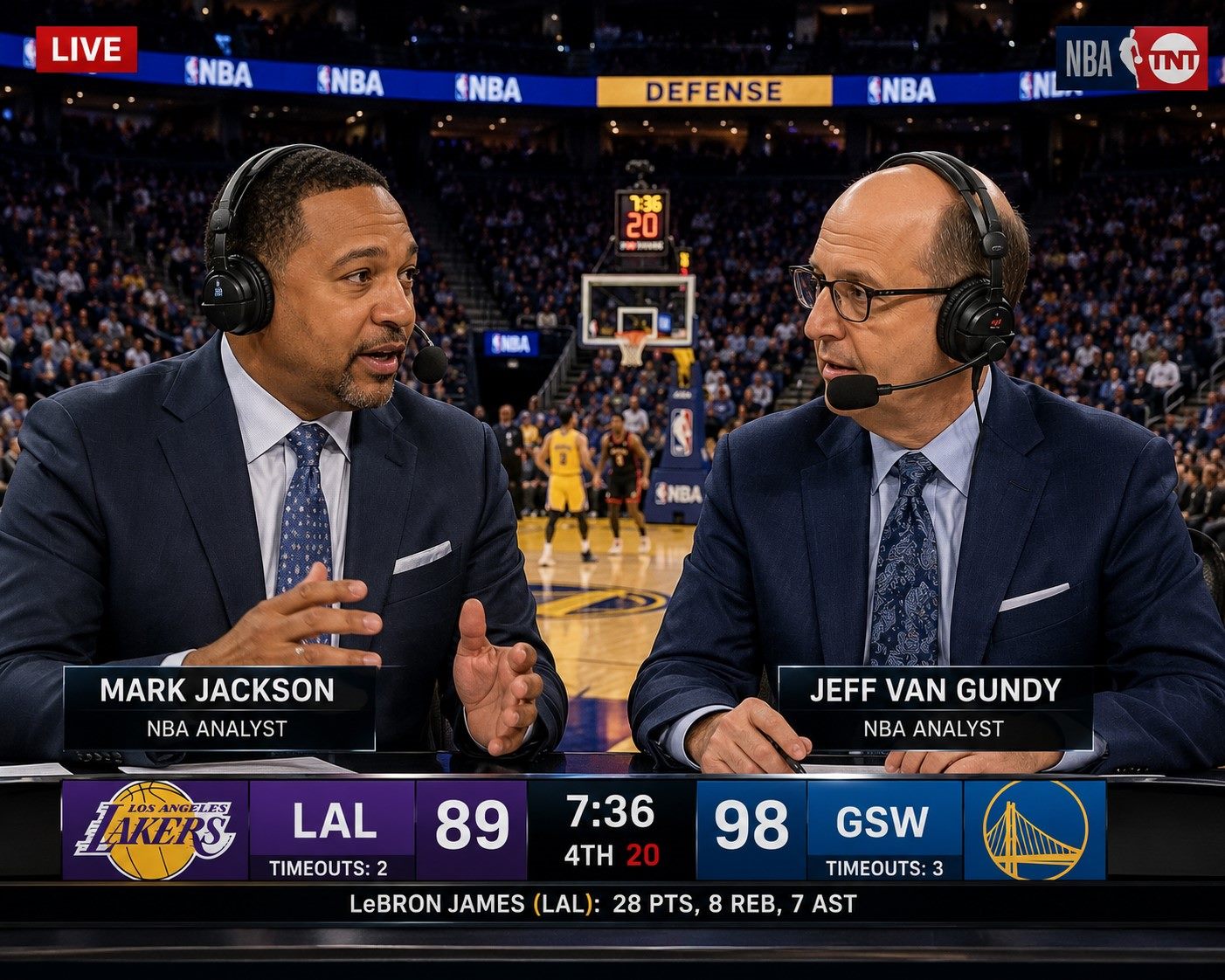
For a century, the commentator was a fixed feature of the broadcast, like the scoreline. One crew, one language, one tone, beamed to millions who had no say in it. You took the voice you were given. If your language was small or your taste unusual, tough luck — the economics of hiring a human crew for every audience simply did not work.
Artificial intelligence dissolves that constraint. A machine can generate live, fluent commentary in dozens of languages and any style you like, for a fraction of the cost of one human. So the question is no longer whether personalized commentary is possible — the pieces exist today. It is whether it becomes the default menu on your screen by 2031, the way alternate audio tracks became standard on films. The signals say yes.
What the Evidence Shows
The building blocks are already deployed at the biggest events. IBM's Watson has generated AI-narrated highlights and commentary at Wimbledon and the Masters, describing shots and building drama automatically. Amazon offers alternate feeds on its football coverage. And ElevenLabs and its rivals can now clone a voice from seconds of audio and speak new sentences in real time, in language after language, indistinguishable from a person.
Audiences have already proven they want alternatives to the single official feed. The Manning brothers' ManningCast — Peyton and Eli riffing over Monday Night Football — became a phenomenon precisely because it was a different flavor of the same game. Fans do not want one broadcast; they want their broadcast. AI turns that appetite from a handful of celebrity side-channels into an infinite menu available to everyone at once.
"The single national broadcast was never a preference. It was a limitation of cost. Remove the cost of producing a hundred versions of the same match, and the single version has no reason to survive."
— Broadcast Futures Review — "The End of the One Feed," 2025Then there is the long tail no human crew will ever serve. A mid-table Premier League match called live in Swahili, Vietnamese, or Tagalog is commercially impossible with people — the audience is too small to fund a booth. For an AI, it is a menu setting. Add accessibility: rich audio description for blind fans, generated automatically. Suddenly markets and audiences that broadcasting always ignored get a first-class, native-language call of every game.
"Soon the question will not be who is calling the game — but which of them is calling it for you."
Why This Is Happening
The languages that human crews can never justify. Broadcasting has always served big audiences and abandoned small ones. There is no business case for a live human crew calling a game in a language spoken by a few million distant fans. AI erases that math entirely. The marginal cost of one more language track is close to zero, so the natural endpoint is every match, every language, all the time.
Fans want a style, not just a score. Some want deep statistics, some want comedy, some want a kid-friendly call for the family, and some would pay to hear a legendary voice — linking directly to the emerging economy of licensed and even resurrected star announcers. AI can offer all of these from the same live feed, letting each viewer dial the tone to taste. Personalization is the entire logic of modern media, and sport is the last big holdout.
Accessibility becomes automatic, not an afterthought. Detailed audio description for blind and partially sighted fans has always required extra human labor, so it was rare. An AI that already narrates the action can generate it for free, on every broadcast. Regulators and advocates will push hard for this, and once it is a switch rather than a budget line, there is little reason not to flip it on.
What Could Happen
Major rights-holders roll out language and style menus alongside the official human feed. You open the app and choose: English or Yoruba, stats-heavy or comedy, calm or hyped, a licensed legend or a neutral narrator. The default human broadcast remains for the marquee events, but the personalized layer becomes as ordinary as picking subtitles, and the small-language and accessibility feeds run entirely on AI.
Big finals and derbies keep beloved human commentary teams because the shared national moment is worth protecting, and iconic calls still sell. AI takes over the languages, minor fixtures, accessibility feeds, and personalized side-channels. Broadcasting splits into a prestige human tier and a vast, cheap, customizable machine tier underneath it.
Announcer unions win protections restricting AI voices, high-profile deepfake scandals sour audiences on synthetic commentary, and rights-holders move cautiously to avoid controversy. Personalized AI stays a niche experiment rather than a default option. This requires organized labor and public backlash to outrun both the cost savings and the accessibility upside — a steep ask against strong commercial winds.
What Can We Do
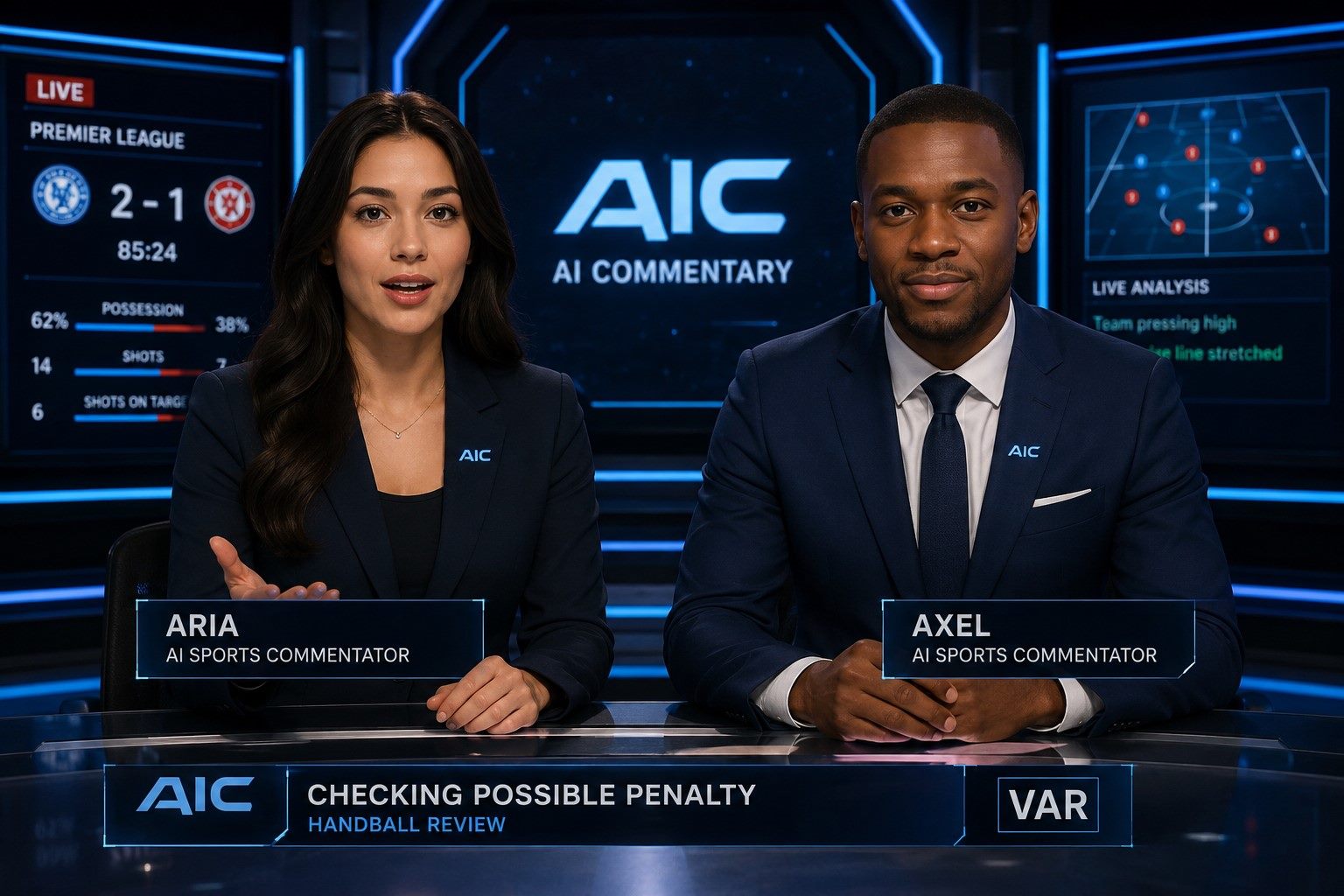
A world of infinite commentary is mostly a gift — but only if we steer it. Whether you are a fan, a broadcaster, or a working commentator, the choices made in the next few years decide whether we gain variety without losing the voices that made us love sport.
Try the alternatives, then keep what you love. When your broadcaster offers a style menu, experiment — a comedy feed, your grandmother's language, a stats mode for a tactical match. But protect the human calls that give a sport its soul. Demand keeps them alive, and demand is a choice you make with every click.
Insist on consent for cloned voices. Licensing a legendary or living announcer's voice must be agreed and paid for, never faked. Reward broadcasters who are transparent about which voices are real, which are AI, and which are licensed, and reject synthetic commentary that impersonates people without permission.
Champion accessibility feeds. The same technology that personalizes your match can give a blind fan a rich, live description of every game for the first time. Push rights-holders and regulators to make AI audio description standard, not a niche add-on. This is the clearest social good in the whole shift.
Support the human craft that AI cannot copy. The unrepeatable roar of a great commentator in a historic moment is still worth paying for. If you work in the industry, lean into what machines lack — memory, emotion, relationships, and the courage to fall silent when the picture says everything.
- IBM — Watson AI Commentary at Wimbledon, 2024
- Amazon — Alternate Feed & Prime Vision Overview, 2025
- ElevenLabs — Real-Time Voice Synthesis Documentation, 2025
- ESPN — ManningCast Ratings Analysis, 2024
- Broadcast Futures Review — "The End of the One Feed," 2025
- Forecast The World Research Desk — 800+ data sources