The Question

Picture an opening weekend a few years from now. A film debuts at number one worldwide. Critics argue about it, fans line up for it, the trailer racks up a hundred million views. And here is the twist: most of what fills the screen was never filmed. No camera, no set, no crew on location. The images were generated by a machine from text prompts — and a large share of the audience has no idea.
The question is not whether AI can make convincing moving pictures. By 2026 it clearly can, in bursts. The question is whether someone stitches those bursts into a full film good enough, and marketed hard enough, to actually top the chart — and how the industry and audience react when they realize the biggest movie of the week was mostly typed, not shot.
What the Evidence Shows
The pace of the tools is the headline. Between 2024 and 2026, OpenAI's Sora, Google's Veo, and Runway went from producing wobbly, dreamlike clips to generating footage that can pass for real at a glance. Each release closed the gap on length, consistency, and control. What looked like a party trick in early 2024 looked like a production tool by 2026 — and the curve is still bending upward, fast.
Studios are already using AI, quietly, inside films you have seen. The 2024 drama "Here" used AI to de-age its stars across decades. Companies like Flawless use AI to fix lip-sync for dubbing so a film plays seamlessly in any language. Backgrounds, previsualization, and crowd shots increasingly lean on generative tools. And in 2025, Netflix aired what it described as its first AI-generated final footage, using the technique for a visual-effects sequence in the series "El Eternauta."
"The first mostly-AI blockbuster will not announce itself with a manifesto. It will slip into a Friday release slot, look expensive, cost almost nothing, and win the weekend — and the argument about what a movie even is will start on Monday morning."
— Screen Futures Institute — "The $20 Million Blockbuster," 2025The controversies show how close and how fraught this is. "The Brutalist" drew fire in 2025 for using AI to refine an actor's accent — a small touch that sparked a large fight. Each of these moments proves the tools are already in the pipeline of prestige film, not just cheap content. The technical barrier is falling; what remains is a battle over disclosure, credit, and consent.
"What happens to Hollywood when a $200-million look can be conjured for $20 million — by a studio that never asked Hollywood's permission?"
Why This Is Happening
The cost revolution is simply too tempting. A tentpole blockbuster can cost $200 million or more, most of it in effects, sets, and location shoots. Generative video collapses that budget toward a fraction. A team that can produce a spectacle-scale look for $20 million holds an advantage no traditional studio can match. In an industry obsessed with return on investment, that math will find someone willing to gamble on it.
The disruptor may come from outside Hollywood. The first mostly-AI hit need not be American or live-action. Animation and anime hide the "tell" of AI most easily, and a fast-moving studio in China or India — outside the reach of Hollywood's unions and norms — could ship a fully AI-driven feature years before Los Angeles dares. The rules that slow the incumbents do not bind the newcomers.
Audiences have shown they mostly don't mind. When AI-generated music flooded streaming, listeners largely shrugged and kept playing what sounded good. Viewers already accept CGI, de-aging, and digital doubles without protest. If a film is entertaining, most of the paying public cares far more about the story than the method — a pattern that gives an AI blockbuster a very real shot at winning them over.
What Could Happen
An animated or genre feature, likely from a nimble studio outside the traditional system, is built mostly from generative footage, marketed like any blockbuster, and tops a weekly worldwide chart. The debut is framed as a milestone by supporters and a threat by critics. By 2032, "how much of it was AI?" becomes a standard question asked of every big release.
Generative tools become standard for effects, backgrounds, and dubbing, but full films remain human-led hybrids. Chart-toppers use AI heavily without being "majority AI-generated," so the specific milestone slips past 2032 even as the technology quietly reshapes every production. The revolution happens inside the pipeline rather than on the marquee.
SAG-AFTRA and IATSE win strong protections, mandatory disclosure laws let audiences avoid AI films, an Academy stance excludes them, and a consumer boycott bites. The first mostly-AI hit is delayed well beyond 2032. This requires resistance to hold across every major market and platform at once, against a powerful cost incentive — a tall order given how fast the tools are spreading.
What Can We Do
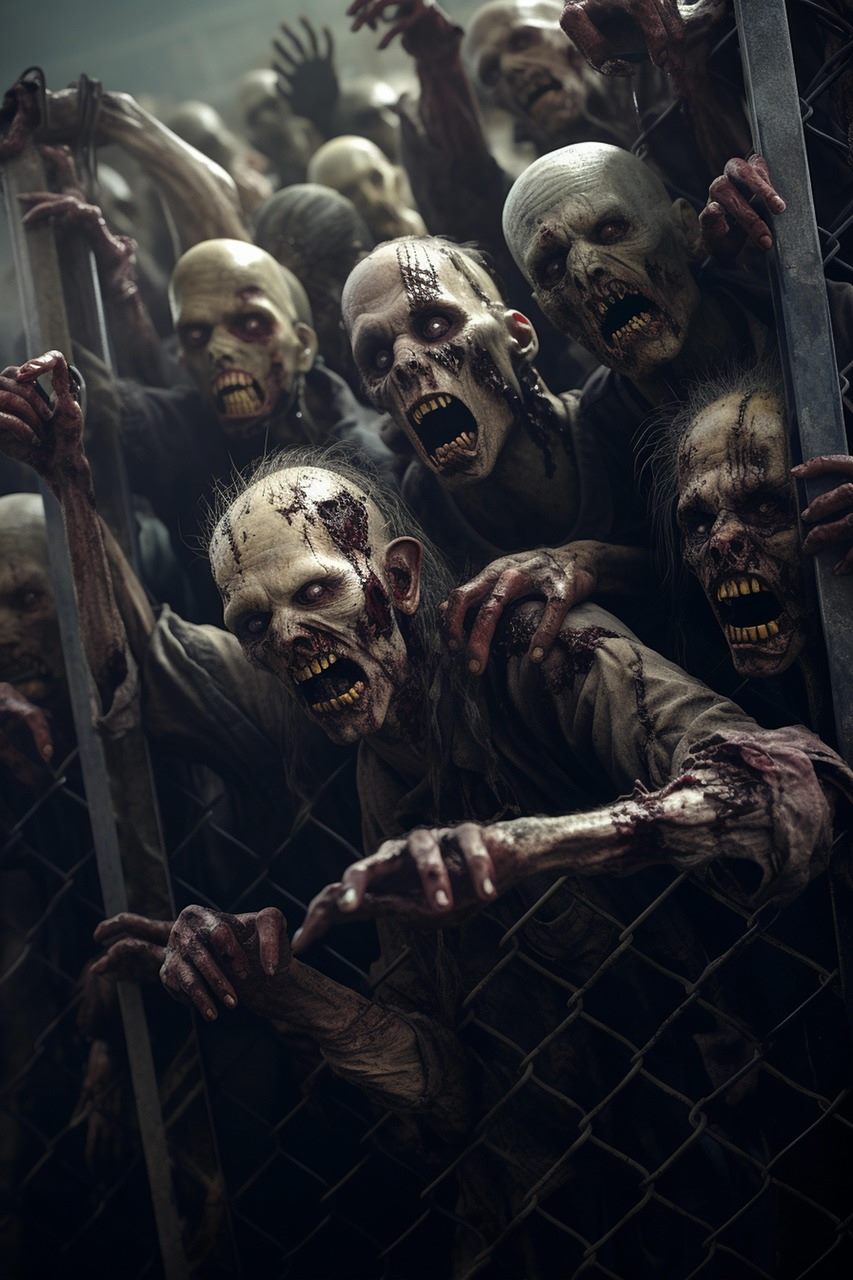
An AI-made hit will divide people fiercely — as an exciting democratization of filmmaking or as a threat to thousands of livelihoods. Wherever you land, there are practical ways to meet the moment instead of being blindsided by it.
Ask how it was made, and value that it's answered. The healthiest future is one where films are honest about their use of AI. Support disclosure, read the credits, and reward productions that are transparent. You do not have to boycott AI to insist on knowing what you are watching — and that knowledge keeps the whole industry accountable.
Creators: learn the tools before they learn to replace you. The filmmakers who thrive will be those who direct AI rather than compete with it. Storytelling, taste, and vision become more valuable, not less, when anyone can generate footage. Treat Sora, Veo, and Runway as a new kind of camera to master, not a wave to be swept under.
Workers: fight for the terms, not just against the tech. The stakes for artists, crew, and performers are real. Back unions and contracts that guarantee consent for digital likeness, fair credit, and a share of the savings. The goal is not to stop the technology but to make sure the people who built the craft are not simply erased by it.
Keep supporting human-made cinema you love. Markets follow money. If audiences keep turning out for films made by people, that work keeps getting funded alongside the AI experiments. Your ticket is a vote — so cast it deliberately, for the kind of movies and the kind of filmmaking you actually want to survive the 2030s.
- OpenAI / Google DeepMind / Runway — Text-to-Video Model Releases, 2024–2026
- Netflix — Generative VFX Production Statements, 2025
- Variety — Hollywood AI Usage & Controversy Coverage, 2025
- SAG-AFTRA / IATSE — AI Provisions in Industry Agreements, 2025
- Screen Futures Institute — "The $20 Million Blockbuster," 2025
- Forecast The World Research Desk — 800+ data sources