The Question
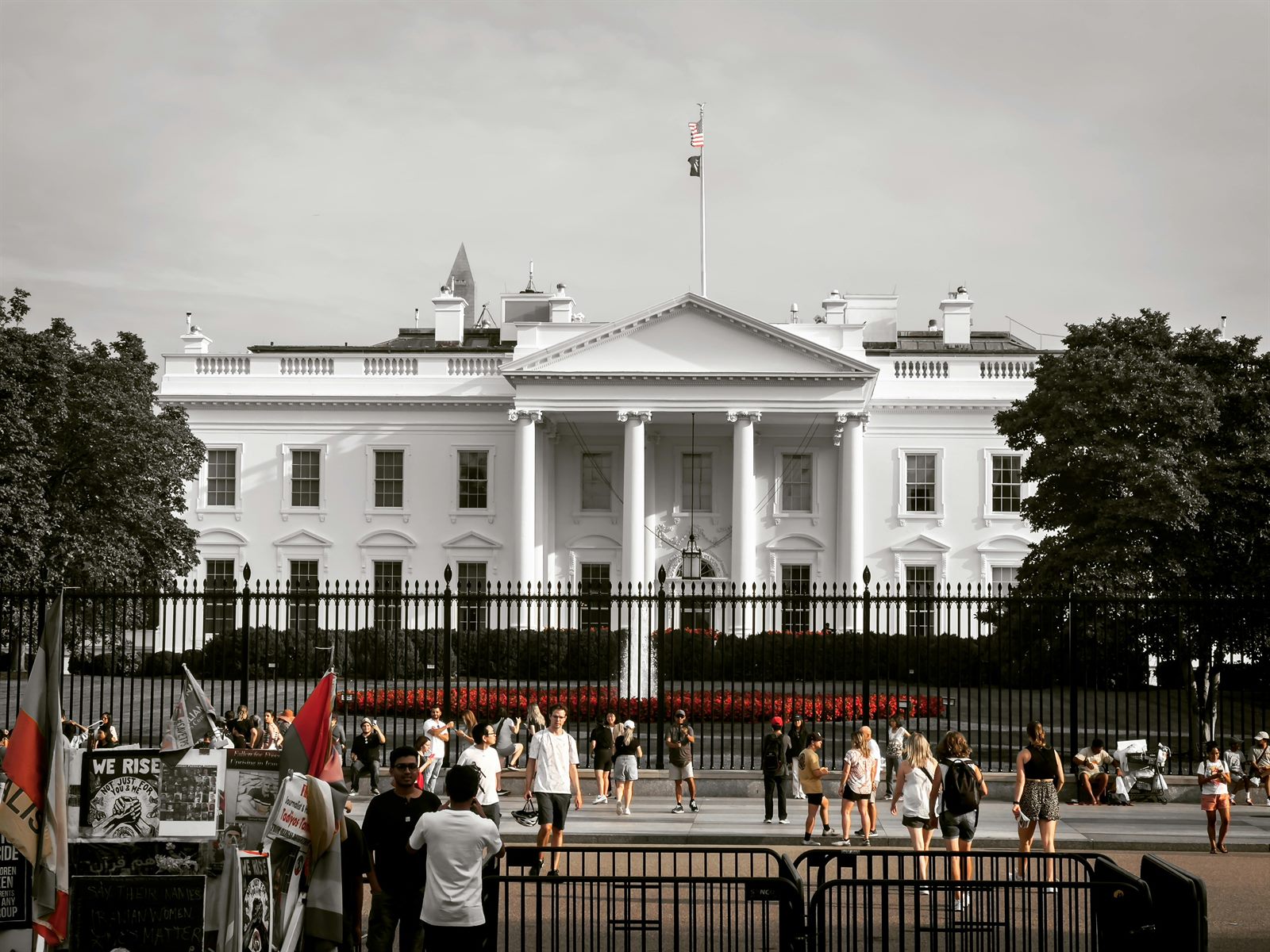
There was a time — roughly from the end of World War Two to the early 1970s — when trust in institutions was so high it barely needed to be discussed. Most people in wealthy democracies trusted their governments to tell the truth, their banks to be solvent, their newspapers to be accurate, and their scientists to know what they were talking about. That era is over. The question is whether it can return — or whether something broke that cannot be fixed.
This matters for reasons that go beyond political science. Institutions are the invisible infrastructure of modern life. They are the reason you can board a plane without checking whether the pilot is certified, eat food without testing it for toxins, and trust that the money in your bank account will still be there tomorrow. When trust in institutions collapses — really collapses, not just polling-number collapses — democracies become ungovernable and economies seize up. We are not there yet. But the trajectory is pointing in that direction.
What the Evidence Shows
The Edelman Trust Barometer, which has surveyed trust in institutions across dozens of countries since 2001, recorded its lowest-ever global average in 2024. In the United States, Gallup's long-running confidence survey found that trust in Congress stood at 8% — a figure that would have seemed like a satirical exaggeration in 1970. Trust in newspapers, television news, and the criminal justice system has roughly halved since the early 1990s. The pattern repeats across Europe, Australia, and Canada with only minor variations.
"We are living through a trust recession — and unlike an economic recession, there is no central bank that can inject confidence into the system."
Edelman Trust Barometer — Global Report, 2024What's striking is the breadth of institutions affected. It is not simply that governments are distrusted — that has always fluctuated. It is that science, medicine, academia, journalism, courts, and religious organisations have all declined simultaneously. The 2008 financial crisis shattered trust in banks and regulators. The Iraq War eroded trust in intelligence agencies and political leadership. COVID-19 produced a trust whipsaw — a brief surge in confidence in public health institutions, followed by a collapse as pandemic policies became politically contested. Each event leaves the baseline a little lower than before.
"The problem isn't that institutions keep failing — it's that we now have the tools to watch them fail in real time, forever."
Why This Is Happening
Social media has industrialised institutional failure. Every genuine mistake an institution makes now reaches millions of people within hours, stripped of context, amplified by algorithm, and interpreted through partisan lenses. This is not imagined — it is a structural feature of how information now spreads. Institutions have always made mistakes. The difference is that those mistakes are now permanent, searchable, and sharable. The asymmetry between how fast trust is lost and how slowly it is rebuilt has become extreme.
AI-generated misinformation has poisoned the epistemic well. The ability to fabricate convincing video, audio, and text at industrial scale has created a new problem: not just that false things are believed, but that true things are doubted. When every video of a politician saying something embarrassing could be AI-generated, the rational response is to trust nothing — which is exactly what bad actors want. By 2026, distinguishing real institutional communications from sophisticated fakes has become a genuine cognitive challenge for ordinary people.
The track record justifies some of the scepticism. This is the part of the trust crisis that is hardest to address. The 2008 financial crisis was real. The weapons of mass destruction were not. The Catholic Church's abuse scandal was systematic and covered up. The opioid crisis was fuelled by pharmaceutical companies with regulatory complicity. Distrust of institutions is not purely irrational — it is, in part, a rational response to genuine institutional failure at scale.
What Could Happen
By 2034, institutional trust remains at or near current lows but does not collapse further. Democracies adapt by becoming messier and more fractious — polarisation is high, consensus is rare, but the basic functions of government continue. Trust moves from formal institutions to informal networks: local governments, community organisations, trusted individuals. Society works, but with constant friction and at higher cost. This is already the lived experience in much of the US and UK.
A combination of genuine institutional reform — serious accountability for institutional failures, major investment in public media literacy, AI regulation that reduces misinformation at scale — produces a measurable but partial recovery in trust by 2034. This requires political will that is currently absent in most democracies. Historical precedent suggests it is possible: trust in US government recovered significantly after Watergate, and trust in UK institutions rose after the Major-to-Blair transition. The window exists; the will does not yet.
A major institutional failure — a severe financial crisis mishandled by regulators, an election widely perceived as fraudulent, a pandemic response catastrophically at odds with subsequent evidence — pushes trust below the threshold at which institutions can function effectively. Vaccine refusal generalises to other public health measures. Tax compliance declines. Elections produce results that large portions of the population refuse to accept as legitimate. This scenario is not inevitable but is being actively enabled by the current trajectory.
What Can We Do
Trust is rebuilt in specific places by specific actions — not by communications strategies or PR campaigns. Here is what actually works.
Institutions need to be visibly accountable for failures, not just successes. The single most powerful predictor of trust recovery after an institutional failure is not the failure itself — it is whether anyone was held responsible. Accountability is the mechanism through which trust is rebuilt. Institutions that escape accountability for their worst decisions destroy trust durably.
Local and community institutions remain far more trusted than national ones. This is consistent across every country measured. If you are looking for institutions worth investing in — with your time, your money, or your civic energy — local government, community organisations, and local journalism are the places where trust is still functioning and where individual contributions still make a visible difference.
Media literacy education needs to start earlier and focus on structural thinking, not just fact-checking. Teaching people to identify specific false claims is less valuable than teaching them to ask "who benefits from me believing this?" and "what incentives does this source have?" Those questions work regardless of how sophisticated the fake becomes.
Transparency is not the same as trust, but it is a precondition for it. Institutions that release their data, publish their reasoning, and allow independent audit of their decisions create the conditions in which trust can grow. Opacity, even when well-intentioned, is fatal to institutional credibility in an age when people assume they are being deceived.
- Edelman — Trust Barometer Global Report, 2024
- Gallup — Confidence in Institutions Survey, 2023–2025
- Pew Research Center — Public Trust in Government, 1958–2024
- Reuters Institute — Digital News Report, 2024
- OECD — Government at a Glance: Trust in Public Institutions, 2023
- Forecast The World Research Desk — 800+ data sources