The Question
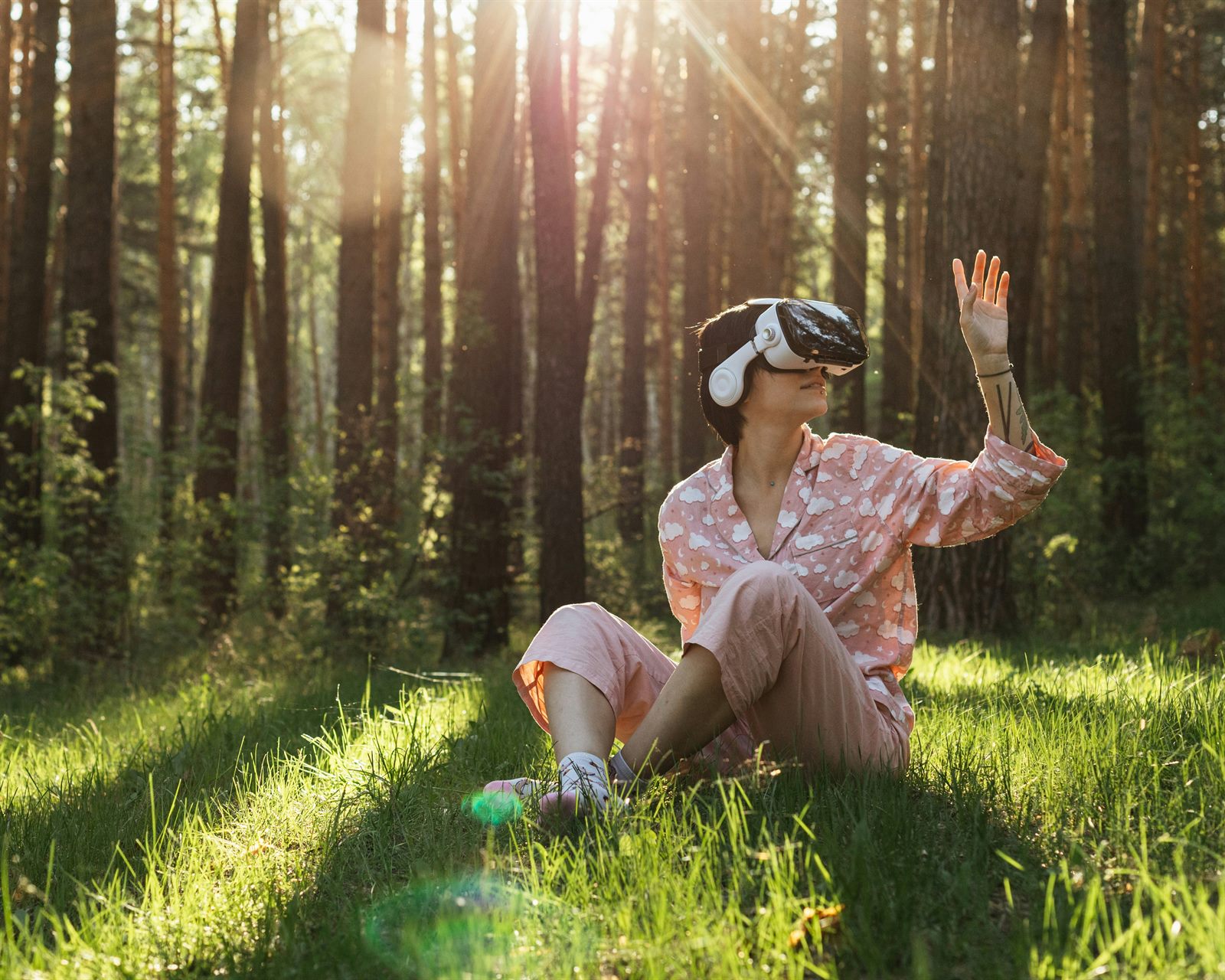
Put on a modern VR headset and stand at the rim of the Grand Canyon. The scale is right. The colour of the rock is right. Turn your head and the view follows, smoothly and immediately, with no visible lag. Your brain, which evolved to treat visual panoramas as reality, is being genuinely fooled. Now ask yourself: could that experience, at some point in the next decade, substitute for actually booking a flight and going there?
That is the question we are examining — and it is not as absurd as it sounds. The global travel industry runs on the gap between where people are and where they want to be. VR is narrowing that gap faster than the industry is comfortable admitting. But desire for physical travel is ancient and deep, wired into how humans form memories, connect with each other, and understand the world. The outcome of this collision will define what leisure looks like in the 2030s.
What the Evidence Shows
The VR hardware trajectory is striking. The first commercial VR headsets in the mid-2010s were heavy, required a tethered gaming PC, and cost over $800. By 2024, standalone headsets — no PC required, no cables — were available for under $300 and delivered resolution that passes the basic screen-door test (the point at which individual pixels are no longer individually visible). The next generation, arriving through the late 2020s, is expected to match human visual acuity within the central field of view. Meanwhile, 360-degree video of destinations is being shot at 8K resolution, spatial audio is now standard, and haptic feedback — gloves or vests that let you feel a gentle breeze or the texture of a surface — is moving out of labs and into consumer products.
The demand signal exists in niche populations today. Elderly and disabled people who cannot travel physically are already using VR destination experiences therapeutically — studies show meaningful reductions in anxiety and measurable boosts to wellbeing. Budget travellers who want to preview destinations before committing to a flight are using VR as a scouting tool. A growing number of environmentally motivated travellers, acutely conscious of aviation's carbon footprint (a single long-haul flight can emit more CO2 per passenger than months of everyday life), are at least open to virtual alternatives for trips they consider lower priority.
"Virtual reality tourism is not trying to replicate the sensory totality of travel — it is trying to deliver the core emotional payload: wonder, discovery, and the feeling of being somewhere extraordinary."
— World Tourism Organization — "Digital Futures in Tourism" Report, 2024Airlines and hotel chains, for their part, are watching carefully. Several major hotel groups have invested in VR preview experiences for their properties. At least two airlines have tested VR destination content in premium cabins. The industry's posture is "complement, not compete" — but the investments reveal anxiety about what happens if the technology improves faster than predicted.
"No one who has stood at the edge of the Amalfi Coast and smelled salt air has ever confused it with a headset — but that gap is closing faster than the travel industry wants to admit."
Why This Is Happening
The cost barrier is collapsing. A decent international flight plus accommodation can cost $2,000–5,000 per person. A VR headset capable of delivering immersive destination experiences costs under $400 and is a one-time purchase. As content libraries expand and quality improves, the economic calculus will become genuinely compelling for budget-constrained travellers choosing between "real Bali" next year and "virtual Bali" this weekend.
Environmental pressure is real and growing. Aviation accounts for roughly 2.5% of global CO2 emissions — but when non-CO2 warming effects are included, its total climate impact is roughly three times higher. Among younger travellers particularly, climate guilt around flying is a documented and growing phenomenon. Some will act on it by flying less. Virtual travel gives them somewhere to redirect that desire.
But the human case for real travel is formidable. Travel research consistently shows that the wellbeing benefits of travel are tied to novelty, sensory richness, social connection, and the disruption of routine — not just visual beauty. Eating food in a foreign country, getting lost in an unfamiliar city, forming a friendship with a stranger on a train: these things do not translate to VR, at least not yet. The neuroscience of memory also suggests that physically being somewhere — with all its discomfort, unpredictability, and sensory overload — encodes experience more durably than curated immersive media.
What Could Happen
By 2034, VR travel experiences are widely used as a preview tool, a scouting mechanism, and a way to "visit" places that are too expensive, too physically demanding, or too carbon-intensive for regular trips. Virtual travel expands the total market for travel rather than replacing it — people who experience Kyoto in VR are more likely to save up for the real trip. A meaningful minority of elderly or mobility-limited people genuinely substitute VR for trips they could not take anyway. Real substitution among healthy, solvent travellers remains limited. The 15% substitution threshold is not crossed.
VR hardware quality crosses a threshold in the late 2020s that makes destination experiences genuinely compelling — not identical to real travel, but emotionally satisfying enough for specific use cases. Budget travellers use virtual trips as substitutes for lower-priority destinations. Climate-motivated travellers deliberately swap two or three flights a year for virtual alternatives. Elderly and disabled people constitute a substantial VR travel audience. By 2034, the 15% substitution rate is reached — not by converting dedicated travellers, but by winning the marginal trips that were barely making it onto the itinerary anyway.
The preview effect dominates entirely. VR destination experiences are so good at conveying a place's beauty and atmosphere — and so obviously incomplete in replicating the full sensory experience — that they function purely as advertising. Every virtual trip spawns a real one. Travel volumes increase, not decrease. Virtual travel becomes the most effective marketing channel the tourism industry has ever had, and the idea of substitution looks silly in retrospect. This outcome requires the hardware to be good enough to inspire but not good enough to satisfy — a narrow band that may not hold as technology improves.
What Can We Do

Whether or not virtual travel replaces real travel, the choices being made now — by individuals, travel companies, and policymakers — will shape which future arrives.
If you care about climate, audit your flights honestly. Long-haul flights are where aviation's carbon footprint is concentrated. A transatlantic return flight emits roughly 1.5–2 tonnes of CO2 per passenger — comparable to several months of average driving. Deciding which trips are worth that cost is a genuine ethical calculation, not a lifestyle performance.
Try a VR destination experience before dismissing it. The gap between what people expect VR to feel like (based on headsets from five years ago) and what current hardware actually delivers is enormous. Testing it changes the conversation.
Travel companies should invest in virtual previews as conversion tools. The evidence strongly suggests that high-quality VR previews increase, not decrease, real booking rates. Treating virtual travel as a threat rather than a funnel is the wrong strategic call.
Policymakers should require aviation to price in its true climate cost. The reason virtual travel is not a more serious economic competitor is partly that flights are artificially cheap — aviation fuel is untaxed in most countries, a subsidy that distorts the market. A genuine carbon price on aviation would change the maths significantly.
Content creators should stop treating virtual travel as a second-rate experience. The most compelling VR travel content leans into what virtual travel can do that physical travel cannot: instant transport between locations, access to places closed to the public, time-of-day and weather control. Competing with real travel on its own terms is the wrong frame.
- World Tourism Organization — "Digital Futures in Tourism" — UNWTO, 2024
- Lee H. et al. — "Virtual Reality Tourism and Wellbeing in Older Adults" — Journal of Medical Internet Research, 2023
- International Air Transport Association — Aviation Carbon Footprint Data — IATA, 2025
- IDC — Global AR/VR Headset Market Forecast — IDC, 2025
- Deloitte Insights — "Travel in the Age of Immersive Technology" — Deloitte, 2024
- Forecast The World Research Desk — 800+ data sources