The Question
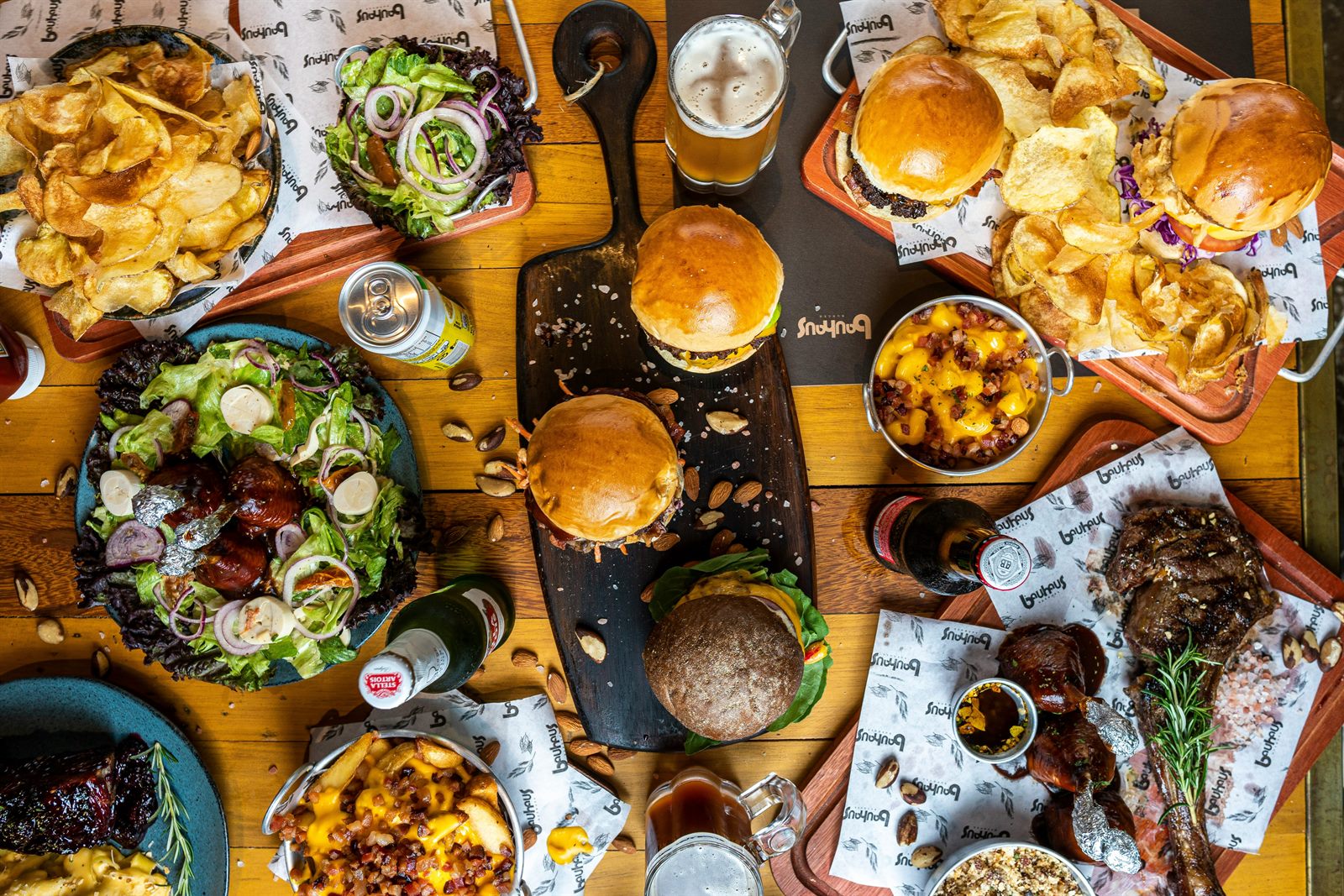
Think about what your grandparents ate. Meat from the butcher. Vegetables from the garden or the produce section. Bread from the bakery. The ingredients were simple, the supply chain was short, and almost none of it came from a lab. Now think about what your grandchildren might eat. Meat grown from animal cells in a bioreactor. Lettuce harvested that morning from a vertical farm in an urban warehouse. A personalized protein shake formulated by an AI that analyzed your gut microbiome. This isn't science fiction. All of it exists today. The question is whether it reaches the dinner table of an ordinary American family by 2034.
Our specific prediction: by 2034, at least one food category that was commercially negligible in 2020 — cultivated meat, precision-fermented proteins, AI-personalized functional foods, or vertical farm produce — will be a routine part of the average American diet. We put the probability at 71%.
What the Evidence Shows
The plant-based protein category already crossed the mainstream threshold. Beyond Meat and Impossible Foods put plant-based burgers in fast food restaurants across the country. The category has since plateaued — consumers found the products impressive but not compelling enough to make a habit — but the infrastructure it built, and the consumer openness it demonstrated, created a foundation for the next wave of food technology.
Cultivated meat — real animal meat grown from cells without slaughtering an animal — received its first US regulatory approvals in 2023, when GOOD Meat and UPSIDE Foods gained USDA clearance. The products are expensive and currently only available in a handful of restaurants. But the cost curve is moving fast. Early production costs that exceeded $300,000 per kilogram have fallen to under $10 in controlled settings, and multiple companies are targeting price parity with conventional chicken by the late 2020s.
"We are at an inflection point similar to where solar energy was in 2012. The cost curves are moving. The regulatory pathways are opening. The question is no longer whether this happens — it is when."
— Good Food Institute — State of the Industry Report, 2024Meanwhile, a less visible revolution is already on supermarket shelves. Precision fermentation — using microorganisms to produce specific proteins, fats, and flavors identical to animal-derived products — has produced dairy proteins that are chemically identical to cow's milk but made without a single cow. Perfect Day's whey protein is already in commercial products. Remilk and others are scaling fast. These products don't ask consumers to change what they eat; they just change where it comes from.
"The most radical food revolution in history may succeed precisely because it will be invisible — you won't know you're eating the future until you already have been for years."
Why This Is Happening
Climate pressure is accelerating everything. Agriculture accounts for roughly 26% of global greenhouse gas emissions, with beef production being one of the most emissions-intensive activities on earth. As climate commitments tighten and carbon pricing spreads, the cost advantage of conventional meat becomes less certain. Food companies are hedging their bets by investing in alternative proteins before they need to pivot.
GLP-1 drugs are reshaping what people want to eat. Millions of Americans now on semaglutide and similar drugs report dramatically reduced appetite and changed food preferences — less interest in fatty, salty foods and more interest in protein and vegetables. This is creating a market for high-protein, lower-calorie foods formulated for the GLP-1 era that didn't meaningfully exist five years ago. Food companies are racing to meet it.
Supply chain fragility has made food security a political issue. COVID-19 exposed how dependent modern food systems are on long, complex supply chains. Avian flu outbreaks have devastated poultry flocks. Drought is shrinking agricultural yields in key growing regions. Governments and food companies that once ignored alternative food technologies are now treating them as supply chain insurance.
What Could Happen
Cultivated chicken reaches price parity with conventional chicken by 2029. Major fast food chains introduce it as a standard menu option. Precision-fermented dairy proteins become invisible ingredients in everyday products — protein bars, yogurts, pasta — that most consumers don't realize contain them. By 2034, a majority of Americans have eaten cultivated or precision-fermented protein within the past month, most without thinking much about it. The revolution happens quietly, through the processed food system, rather than through dramatic consumer conversion.
GLP-1 drugs suppress appetite so broadly that Americans simply eat less of everything, and what they eat skews toward protein and whole foods. The food technology revolution stalls due to consumer skepticism about lab-grown meat — "frankenfoods" — and political backlash in agricultural states. But diet still changes substantially by 2034, driven by health consciousness and medication effects rather than food tech. The plate looks different, but through old ingredients in new proportions rather than genuinely new categories.
A major shock — a pandemic-level disease affecting conventional livestock, a severe drought that hits multiple commodity crops simultaneously, or a dramatic spike in food prices — accelerates adoption of alternative proteins faster than market forces alone would have achieved. Food systems that were cautiously experimenting with alternatives are forced to scale them rapidly. By 2034, the transition that might have taken until 2040 is largely complete.
What Can We Do
Food is both deeply personal and politically charged. The choices available at your dinner table in 2034 will be shaped by decisions happening now at the regulatory, investment, and cultural level.
Try the products that already exist. The precision-fermented proteins in today's protein bars, the plant-based options in grocery stores, the vertical farm greens at some supermarkets — these are real products available now. Consumer adoption signals to producers and investors that the market exists, which accelerates the cost reductions that make the next generation of products affordable.
Push for clear, honest labeling. The biggest barrier to consumer trust in novel food technologies is uncertainty about what's in the product. Mandatory, plain-language labeling of cultivated meat, precision-fermented ingredients, and other novel food categories — combined with rigorous safety testing — builds the public confidence that allows these technologies to scale.
Support agricultural transition, not just disruption. The food revolution will displace conventional farmers if handled badly. Policies that fund farmer retraining, help agricultural communities transition to producing feedstocks for food technology, and ensure the economic benefits of the new food system reach rural communities rather than concentrating in coastal biotech hubs are essential to managing this transition without creating new rural-urban fault lines.
Think about your diet as a system, not just a preference. What you eat has consequences for land use, water, emissions, and animal welfare that extend far beyond your plate. The most powerful thing an individual can do is reduce beef consumption — which has an outsize environmental footprint — while supporting the development of alternatives that make that substitution easier and tastier.
- Good Food Institute — State of the Alternative Protein Industry, 2024
- USDA Food Safety and Inspection Service — Cultivated Meat Regulatory Framework, 2023
- Poore J. & Nemecek T. — "Reducing Food's Environmental Impacts" — Science, 2018
- McKinsey Global Institute — The Future of Food: Sustainable Protein Sources, 2024
- IPCC — Climate Change and Land: Food Security Chapter, 2022
- Forecast The World Research Desk — 800+ data sources