The Question
There is a deal at the heart of the modern internet, and almost nobody read the fine print. In exchange for free email, free search, free maps, free social networking, and free entertainment, billions of people agreed to hand over something far more valuable: an unbroken record of everywhere they go, everything they search, every product they browse, every political opinion they express, every relationship they maintain. This is the surveillance bargain. And by 2032, we predict it will have cleaved the world into two distinct classes — those who can afford to opt out, and those who cannot.
The question we are examining is specific: will meaningful digital privacy — not perfect anonymity, but basic control over your own data — become a premium product that ordinary people on ordinary incomes cannot reasonably access? The evidence says yes. And the trend is accelerating.
What the Evidence Shows
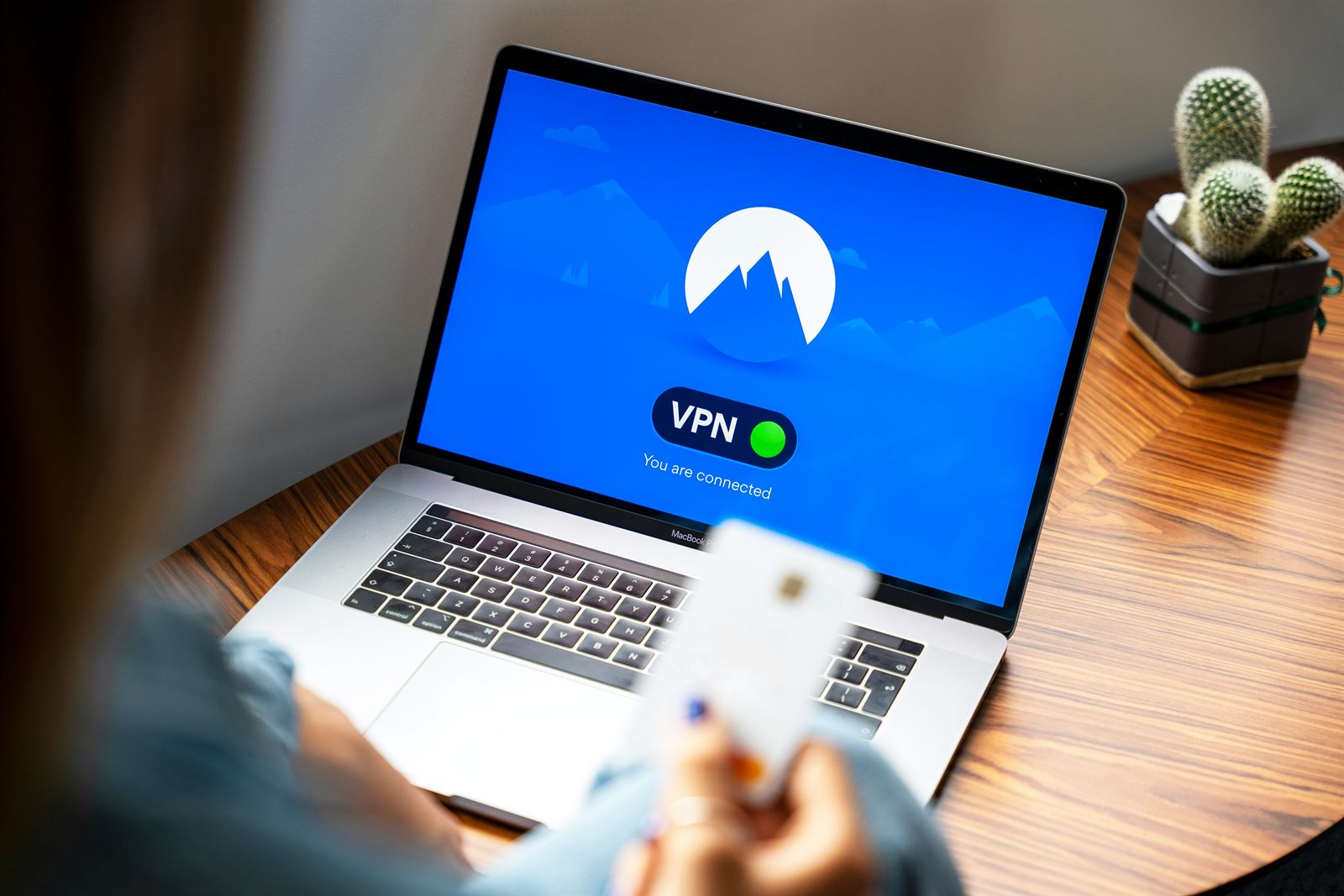
Consider what it already costs to have a reasonably private digital life. A premium smartphone from Apple, which has made privacy a central marketing proposition and actually delivers meaningful protections — App Tracking Transparency, on-device processing, end-to-end encrypted messaging — starts at around $1,000. A quality VPN (a virtual private network, a tool that hides your internet traffic from your internet provider and advertisers) costs $5–12 a month. End-to-end encrypted email, $3–8 a month. Cloud storage that does not mine your files, $3–10 a month. Password management, another $3. Add it up and a genuinely private digital existence is a subscription service costing $20–40 a month — before the hardware. For the 40% of American adults who struggle to cover an unexpected $400 expense, that is not a realistic option.
Meanwhile, the free alternatives are becoming more invasive, not less. Android phones from budget manufacturers — which dominate the market in lower-income households — come pre-loaded with advertising SDKs (software tools that track your behaviour) that cannot be removed without technical expertise. Free email services scan message content to build advertising profiles. Free apps request access to your location, microphone, contacts, and camera far beyond what their function requires, and the majority of users grant these permissions because declining them often means the app does not work.
"Privacy is rapidly becoming a feature, not a right — sold as a premium add-on to those who can afford to pay, while everyone else is the product."
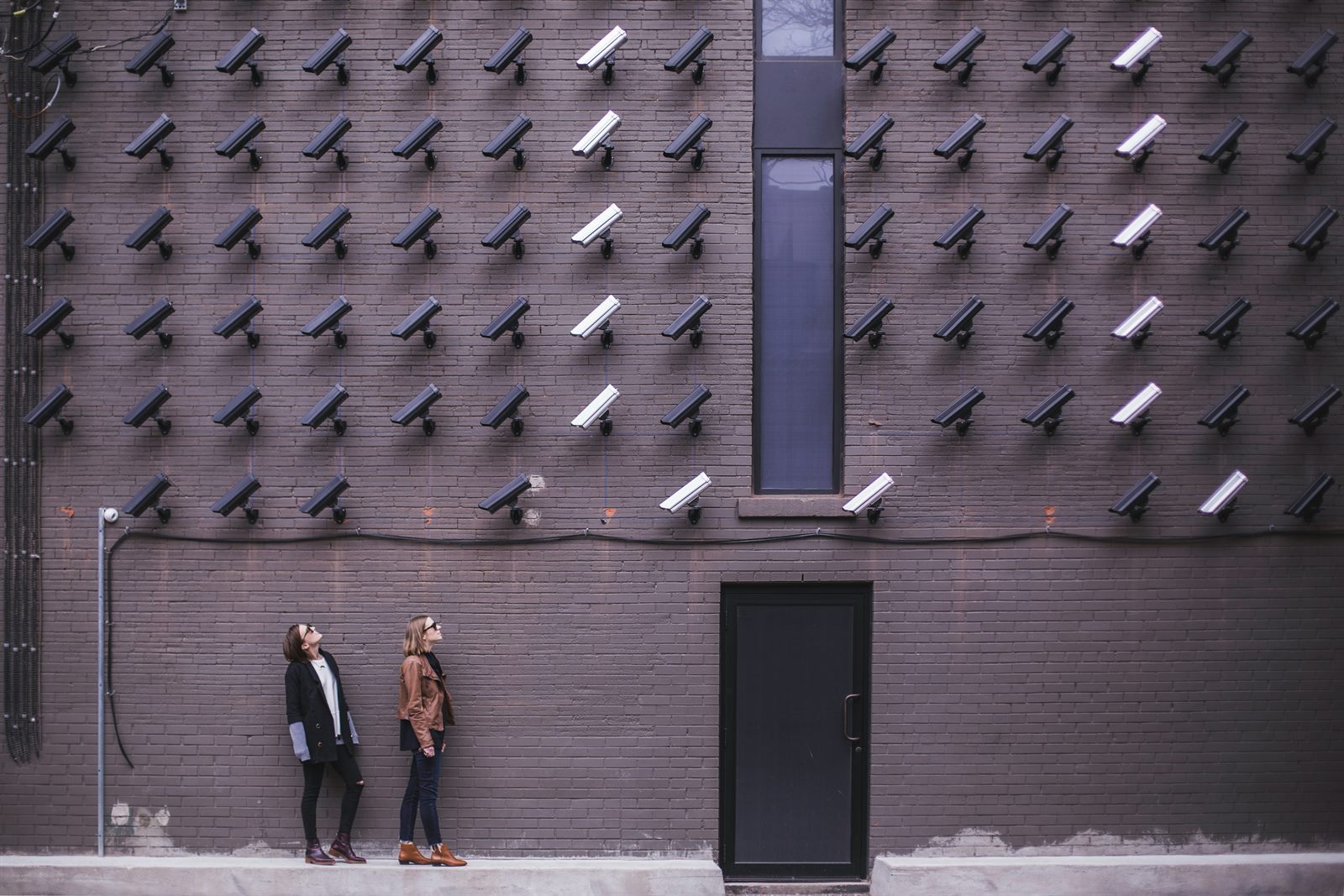
— Electronic Frontier Foundation — "Privacy for Sale" Report, 2024Public space has the same problem. Cities across the US, UK, and China have deployed facial recognition cameras at scale. Amazon's Ring doorbell network has, effectively, created a citizen-operated surveillance grid of residential neighbourhoods, with footage frequently shared with police. You can choose not to have a Ring doorbell. You cannot choose not to walk past your neighbour's.
"The free internet was never actually free — we are just now receiving the bill, and some people cannot afford to pay it."
Why This Is Happening
Surveillance capitalism is structurally self-reinforcing. The companies with the most user data can build better products, attract more users, and collect more data. Google and Meta together capture roughly half of all global digital advertising revenue — a market that reached $600 billion in 2024. The incentive to make the free tier more extractive, not less, only grows as competition for ad dollars intensifies.
Premium privacy tools are becoming a genuine market. Apple's decision to reframe privacy as a product differentiator — and charge iPhone prices accordingly — proved there is a profitable audience willing to pay. The market for encrypted messaging, private browsers, VPNs, and identity protection services is growing at around 15% a year. But it is growing among people who already have disposable income and digital literacy.
Regulation has not kept pace, and may never. Europe's GDPR gave individuals rights over their data on paper. In practice, the cookie consent banners it spawned are widely understood to be compliance theatre — designed to nudge users into clicking "Accept All" while technically satisfying legal requirements. The US has no equivalent federal privacy law. State-level patchworks like California's CCPA help, but enforcement is limited and the opt-out mechanisms are deliberately obscure.
What Could Happen
By 2032, the two-tier system is entrenched and accepted. Premium devices and services provide genuine privacy for those who pay. Free alternatives are openly surveillance-funded — the business model is explicit rather than buried in terms and conditions. A generation of young adults grows up understanding that "free" means "your data pays for it." Privacy becomes a line item in household budgets, like health insurance — something you either afford or go without. Regulation exists but focuses on transparency rather than prohibition.
A coalition of democratic governments — likely led by the EU, with the US following after a major data scandal — establishes enforceable minimum privacy standards that apply to all products regardless of price. Surveillance-funded free services are permitted but required to make data collection genuinely optional, with real penalties for dark patterns. Privacy becomes more like seatbelts than sunroofs — a baseline protection, not a luxury add-on. This is technically achievable. The political will is the variable.
The public surveillance layer — cameras, licence plate readers, biometric databases, location tracking through telecoms infrastructure — becomes so comprehensive that no consumer product choice can meaningfully insulate anyone. Even wealthy individuals are trackable through their financial transactions, physical movements, and the devices of the people around them. Privacy becomes not a class divide but a relic. This outcome requires more state-level surveillance investment than currently seems likely in most democracies, but it is already the reality in China and is advancing elsewhere.
What Can We Do
This divide is not inevitable, but reversing it requires action at the individual, institutional, and policy levels simultaneously.
Use what's free and actually protective. Signal is a free, end-to-end encrypted messaging app used by security professionals worldwide. Firefox and Brave are free browsers that block trackers by default. DuckDuckGo is a free search engine that does not build a profile on you. These tools are not perfect, but they close much of the gap without spending anything.
Audit your app permissions. On both iPhone and Android, you can review exactly which apps have access to your location, camera, microphone, and contacts — and revoke what isn't needed. Most people have granted permissions they have completely forgotten about. Spending fifteen minutes on this is the highest-ROI privacy action most people can take.
Demand real opt-out, not dark patterns. When you encounter cookie banners that make "Reject All" harder to click than "Accept All," that is a regulatory failure. Contacting your elected representatives about strengthening privacy enforcement is not naive — GDPR exists because enough people pushed for it.
Support institutions building privacy infrastructure. The Electronic Frontier Foundation, Mozilla Foundation, and privacy-focused open-source projects are building the tools that keep the non-premium internet liveable. They run on donations. Treating them like public utilities — worth funding even if you benefit for free — is part of how this gets fixed.
Expect employers and schools to take responsibility. The devices and accounts that institutions issue to employees and students carry surveillance risks that individuals often cannot control. Demanding that your employer use privacy-respecting tools — and that schools do the same for children — moves the problem from individual choice to institutional policy, where it can scale.
- Electronic Frontier Foundation — "Privacy for Sale: The Data Broker Economy" — EFF, 2024
- Zuboff S. — "The Age of Surveillance Capitalism" — PublicAffairs, 2019
- Pew Research Center — "How Americans Think About Privacy" — Pew, 2023
- European Data Protection Board — GDPR Enforcement Tracker — EDPB, 2025
- eMarketer / WARC — Global Digital Advertising Revenue Report — 2024
- Forecast The World Research Desk — 800+ data sources