The Question
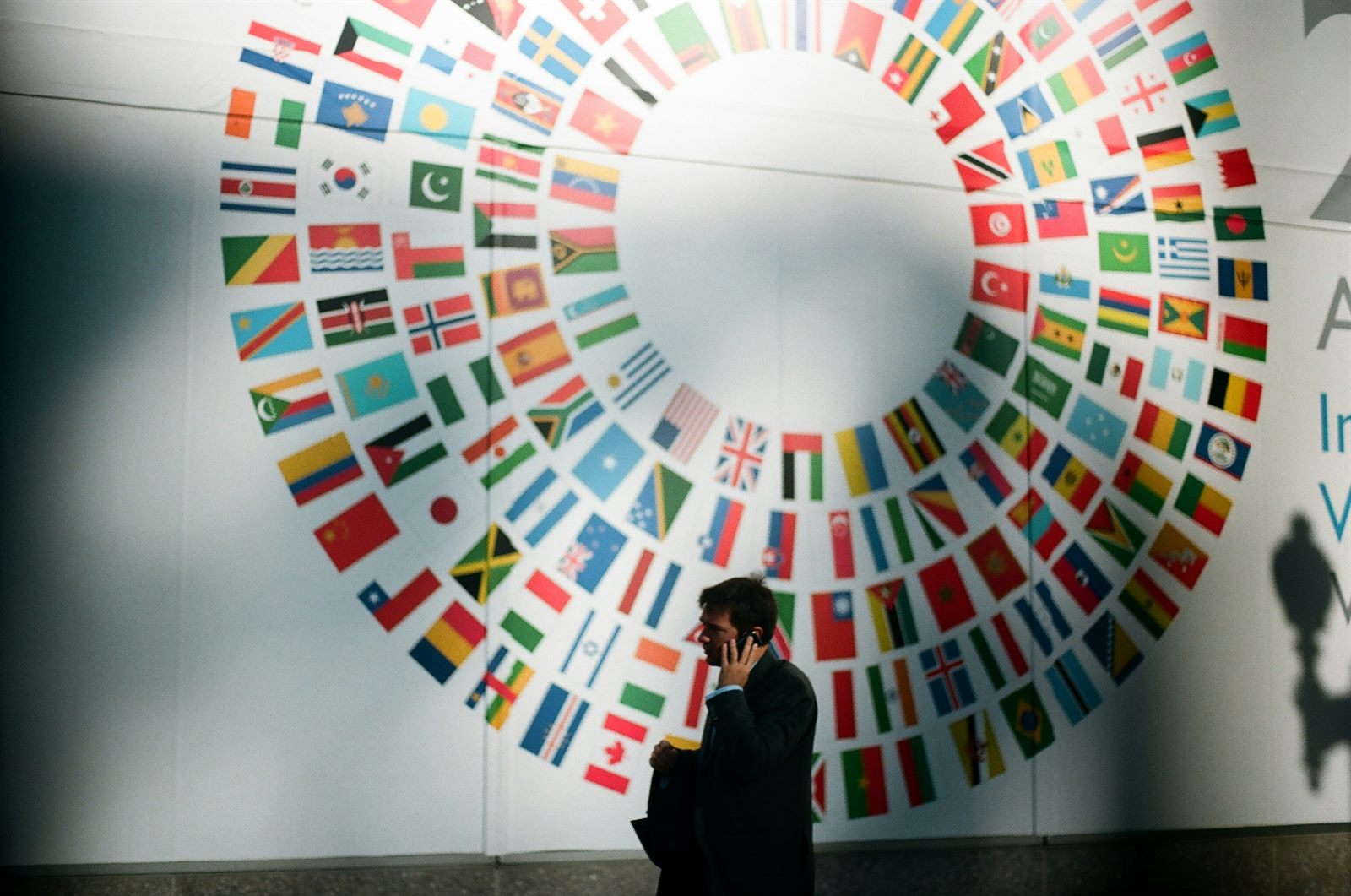
The internet was built in English. Its protocols were written in English. Its first websites were in English. The first generation of tech companies — Google, Amazon, Facebook, Apple — were American, and defaulted to English as the language of the web. For the first two decades of the public internet, if you wanted to participate fully, you needed to speak English. Hundreds of millions of people around the world learned to do exactly that.
That era is ending. Not because English is retreating — it isn't — but because the rest of the world is arriving. The next billion internet users are coming overwhelmingly from South Asia, Sub-Saharan Africa, and Southeast Asia, and they are arriving in their own languages. At the same time, AI translation has reached a quality threshold where reading and writing in your native language is no longer a barrier to accessing content originally produced in another. The question is not whether the internet becomes multilingual. It already is. The question is how fast, and what it means for the English speakers who built it.
What the Evidence Shows
English already accounts for less than 60% of internet content by volume, down from over 80% in the late 1990s. That decline has accelerated with the rise of non-English social platforms. WeChat, with over a billion users, is predominantly Chinese. ShareChat dominates in Hindi, Tamil, and Telugu. TikTok's global user base produces content in hundreds of languages, with English representing a shrinking fraction. According to W3Techs, which tracks language use across websites, Spanish, Chinese, and Portuguese collectively account for roughly 20% of web content — a share that has grown consistently for a decade.
"The internet never was an English-language medium. It just looked like one, because for a long time only English speakers had reliable access to it."
Internet Society — Global Internet Report, 2024The decisive shift is AI translation. For most of internet history, the practical barriers to consuming content in another language were high. Machine translation was stilted and often wrong. Real-time translation of video was impossible. Both of these barriers have now largely fallen. AI translation tools in 2026 produce output that native speakers rate as natural in over 80% of cases for major language pairs. The result is that a video produced in Tamil can be watched in real time with English subtitles, and vice versa. The linguistic walls that once shaped the internet are becoming permeable.
"When translation becomes invisible, language stops being a barrier — and starts being a choice."
Why This Is Happening
The demographic centre of gravity of the internet has shifted. In 2000, most internet users were in North America and Western Europe. By 2026, the majority of internet users are in Asia, and the fastest-growing populations of new internet users are in Africa and South Asia. India alone adds tens of millions of new internet users per year, the vast majority of whom prefer to use Hindi, Bengali, Tamil, or other regional languages rather than English. The internet is following its users.
AI has broken the productivity advantage of English content creation. For most of the internet era, producing content in English gave you access to the largest audience and the best search visibility. That advantage depended on translation being difficult and expensive. Large language models have made high-quality translation nearly free and instantaneous. Content produced in any major language can now reach a global audience without significant friction. The economic incentive to produce content in English — rather than your native language — has weakened substantially.
Governments and tech companies are investing heavily in non-English AI. India's government has made indigenous language AI a national priority. China has invested massively in Mandarin language models. Arabic, Swahili, and Yoruba language AI tools are advancing rapidly, funded both by governments seeking cultural independence from English-dominated AI and by companies targeting the enormous underserved markets in those language communities. The infrastructure for a genuinely multilingual internet is being built at scale.
What Could Happen
By 2034, English's share of internet content falls below 40%, with Spanish, Mandarin, Hindi, Arabic, and Portuguese collectively exceeding it. AI translation makes language largely irrelevant as a barrier to content consumption. The internet becomes functionally multilingual — users create in their native language and consume across languages seamlessly. English remains important in technology, science, and international business, but loses its status as the default language of the web. This is the trajectory the current data points toward most clearly.
English retains dominance in the high-value layers of the internet — software documentation, scientific publishing, international e-commerce, financial services — even as local-language content grows in social media and entertainment. The internet becomes stratified: a multilingual consumer layer and an English-language professional layer. English speakers retain a meaningful advantage in career prospects and economic participation, but the gap narrows. English falls below 50% of total content but remains the single largest language on the web by a clear margin.
The fragmentation of the internet along geopolitical lines — already visible in China's Great Firewall and Russia's attempts at a sovereign internet — accelerates. By 2034, the internet has effectively split into regional language zones that overlap only partially: a Chinese-language zone, an English-language zone, a Hindi-language zone, and so on. Content does not flow freely between zones. AI translation exists but is filtered and restricted by governments. The multilingual internet arrives, but in the form of mutually suspicious silos rather than a seamless global conversation.
What Can We Do
A multilingual internet is good news for most of humanity. Here is how to position yourself well for it.
If you only speak English, your window to develop a second language skill is narrowing — not because the opportunity is disappearing, but because AI translation will soon make it less necessary. Learning a second language while it still provides a meaningful professional advantage is worth doing now, before that advantage diminishes. Spanish, Mandarin, and Hindi offer the largest audience reach for investment of effort.
For content creators and businesses, the opportunity in non-English markets is enormous and still underserved. AI translation now makes it feasible to produce content in multiple languages at low marginal cost. Businesses that build non-English audiences now are positioning ahead of the competition that will arrive when the opportunity becomes obvious to everyone.
For educators and policymakers, the declining barrier of language in information access is a genuine development opportunity for billions of people who have been locked out of knowledge produced in languages they don't speak. The priority should be ensuring AI translation tools are high quality, freely accessible, and work well for less-represented languages — not just the major ones.
For those who care about linguistic diversity, the multilingual internet is double-edged. It may make it easier to consume content in minority languages, but it also makes it easier to consume content in major languages without learning minority ones. The forces that have driven language extinction historically — economic pressure toward dominant languages — do not disappear with AI translation. They may simply be expressed differently.
- W3Techs — Usage Statistics of Content Languages for Websites, 2025
- Internet Society — Global Internet Report: Consolidation in the Internet Economy, 2024
- DataReportal — Digital 2025: Global Overview Report
- UNESCO — The Languages of the Web, 2023
- Meta AI Research — No Language Left Behind: Scaling Human-Centred Machine Translation, 2022
- Forecast The World Research Desk — 800+ data sources