The Question
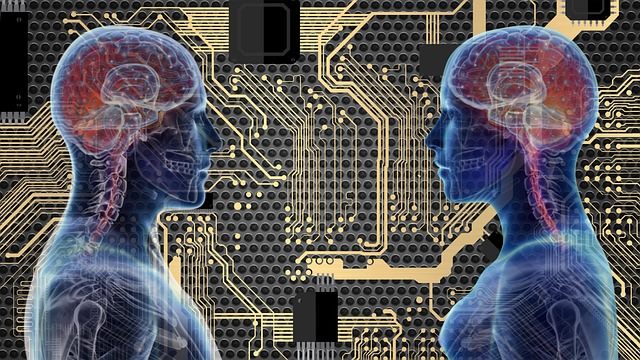
The experiment was precise and limited. Rajesh Rao, a computational neuroscientist, wore an EEG cap recording his scalp's electrical activity as he watched a video game. When he imagined pressing the fire button, his brainwave pattern changed characteristically. That pattern was transmitted over the internet to a transcranial magnetic stimulation coil over the motor cortex of Andrea Stocco, a colleague in a different building on campus. The coil fired, and Stocco's right hand moved in a twitching, involuntary motion, as if a puppeteer had briefly taken control. He had no idea when it would happen and could not stop it — his hand moved because someone else thought it should.
This was not rich mental communication. Rao transmitted no thought, image, or concept — only a binary signal, fire / don't fire, decoded by software into a magnetic pulse that fired a specific motor neuron cluster. The bandwidth was roughly one bit — an 1840s telegraph had more expressive capacity. But the principle it demonstrated — that neural signals can be recorded from one brain, transmitted across a network, and used to influence another — was genuine, verified, and replicated by other labs. The era of brain-to-brain interfaces had begun.
What the Evidence Shows
The Rao-Stocco experiment was not the first brain-coupling demonstration. By 2013, Miguel Nicolelis's team at Duke University had already coupled two rat brains via implanted electrodes and an internet connection so the rats cooperatively solved sensory discrimination tasks — one rat's activity influencing another on a different continent. Nicolelis called the linked rats an "organic computer" whose combined activity outperformed either brain alone, and later showed the same in primates.
The 2019 BrainNet experiment at the University of Washington took the concept further. Three people — two "senders" and one "receiver" — played a collaborative Tetris-like game. The senders could see the board and decided whether to rotate a falling block, transmitting their decisions brain-to-brain to the receiver, who could not see it but felt the magnetic pulses and acted on them. The three-brain network outperformed any single brain alone — the first multi-person brain-to-brain interface ever demonstrated. Slow and crude, but the proof of concept was unambiguous.
"What we showed is that it's possible to create a direct link between brains — not just between a brain and a machine, but between a brain and a brain. The implications of that for communication, for education, for medicine — I don't think we've fully thought them through yet."
— Rajesh Rao, University of Washington, speaking after the BrainNet publication, 2019Separately, AI decoding of mental content from brain imaging has advanced dramatically. In 2021, UC San Francisco researchers led by Edward Chang decoded attempted speech from a paralysed patient's cortex at up to 18 words per minute — enough for basic conversation. In 2023, a University of Texas team showed an fMRI-based AI system could reconstruct the semantic content of language a subject heard or imagined, identifying not just words but concepts and narrative ideas from brain activity alone, while Meta AI showed MEG scans could reconstruct images a person was viewing in real time. These are not brain-to-brain demonstrations, but they reveal the decoding capability a high-bandwidth link would require.
"We are not yet at telepathy. We are at the telegraph stage of brain-to-brain communication — one bit at a time, with enormous infrastructure. But the telegraph became the telephone, and then the internet."
Why This Is Happening
Neural decoding has crossed a threshold of practical utility. For decades the main obstacle was not stimulating or recording from a brain — both were achievable — but decoding the signals into something meaningful. Deep learning changed that. Neural networks trained on brain imaging paired with stimulus or behaviour data now decode signals with accuracy impossible using traditional signal processing — the same AI behind image recognition and language models, applied to the brain.
Non-invasive technologies are becoming sensitive enough to matter. Early experiments relied on EEG — a century-old technology that captures only crude, averaged signals through the skull. AI signal processing and better hardware have significantly improved what can be extracted from scalp recordings, and functional near-infrared spectroscopy (fNIRS), a wearable non-invasive imaging technology, is advancing fast. A future system may not require surgery at all.
Military applications are driving sustained investment. DARPA's Next-Generation Nonsurgical Neurotechnology (N3) programme funds non-invasive interfaces that read from and write to the brain without surgery, aiming to let soldiers control autonomous systems through thought. This research has civilian spinoffs, and DARPA funding has underwritten much of the basic science academic researchers draw on.
What Could Happen
Building on the speech-decoding work at UC San Francisco and UT Austin, a system lets a locked-in patient communicate with a caregiver via decoded neural signals at enough bandwidth for meaningful conversation. The "receiver" side may initially be a text display rather than another brain — but it is brain-to-mind communication in a meaningful sense. This path has the clearest near-term clinical justification and most active research pipeline.
A wearable EEG device, a powerful AI decoding layer, and a paired stimulation device worn by the receiver let simple signals — emotional valence, yes/no decisions, directional commands — pass between two consenting users at useful speed. It is marketed for gaming, intimate relationships, or team sports, with early clinical uses for non-verbal communication in autism or locked-in conditions. Bandwidth is still very low by language standards, but the symbolic importance is huge.
Invasive high-density recording (Neuralink, BrainGate), AI decoding of language and imagery (the UT Austin and Meta teams), and minimally invasive stimulation combine to transmit complex mental content — words, images, concepts — directly from one brain to another with enough fidelity to constitute genuine mind-to-mind communication. This requires solving several hard problems at once — less likely within the timeframe, but not impossible.
What Can We Do
Transmitting mental states between people — even at low bandwidth — raises questions about consent, privacy, and identity that philosophy and law are unprepared to answer. The time to prepare is now, while the technology is still crude enough that its implications can be engaged thoughtfully.
Establish the legal principle of cognitive liberty before it is needed. The right to mental privacy — not to have your thoughts read, transmitted, or influenced without consent — is not yet a distinct legal right anywhere, because no technology previously made it necessary — but that is changing. Scholars including Marcello Ienca and Rafael Andorno have argued for a human right to cognitive liberty. Establishing this in law now, before these technologies deploy commercially, is far easier than retrofitting it after the market has created dependencies.
Require informed consent standards specific to neural communication. Consent to have your neural data recorded and transmitted to another person's brain is qualitatively different from sharing a photograph or medical record. It needs its own framework — specifying what is recorded, how long it is retained, whether it can train AI models, who can access it, and what happens if it is hacked or misused.
Fund research into the security vulnerabilities of neural stimulation devices. Transcranial magnetic stimulation can move a person's limb without their consent, as the 2013 experiment showed, and scaled-up versions could theoretically influence behaviour unknowingly. Security research into neural interface vulnerabilities — a tiny field today — deserves far more attention and funding than it receives.
Begin public deliberation about hive mind ethics before the technology makes it necessary. BrainNet showed networked brains can outperform individual brains on certain tasks. The military implications are obvious; the civilian ones — networked human cognition in workplaces, classrooms, or social settings — are both exciting and deeply unsettling. Deliberation about whether and when cognitive networking is acceptable cannot wait until it is already deployed.
- Rao & Stocco — "A direct brain-to-brain interface in humans," PLOS ONE, 2014
- Jiang et al. — "BrainNet: A Multi-Person Brain-to-Brain Interface," Scientific Reports, 2019
- Chang Lab, UCSF — "Neuroprosthesis for decoding speech," New England Journal of Medicine, 2021
- Tang et al., UT Austin — "Semantic reconstruction of continuous language from non-invasive brain recordings," Nature Neuroscience, 2023
- Nicolelis et al., Duke — "Unilateral and bilateral brain-machine interfaces," Scientific Reports, 2013
- Forecast The World Research Desk — 800+ data sources