The Question
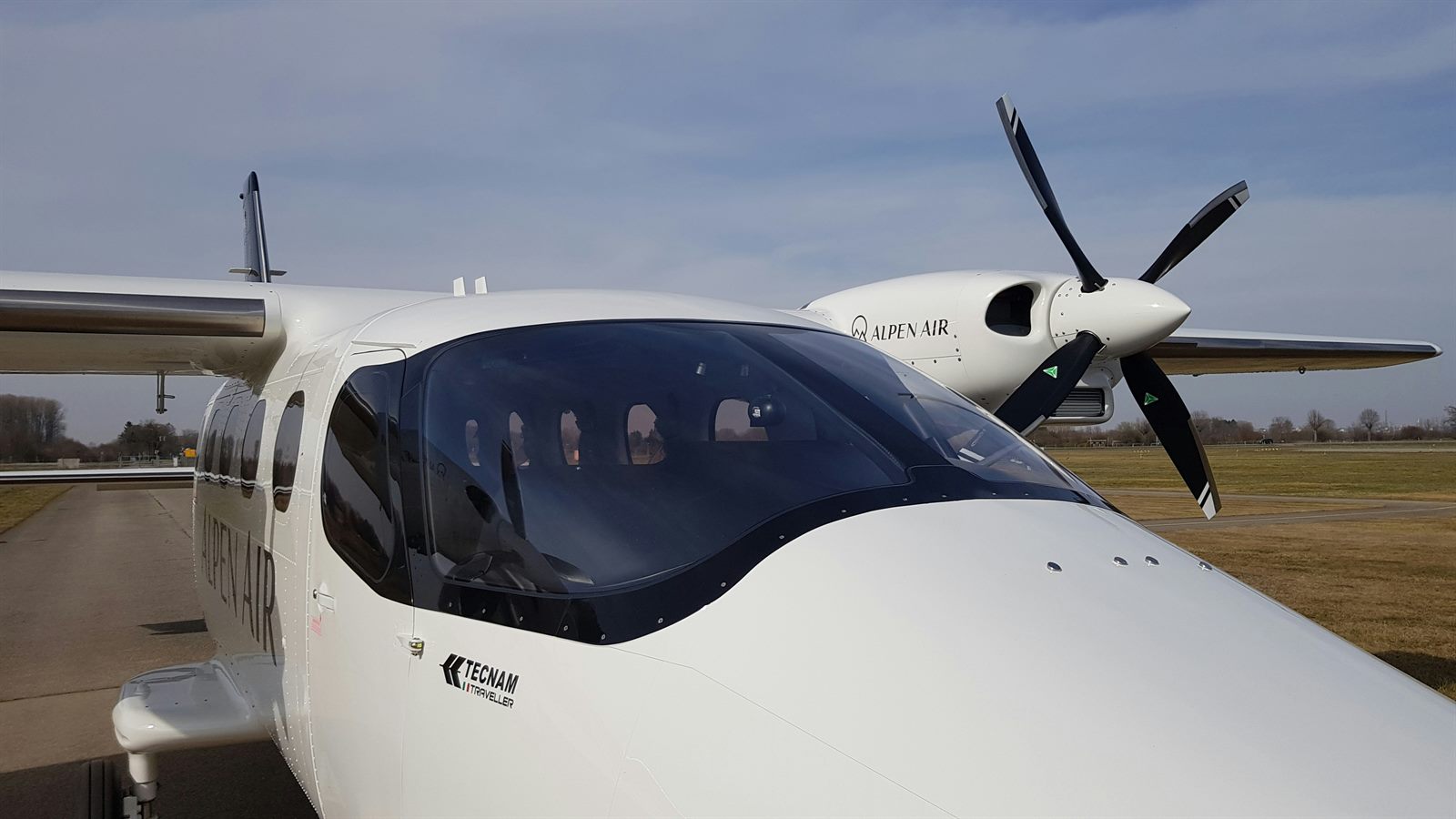
On the flight deck of a modern Boeing 787 Dreamliner, the two pilots are, in a precise sense, not flying the aircraft. After takeoff — a process that can itself be automated — the crew typically hands control to the Flight Management System within the first 30 seconds of flight. From that point, on a routine long-haul route, the autopilot flies with greater precision than any human, holding altitude to within 10 feet, navigating to within metres of the planned track, and managing fuel with an efficiency no human could match. The crew monitors. The aircraft flies.
According to Boeing's own training documentation, human hands are on the controls for an average of 3 minutes and 30 seconds per flight on modern widebody aircraft — including takeoff and landing. For everything in between, the human is a legal requirement, not an operational necessity. The uncomfortable question the aviation industry has spent decades not asking aloud is now unavoidable: what exactly are those humans for?
What the Evidence Shows
The case for automation is written in accident statistics. Boeing's analysis of commercial accidents between 2012 and 2022 found crew error contributed to 80% of all fatal accidents; the autopilot has never caused a crash through pilot-equivalent decision error. The crashes of Air France 447 in 2009 and Lion Air 610 in 2018 were, ironically, caused by human pilots failing to correctly manage automated systems that had disengaged — accidents an aircraft with no humans to make panicked inputs might have survived. Even the 737 MAX MCAS failure, which caused 346 deaths, was fixed by adding pilot training, not removing the automation.
Meanwhile, fully autonomous aviation has already arrived — it simply hasn't entered passenger cabins. Google's Wing has delivered packages autonomously in Australia, Finland, and the US since 2019, logging over 300,000 deliveries. Amazon Prime Air received FAA approval for autonomous drone delivery in 2020. The US military's MQ-9 Reaper flies 27-hour missions with no human aboard; and the autonomous Boeing MQ-28 Ghost Bat first flew in 2022 alongside crewed F/A-18 jets. These are not prototypes; they are operational aircraft, flying today in real airspace.
"The question is not whether we can build autonomous passenger aircraft — we already have all the necessary technology. The question is whether regulators and the public will accept them before the pilot shortage forces the issue."
— IATA — Future of Aviation Workforce Report, 2024The pilot shortage is the factor most likely to accelerate the timeline. IATA projects a global shortfall of 80,000 commercial pilots by 2032. In the US, the regional airline industry is already in crisis: Cape Air, SkyWest, and GoJet have cancelled hundreds of routes not for lack of demand, but for lack of qualified pilots. A US commercial licence costs roughly $100,000 and takes three to five years — a structurally broken pipeline. Airlines have begun lobbying the FAA to cut minimum flight-hour requirements from 1,500 to 1,000 hours for co-pilots. The next step, insiders acknowledge privately, is single-pilot operations — already being tested by Xwing and Reliable Robotics with Cessna Caravans in US airspace.
"We already have aircraft that can fly themselves. What we don't have is a society that has decided to let them."
Why This Is Happening
The technology gap closed faster than anyone admitted. Autopilot systems capable of handling all phases of flight — including takeoff and landing in zero-visibility Category III ILS approaches — have existed since the 1970s. What changed in the 2010s was AI-based decision-making capable of handling edge cases: bird strikes, sudden decompression, engine failure on takeoff. Xwing's autonomous system, tested on Cessna Caravans in 2023, handled 17 simulated emergency scenarios that had previously caused human pilots to crash in simulation.
eVTOL is the wedge technology. Electric vertical takeoff and landing aircraft — from Joby, Archer, Wisk Aero, and Lilium — are being certified as autonomous from the outset. Wisk, backed by Boeing and Google, is explicitly pursuing FAA certification for fully autonomous urban air taxis. Operating at lower altitudes and shorter ranges than commercial jets, they face a lower regulatory bar and will be the public's first experience of autonomous flight. Once millions have ridden a pilotless Joby taxi to an airport, the psychological barrier to pilotless long-haul flight dissolves.
Economics make the outcome inevitable. A US airline pilot earns between $120,000 and $350,000 a year. A two-pilot crew on a single long-haul route is $500,000 to $700,000 a year in personnel costs. The avionics to automate the same route cost roughly $2 million per aircraft with zero recurring labour cost. At scale across hundreds of aircraft, the economics are overwhelming. Airlines will automate when regulation permits; regulation will permit when public acceptance allows — a matter of when, not whether.
What Could Happen
Regulators follow the path of least resistance: FAA and EASA first approve single-pilot operations for cargo aircraft (no passengers to object) in the late 2020s, then short-haul passenger routes by 2035. By 2040, zero-pilot certification begins for regional routes under 500 miles. The 300,000 commercial pilots employed today are not fired — they retire and are simply not replaced, as airlines quietly shrink their training pipelines while publicly maintaining that "pilots remain essential."
A high-profile failure of an autonomous cargo aircraft or eVTOL taxi — even with no fatalities — triggers political backlash and regulatory retrenchment. Mandatory pilot requirements are written into law rather than regulation, making them harder to change. Autonomous aviation continues in military and cargo contexts but the passenger transition is delayed 10 to 15 years. The pilot profession gets an unexpected reprieve, though the pilot-shortage economics keep grinding in the background.
Autonomous eVTOL taxis prove dramatically safer than crewed alternatives, accumulating a safety record so compelling that public demand for pilotless aircraft outpaces regulatory caution. By 2035, airlines market their autonomous aircraft as a safety premium rather than a cost cut — the way Volvo marketed seatbelts. Zero-pilot commercial aviation is essentially complete by 2038, 15 years ahead of industry consensus forecasts.
What Can We Do
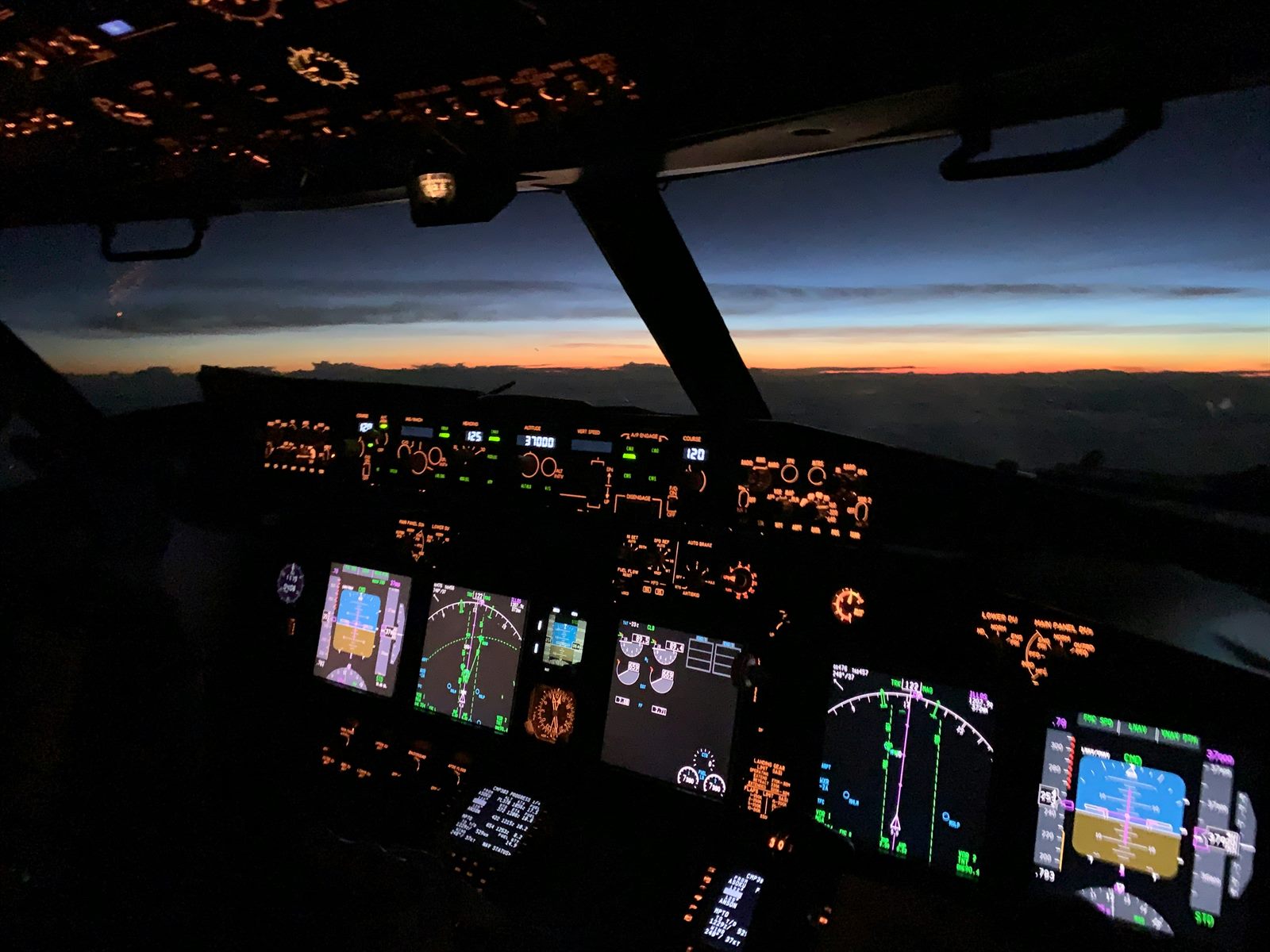
The transition to autonomous aviation is not inherently good or bad — it is a design problem. The outcomes depend on decisions made now about safety standards, retraining, and regulation.
Invest in retraining pipelines for displaced pilots. The world's 300,000 commercial pilots possess extraordinary skills — systems management, spatial reasoning, crisis decision-making — that translate directly into autonomous aviation operations, drone fleet management, air traffic control, and aerospace engineering. Voluntary retraining funds, modelled on the coal-transition programs in Germany's Ruhrgebiet, should be established now, before displacement.
Demand transparent safety standards for autonomous aircraft. The FAA's current certification framework was designed for crewed aircraft. Autonomous aircraft need a different one — assessing the reliability of AI decision-making across millions of edge cases, not just the skills of a human pilot. Public comment periods on FAA rulemaking for autonomous aviation are open to citizens and deserve engagement.
Support the eVTOL transition as a safety upgrade, not just a novelty. The Joby, Archer, and Wisk vehicles in certification represent the safest class of aircraft ever built, with distributed electric propulsion that eliminates the single-point engine failure behind most light aircraft crashes. Treating urban air mobility as merely an environmental or congestion solution ignores the safety case — the most powerful argument for public acceptance.
Watch the cargo sector for leading indicators. Every regulatory decision about autonomous cargo aircraft in the next five years — by FAA, EASA, and China's CAAC — will directly determine how quickly the technology enters passenger aviation. Cargo is where political resistance is weakest and economics most compelling. What happens with Wing, Prime Air, and Reliable Robotics between now and 2030 is the clearest signal of the passenger timeline.
- Boeing — Commercial Aviation Safety Study, 2012–2022
- IATA — Future of Aviation Workforce Report, 2024
- FAA — Unmanned Aircraft Systems Integration Pilot Program Reports, 2019–2024
- Xwing — Autonomous Cessna Caravan Test Flight Reports, 2023
- Wisk Aero — FAA Certification Application for Autonomous eVTOL, 2023
- Forecast The World Research Desk — 800+ data sources