The Question
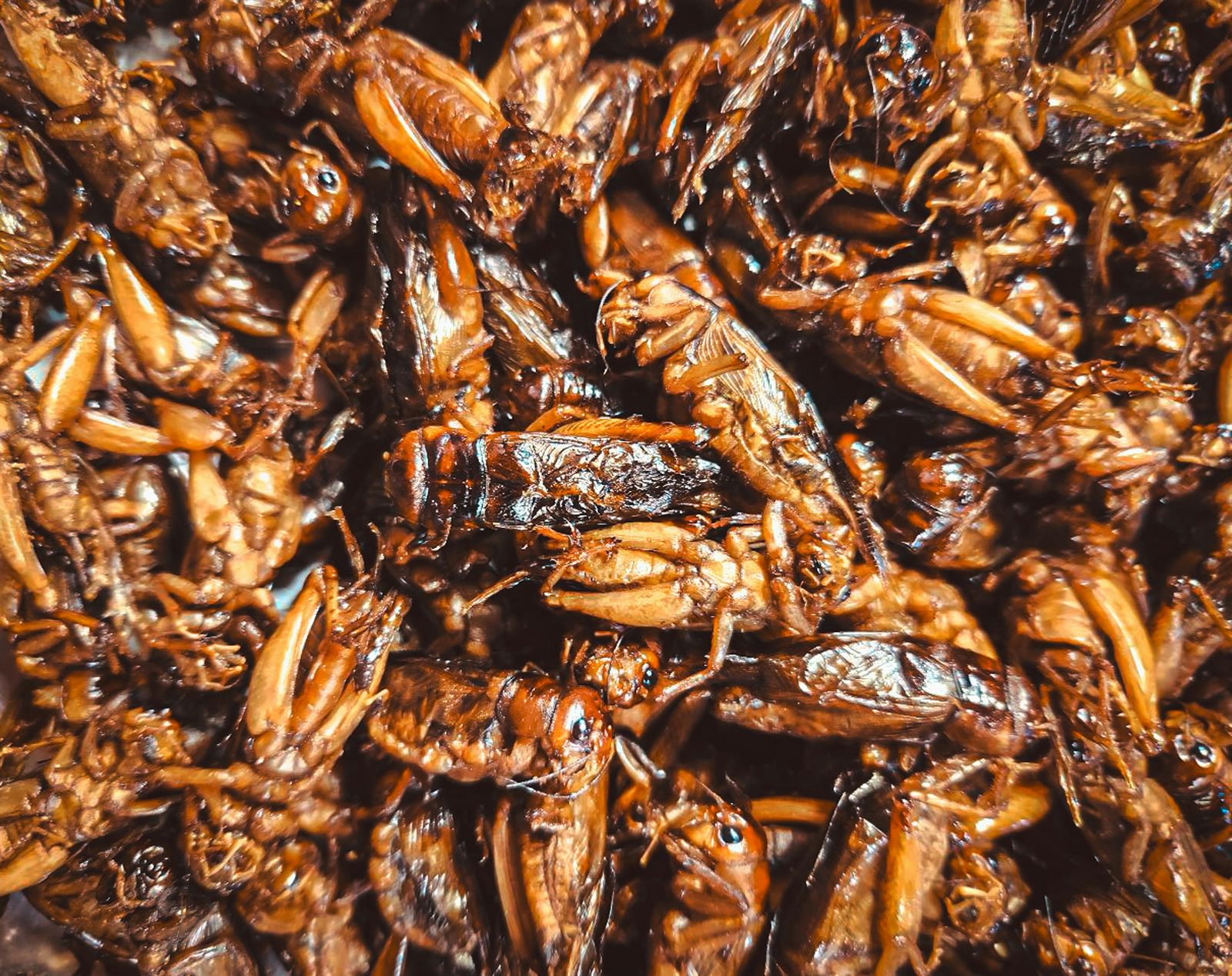
Pick up a bag of premium salmon feed from a Norwegian aquaculture supplier and you will find, in the fine print, "black soldier fly larvae meal." The fish don't mind. Neither does the FDA, which since 2016 has granted GRAS — Generally Recognized As Safe — status to black soldier fly larvae as a feed ingredient for poultry, swine, and farmed fish. The product is manufactured at industrial scale by companies including Protix in the Netherlands and Ÿnsect in France. The insects are ground, defatted, and processed into a beige powder nutritionally indistinguishable from fishmeal — at roughly one-tenth the environmental cost.
What began in animal feed is now moving up the food chain toward human plates, in a form most Western consumers would never recognise: protein isolate, flour additive, nutritional supplement. The question is not whether this transition will happen — regulators in the EU, UK, Canada, Australia, and Singapore have already decided it will. It is whether it will happen transparently, with full labelling, or quietly, through ingredient lists that most shoppers never read.
What the Evidence Shows
The regulatory approvals are real and already in effect. The European Food Safety Authority approved dried yellow mealworm (Tenebrio molitor) as a novel food in January 2021 — the first insect under the EU's Novel Food Regulation — followed by migratory locust in November 2021, and house cricket (Acheta domesticus) and partially defatted black soldier fly larvae in January 2023. The UK's Food Standards Agency approved four species in February 2024, Singapore has permitted multiple species since 2020, and Canada's Entomo Farms has sold cricket flour and protein powder since 2014.
The market is already larger than most consumers realise. Purina's Beyond Natural dog food uses black soldier fly larvae as a primary protein source, and Hill's Science Diet introduced insect protein lines across European markets in 2022. In human food, Switzerland's Essento sells cricket burgers in Coop supermarkets, UK startup Horizon sells cricket-flour pasta in Sainsbury's, and France's Jimini's sells insect snacks in over 3,000 supermarkets. The global edible insect market, valued at $1.4 billion in 2023, is projected to reach $4.6 billion by 2028 — a 26.5% compound annual growth rate.
"Insects offer the most promising near-term solution to the protein gap. They can be produced at massive scale with a fraction of the land, water, and greenhouse gas emissions of conventional livestock — and the technology to process them into invisible ingredient forms already exists at commercial scale."
— FAO — "Edible Insects: Future Prospects for Food and Feed Security," 2023 UpdateThe environmental case is genuinely extraordinary. Producing one kilogram of cricket protein requires about 1.7 kilograms of feed, against 10 kilograms for beef protein. Cricket farming uses one-twelfth the land of cattle ranching per unit of protein, water consumption is roughly 2,000 times lower than beef, and greenhouse gas emissions are 80% lower than pork and 99% lower than beef. Insects can be farmed on organic waste streams that would otherwise require disposal. The FAO's 2023 update concludes that transitioning 10% of human protein consumption to insects would reduce agricultural land use by an area equivalent to Western Europe.
"Two billion people already eat insects. The other six billion will, too — they just won't be told."
Why This Is Happening
The protein gap is real and growing. The global population is projected to reach 9.7 billion by 2050, requiring a 70% increase in food production according to the FAO. Conventional livestock already uses 77% of global agricultural land while providing only 18% of caloric supply. Planetary protein demand cannot be met through conventional animal agriculture alone. Alternative proteins — plant-based, lab-grown, and insect-derived — are structural necessities, and insects are the most economically viable of the three at current technology levels.
The "invisible ingredient" strategy is deliberate. Producers learned from plant-based meat that acceptance depends on framing. Insect protein in flour form — colourless, odourless, "mildly nutty" — does not trigger the disgust response that whole insects reliably produce in Western consumers. Companies like Ÿnsect and Protix explicitly market to food manufacturers rather than consumers, positioning their output as a protein ingredient rather than an insect product. The ingredient list entry reads "insect protein isolate" — legally required but easily missed.
Consumer psychology of disgust is the only barrier left. Two billion people — roughly 25% of the global population — already eat insects routinely, primarily in sub-Saharan Africa, Southeast Asia, and Latin America. Insect consumption was common across all human cultures until about 200 years ago, when European industrialisation made other protein sources cheaper. The disgust response is cultural, not instinctive. Wageningen University studies found that when European consumers ate cricket-flour products without being told the insect content, approval was high; told beforehand, approval dropped sharply. The food industry has drawn the obvious conclusion.
What Could Happen
Insect-derived protein flour and isolate become standard ingredients in processed foods, protein supplements, and animal feed globally by 2032. Most consumers in developed countries consume insect protein weekly without awareness, primarily through protein bars, pasta, bread supplements, and aquaculture-raised fish. Transparent labelling exists but is presented in the same format as other unfamiliar ingredients — technically disclosed, practically invisible. Consumer surveys in 2030 show that acceptance of intentional insect eating remains low, but inadvertent consumption has become universal.
A media-driven consumer backlash — triggered by investigative reporting on unlabelled insect ingredients in mainstream products — forces regulatory bodies to mandate prominent front-of-pack insect labelling. The result is a two-tier market: insect-ingredient products are labelled and sold at a discount, creating a price incentive that drives gradual consumer acceptance. By 2035, approximately 30% of European consumers actively choose insect-ingredient products for environmental reasons, while the other 70% pay a premium to avoid them.
Precision fermentation technology — which produces animal-equivalent proteins through microbial fermentation without any animal or insect inputs — scales faster than projected, producing protein isolates at $2/kg by 2030. With no consumer disgust barrier and an even better environmental profile, precision fermentation captures the protein ingredient market that insect farming was targeting. Insect farming remains significant but never reaches the projected scale, settling into a premium and animal-feed niche.
What Can We Do
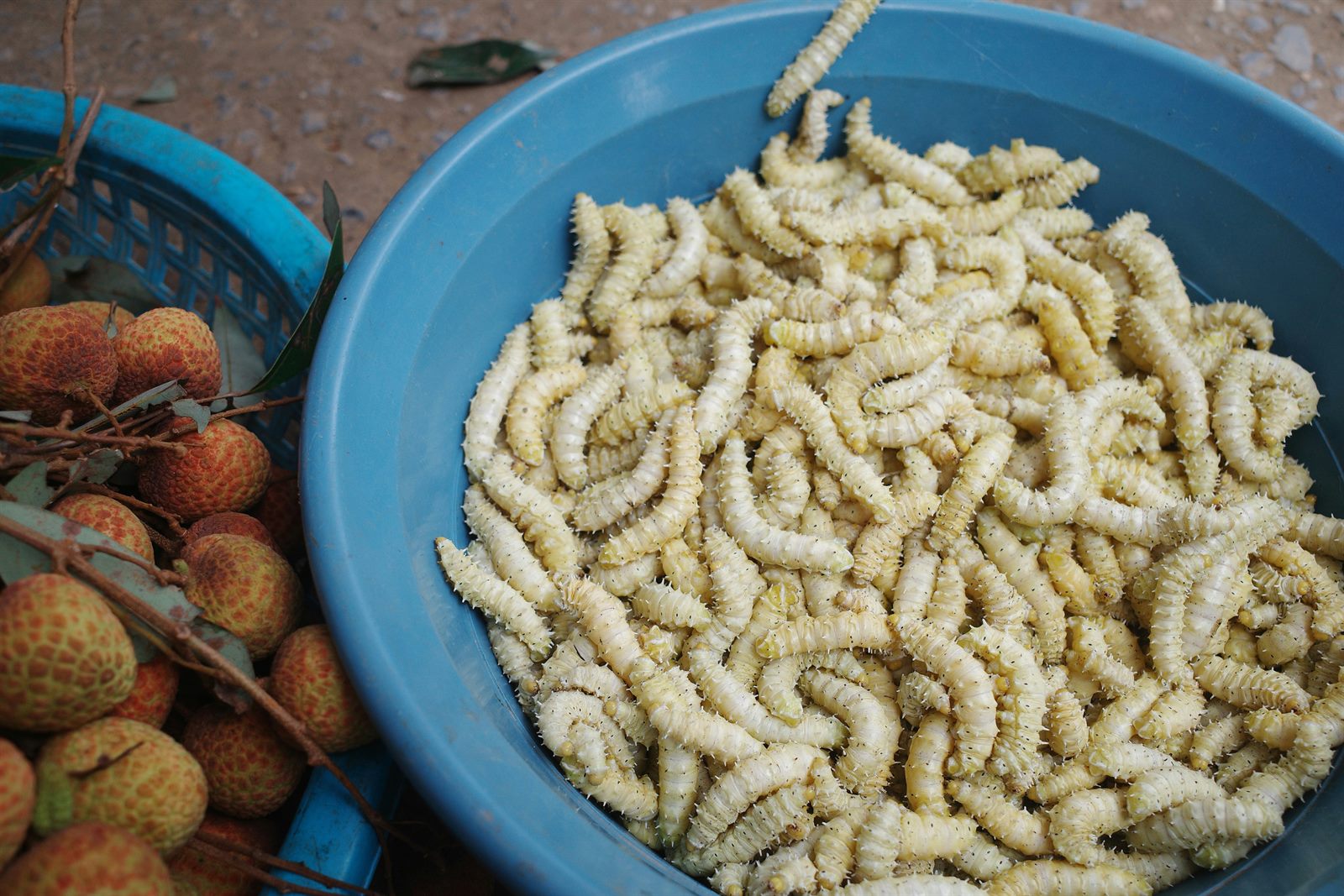
Whether insect protein is something that happens to you or something you actively choose depends largely on your engagement with food labelling and policy. Here is what is actionable now.
Read ingredient lists on protein products. Terms to look for include "insect protein," "cricket flour," "mealworm protein," "black soldier fly larvae meal," and "Acheta domesticus powder" — already present in some protein supplements, energy bars, and specialty foods in European and Canadian markets. You may already be consuming them.
Engage with food labelling consultations. The EU, FDA, and Food Standards Australia New Zealand are all developing or reviewing labelling standards for novel protein ingredients including insects. Public comment periods are open to individuals. If transparent labelling matters to you — in either direction — this is where your voice has leverage.
Consider the environmental arithmetic before choosing a position. The disgust response is powerful and not to be dismissed — but the environmental case for insect protein is among the strongest in all of food science. Deciding your position on accurate information rather than instinct is worth the effort; the FAO's "Edible Insects" report is publicly available and accessible to non-specialists.
Support transparent labelling regardless of your personal preference. Whether you want to choose insect protein or avoid it, clear front-of-pack labelling serves your interest. Those who want to seek it out and those who want to avoid it share identical interests in mandatory disclosure. That coalition is worth building.
- FAO — "Edible Insects: Future Prospects for Food and Feed Security," 2023 Update
- European Food Safety Authority — Novel Food Regulation Approvals, 2021–2023
- MarketsandMarkets — Global Edible Insect Market Report, 2023
- Wageningen University — Consumer Acceptance of Insect-Based Foods Study, 2022
- FDA — GRAS Notice 000606: Black Soldier Fly Larvae as Animal Feed, 2016
- Forecast The World Research Desk — 800+ data sources