The Question

In Nakuru County Referral Hospital in Kenya, a patient presents with symptoms of diabetic retinopathy — a leading cause of blindness, preventable if caught early. In London, that patient would wait three weeks for a specialist. In Nakuru, there is no ophthalmologist. There is a smartphone, a $500 retinal imaging attachment, and a cloud connection to IDx-DR — an FDA-cleared AI that diagnoses diabetic retinopathy with 87.2% sensitivity and 90.7% specificity, with zero physician input. The whole process takes four minutes.
IDx-DR became the first AI diagnostic system FDA-cleared for autonomous use — without a clinician reviewing the output — in April 2018. Since then, FDA-cleared AI medical devices have grown from dozens to over 700 across radiology, pathology, cardiology, dermatology, and ophthalmology. The question is no longer whether AI can diagnose accurately — peer-reviewed studies have settled that. It is what happens to medicine, and to the 1.4 million doctors in the United States alone, when a system on a phone does the same job more accurately at a fraction of the cost.
What the Evidence Shows
The published performance data is worth stating precisely. Paige Prostate, trained on over 30,000 pathology slides, detected prostate cancer with 95.8% accuracy in a 2021 Nature Medicine study, versus 84.9% for the average board-certified pathologist working alone. A 2022 JAMA Oncology study found it reduced pathologist miss rates for early-stage prostate cancer by 70%. The FDA cleared it as the first AI pathology product in August 2021.
The cardiology findings are equally striking. Apple Watch's ECG feature — worn by over 100 million people — received FDA clearance in 2018 to detect atrial fibrillation, which causes roughly 130,000 US deaths per year when undetected. A 2022 Mayo Clinic study in Nature Medicine found that AI analysis of standard 12-lead ECGs detected asymptomatic left ventricular dysfunction — a precursor to heart failure — with an AUC of 0.93, versus standard clinical assessment, which catches fewer than 10% of cases before symptoms appear. The AI was predicting heart failure years before any clinician would have known to look.
"We are approaching an inflection point where AI diagnostic systems will not merely assist physicians but will exceed their diagnostic accuracy in a growing number of specialties. The ethical question is not whether to deploy these systems — the data compels it — but how to manage the transition with justice and without abandoning the human dimensions of medicine."
— New England Journal of Medicine — "AI in Clinical Medicine: A Turning Point," 2023Google DeepMind's AlphaFold represents a different category of achievement: fundamental biology. In November 2020, AlphaFold 2 solved the protein structure prediction problem that had defeated science for fifty years, and DeepMind's 2022 database now provides free access to over 200 million predicted structures — essentially the entire known protein universe. Researchers estimate this will accelerate drug development timelines by 30 to 50%, with the greatest impact where no treatments currently exist.
"The average doctor sees 1,500 patients per year. The average AI diagnostic system processes 1,500 scans per hour. The math of access is not subtle."
Why This Is Happening
The global physician shortage is catastrophic and unfixable through conventional means. The WHO estimates a shortfall of 10 million health workers by 2030. Sub-Saharan Africa has 2.3 physicians per 10,000 people; the United States has 26. Training more doctors cannot close the gap — training takes a decade, and wealthy countries keep attracting doctors from poorer ones. Ada Health has conducted over 30 million AI symptom assessments across 94 countries; Babylon Health's AI triage handles over 4 million consultations per month. These are not pilots. They are functioning health infrastructure for populations with no alternative.
AI is trained on more data than any human could process in multiple lifetimes. A radiologist draws on roughly 100,000 images seen over a 30-year career — vanishingly small by machine learning standards. Google's chest X-ray AI, trained on over 300,000 radiologist-labelled images, exceeded radiologists on 11 of 14 pathology findings in a 2019 study. It does not tire, carry recency bias, or get distracted — and the gap in image-based specialties will only widen as training datasets grow.
Regulatory approval frameworks have adapted faster than critics predicted. The FDA's De Novo and 510(k) pathways have processed over 700 AI/ML device approvals as of 2025. The "predetermined change control plan" framework, finalised in 2023, lets AI systems update continuously on real-world data without full re-approval — removing the biggest structural bottleneck and signalling that the FDA has chosen to facilitate rather than obstruct the technology.
What Could Happen
AI becomes the standard first-contact diagnostician in radiology, pathology, dermatology, and ophthalmology by 2032. Human specialists shift to AI oversight, complex case escalation, and the relational dimensions of medicine. Specialist numbers in image-based fields decline 40 to 60% over 20 years. In low-income countries, AI diagnostics eliminate the specialist gap entirely for common conditions: cancer screening, diabetic complications, cardiovascular risk, TB and malaria identification.
US and EU liability law poses an unresolved question: when an AI diagnostic error harms a patient, who is liable — the physician, the hospital, or the company that built the system? Health systems in wealthy countries adopt a cautious "AI-assist only" posture requiring human confirmation, partially negating the AI's advantage. Meanwhile Rwanda, India, and Southeast Asia — with no equivalent liability culture — deploy autonomous AI diagnostics at scale, a paradox in which the world's poorest patients receive the most advanced diagnostic care.
AI systems optimised for sensitivity over specificity generate high false-positive rates, producing a wave of unnecessary biopsies, surgeries, and anxiety that overwhelms the systems AI was supposed to relieve. Regulators raise the specificity bar, slowing deployment. Medicine settles on a cautious model — AI handles screening and triage, humans confirm anything triggering invasive follow-up — which proves sustainable but falls short of the transformative access gains predicted.
What Can We Do
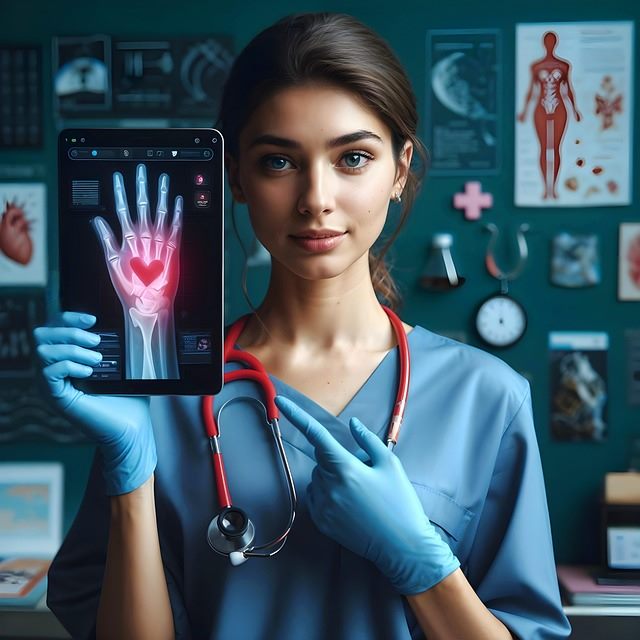
The AI medicine transition will happen with or without public engagement — but its shape, fairness, and safety are being decided now in regulatory agencies and legislatures.
Demand that AI diagnostic tools address health equity, not just affluent markets. Commercial incentives push toward wealthy markets with high reimbursement rates, while the public health need is concentrated in low-income countries. PATH, the Wellcome Trust, and the Gates Foundation are funding AI diagnostic deployment in sub-Saharan Africa and South Asia. Supporting these programs — and demanding FDA and WHO frameworks facilitate resource-constrained deployment — is where individual advocacy has real leverage.
Push for mandatory bias audits on AI medical systems before deployment. Systems trained predominantly on white, male, wealthy patients perform measurably worse on darker skin tones, female patients, and non-Western populations. A 2019 Science study found a commercial algorithm underestimated Black patients' health needs by roughly a factor of 2 because it used spending as a proxy for need. Demographic disaggregation of performance data should be a condition of FDA clearance.
Engage with the liability debate before courts set the precedent. If legislatures do not act, AI medical liability will be set by whichever case reaches a sympathetic judge first rather than by deliberate policy design. Consultations are open in the EU and under discussion in several US states — they warrant engagement from patients, not just physicians and technology companies.
Use what is already available. Ada Health, K Health, and Babylon Health provide AI symptom assessment and triage in most countries at low or no cost. They are not replacements for clinical care, but they improve the information patients bring to appointments, reduce unnecessary emergency visits, and flag high-risk symptom patterns. Using them is rational healthcare behaviour that most people underuse.
- Nature Medicine — "AI-Assisted Pathology in Prostate Cancer Detection," 2021
- New England Journal of Medicine — Apple Heart Study, 2019
- Mayo Clinic / Nature Medicine — ECG AI for Left Ventricular Dysfunction, 2022
- FDA — AI/ML-Based Software as a Medical Device Action Plan, 2021–2025
- WHO — "Health Workforce 2030: A Global Strategy," 2023 Update
- Forecast The World Research Desk — 800+ data sources