The Question
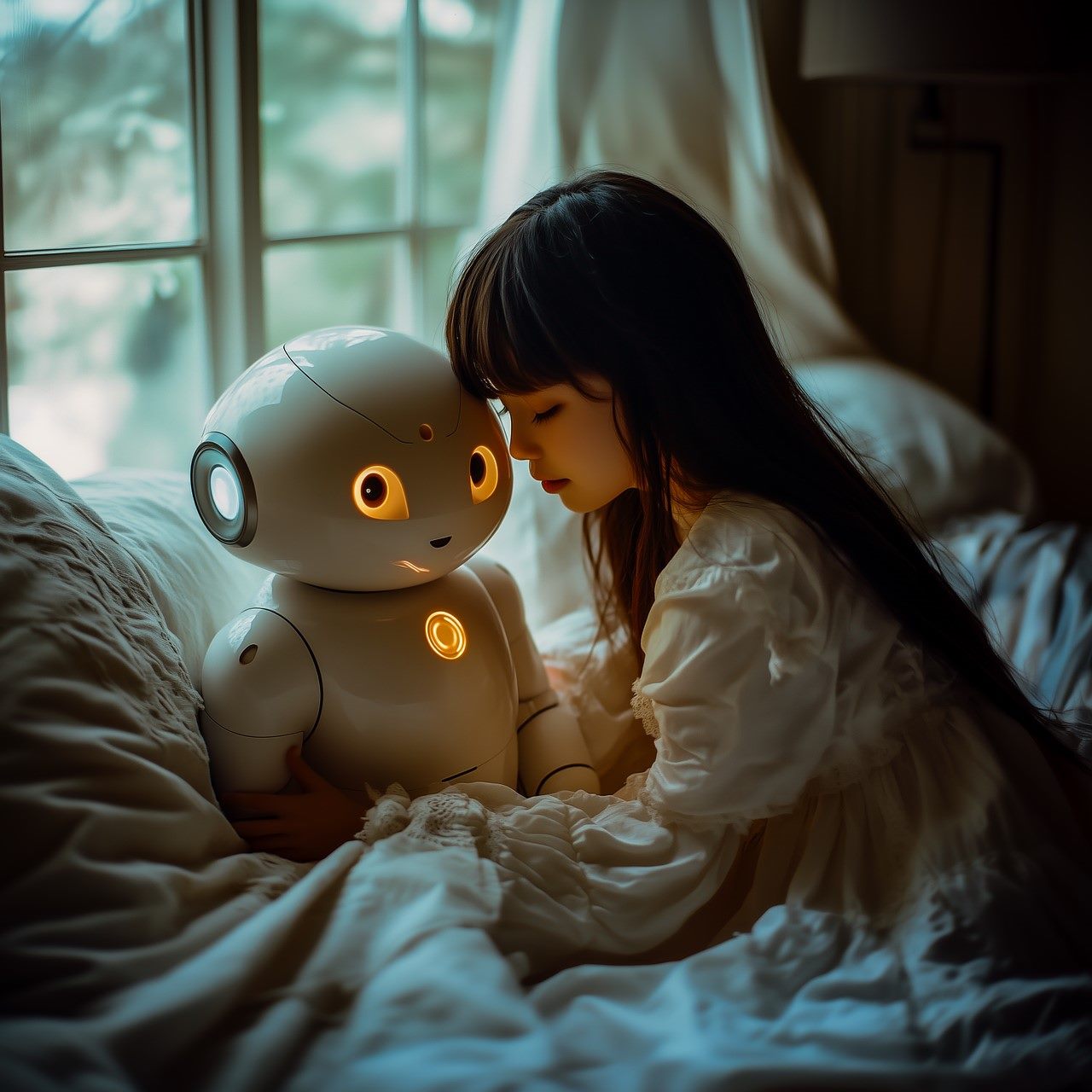
In 2019, researchers at MIT's Media Lab observed children aged three to ten interacting with Jibo — a small, expressive social robot — over several weeks. By the end, the children were confiding in it, telling it secrets they hadn't told their parents, and crying when told the robot would be taken away. One seven-year-old called Jibo "my best friend who always listens." The findings noted no meaningful distinction between the children's emotional responses to Jibo and to human friends.
That was 2019, when social AI was primitive. Today, the Moxie robot from Embodied Inc. — designed for children aged 5 to 10, priced at $899 with a subscription — uses GPT-4 level language models, facial recognition, and emotion detection to hold adaptive conversations, remember past interactions, and respond to a child's emotional state in real time. Moxie's peer-reviewed clinical trials show significant improvements in social skills and emotional regulation in daily users. The children also, without exception, form strong emotional attachments to it. The company frames this as a feature. Developmental psychologists are not sure it is.
What the Evidence Shows
The attachment phenomenon predates AI by decades. In 1998, Tamagotchi and Furby demonstrated that children form genuine emotional bonds with electronic companions: the original Tamagotchi sold 82 million units in its first decade, and schools in Japan and the United States banned it because children were too distressed by their virtual pets' deaths to concentrate in class. Those were crude devices — the emotional response came entirely from children's imaginations. Modern AI companions are immeasurably more sophisticated, and the responses they generate are correspondingly more intense.
Character.ai, founded by former Google Brain researchers, reported 20 million daily active users in 2024, with time-on-platform averaging 2 hours per day — higher than TikTok. Teenagers are its core demographic; many create AI personas as romantic partners, best friends, or therapeutic confidants. A 2023 New York Times investigation documented teenagers who sharply reduced real-world social interaction after forming deep relationships with these personas. When the platform changed its AI's conversational style after a legal dispute, thousands of users reported what clinicians described as "grief-equivalent" responses. Snapchat's My AI showed similar attachment patterns among users aged 13 to 17.
"Children's social development is profoundly shaped by the relationships they form in early childhood. When those relationships include AI companions capable of perfect patience, constant availability, and emotional responsiveness calibrated to the child's needs, we are conducting an unprecedented experiment on human development without a control group."
— American Psychological Association — "Children and AI Companions: A Review of Emerging Evidence," 2024Studies at the University of Washington and Stanford's Human-Computer Interaction Group find that children who regularly use voice assistants are more polite with AI than with humans, including their own parents. More troublingly, some children apply AI interaction patterns to human relationships: expecting instant, non-conflictual responses and expressing frustration when people lack the patience of their AI companions. The first generation raised with AI companions is only now entering adolescence — researchers are watching the longitudinal data with something between fascination and dread.
"An AI companion never loses patience, never has a bad day, and never needs anything back. For a lonely child, that is an almost irresistible offer."
Why This Is Happening
Loneliness among children and teenagers is at historic levels. The US Surgeon General's 2023 Advisory described a "loneliness epidemic," with 61% of people aged 18 to 25 reporting significant loneliness — rising steadily since 2012, when smartphones became ubiquitous, a link documented by NYU psychologist Jonathan Haidt in "The Anxious Generation." AI companions offer what human networks increasingly fail to provide: unconditional availability, consistent positive regard, and zero social risk. For a child navigating the brutal hierarchies of middle school, a companion that never rejects, excludes, or gossips is not a supplement to social life — it is a refuge from it.
AI companions are better at engagement than any toy in history. Hasbro's 2023 internal research, leaked to the Wall Street Journal, showed children aged 6 to 12 engaged with AI-enhanced toys 4.2 times longer per session than with conventional toys, as the AI learned each child's preferences and emotional patterns. This is the deliberate design goal of every company in the sector: Character.ai, Replika, and Moxie all use recommendation-system logic to maximise engagement, creating social-media-style dopamine loops calibrated to an individual child.
For some children, AI companionship may be genuinely beneficial. The Marcus Autism Center and the University of Southern California have documented significant social skill improvements in autistic children who use companions like Moxie as practice environments. For children with severe social anxiety, selective mutism, or trauma histories, a low-stakes AI environment may build capacity for human connection rather than replacing it. The clinical literature is mixed — outcomes depend on how the technology is deployed and supervised.
What Could Happen
By 2030, AI companion devices and apps for children — successors to Moxie, built into smart speakers, toys, and tablets — are present in most middle-class homes in the US, UK, and East Asia, viewed by parents as beneficial educational tools. Longitudinal research reveals a generation with measurably different social skill profiles — some enhanced (emotional expression, empathy), others diminished (conflict resolution, tolerance of ambiguity). Society debates the findings inconclusively for decades.
A high-profile harm event — a severely withdrawn child, or an AI companion giving harmful advice — triggers legislative action. The EU's AI Act and US children's privacy frameworks are extended to require parental oversight tools, usage limits, and mandatory prompts reminding children their companion is not human. Adoption slows among younger children while the teenage market — where risks may be higher — remains largely unregulated.
Well-designed longitudinal studies following children from age 4 through adolescence find net positive outcomes: better emotional literacy, higher empathy, lower social anxiety — supporting the "social rehearsal" hypothesis that skills practised with AI transfer to human relationships. Professional bodies endorse supervised use, and the technology enters mainstream clinical practice for children with social developmental challenges.
What Can We Do

Parents, educators, and policymakers each have specific levers. The question is whether they will act before the first longitudinal studies confirm harm — or after.
Treat AI companion use as you treat social media — with active oversight. Time limits, content review, and regular conversations about online relationships apply with even greater force to AI companions, which are more emotionally engaging and personalised than any social media platform. "My child is using it, it seems fine" is not a monitoring strategy.
Ensure human relationships remain primary. American Academy of Pediatrics screen-time guidance rests on a core principle: technology should supplement human connection, not replace it. A child whose primary source of emotional support is an AI companion rather than parents, teachers, and peers is showing a warning sign — however high quality the AI.
Advocate for the right to grieve AI companion loss. When platforms shut down — as Jibo was, as early Replika features were removed — children experience genuine grief. Schools and therapists should support children through AI companion loss as they would other relationship losses. The grief is real even if the relationship was with a machine.
Demand research funding for longitudinal child AI studies. The science of AI's impact on child development is critically underfunded. NIH, ESRC, and equivalent bodies should fund 10 to 15 year longitudinal studies of children growing up with AI companions — starting now, before uncontrolled deployment makes clean research impossible.
- MIT Media Lab — Jibo Social Robot Child Interaction Study, 2019
- American Psychological Association — "Children and AI Companions: A Review of Emerging Evidence," 2024
- US Surgeon General — Advisory on Youth Mental Health and Social Connection, 2023
- Character.ai — Platform Usage Statistics, 2024
- Embodied Inc. — Moxie Clinical Trial Peer-Reviewed Results, 2023
- Forecast The World Research Desk — 800+ data sources