The Question

We have been running a large, uncontrolled experiment on the human nervous system for the past fifteen years. Smartphones arrived, social media scaled, and we handed over increasing hours of attention without fully understanding the cost. Now the data is coming back, and it is consistent: the people spending less time online are doing better on almost every measure of wellbeing that we track.
The offline advantage is not about rejection of technology. It is about conscious design — choosing when to connect and when to protect attention. The question our model is testing is whether this conscious design becomes a majority behaviour rather than the practice of a technically-savvy minority.
What the Evidence Shows
A 2023 study by the University of Pennsylvania, tracking 143 adults over four weeks, found that limiting social media use to 30 minutes per day produced significant reductions in loneliness, depression, and anxiety compared to normal use. Crucially, participants did not report feeling disconnected — they reported feeling more connected to the people around them.
Research from Stanford and MIT examining 400 households that removed social media entirely for a month found that participants reported a meaningful increase in life satisfaction, spent significantly more time with friends and family in person, consumed more long-form news, and showed reduced political polarisation. The effects persisted six months after the experiment ended.
"For every additional hour spent on social media, reported life satisfaction drops by a statistically significant margin. The relationship is dose-dependent and consistent across cultures."
Hunt et al. — No More FOMO, Journal of Social and Clinical Psychology, 2018The emerging "digital wellness" market — apps that track and limit screen time, device-free hotel experiences, analogue subscription boxes, and screen-free schools — is growing at 28% annually. This is not a fringe phenomenon. Major tech companies, including Apple and Google, have built screen-time management tools into their operating systems — an implicit acknowledgement of the problem.
"The most valuable thing you can do with your phone today may be to put it down."
Why This Is Happening
The attention economy has a visible cost now. A generation of children raised with smartphones is showing measurable differences in attention span, social skills, and mental health compared to those who were not. Parents, educators, and policymakers are responding with urgency. What begins with protecting children tends to eventually reach adults.
The comparison trap is becoming harder to ignore. Social media is engineered to trigger social comparison — and social comparison is reliably linked to lower self-esteem and life satisfaction. As people become more aware of this mechanism, intentional opting-out becomes a rational rather than eccentric choice.
Sleep science is landing in public consciousness. Matthew Walker's Why We Sleep and a wave of subsequent research have made the connection between screens before bed and poor sleep quality universally understood. Protecting sleep — which requires protecting evenings from screens — is driving offline behaviour from a health rationale rather than a values one.
What Could Happen
By 2030, structured offline practices — screen-free mornings, device-free bedrooms, weekly digital sabbaths — become as common as going to the gym. Employers offer offline hours as a benefit and schools embed digital literacy and limitation as core skills.
Governments move faster than culture, restricting social media access for under-16s and mandating screen-free periods in schools and workplaces. The mainstream shift is driven by policy rather than voluntary behaviour change.
AI-driven content curation reduces the addictive and comparison-triggering elements of social media, making deliberate disconnection less necessary. People spend less time online not by choice but because the platforms become less compelling.
What Can We Do
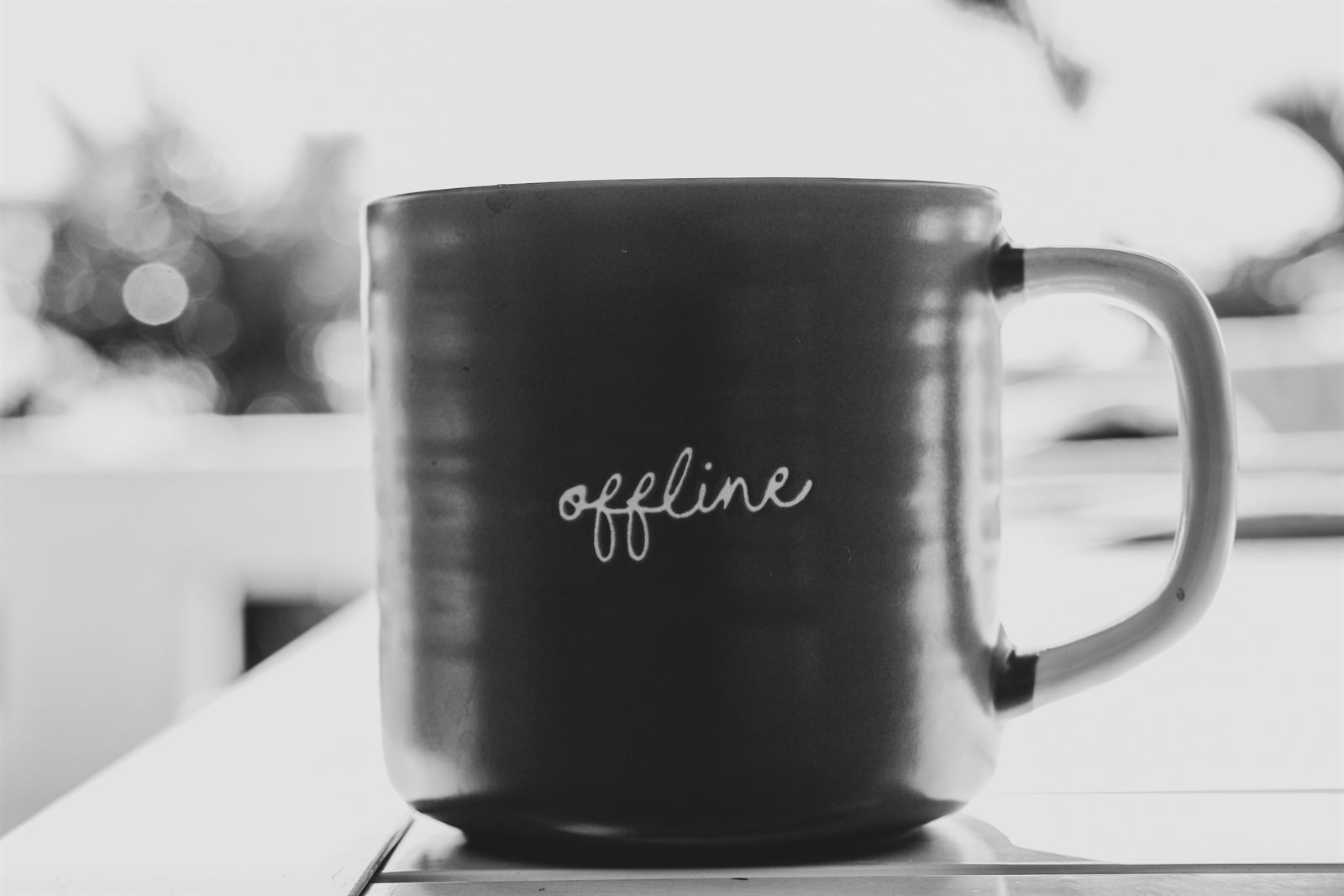
The offline advantage is not about giving up technology — it is about reclaiming agency over your attention. These changes are small in execution and large in effect.
Start with your bedroom. The single most impactful offline change you can make is removing your phone from your bedroom at night. Better sleep quality from this one change alone produces measurable improvements in mood, concentration, and physical health within two weeks.
Protect the first hour of your morning. Reaching for your phone within minutes of waking immediately puts your nervous system into reactive mode — responding to others' agendas before you have formed your own. A phone-free morning, even for 30 minutes, resets this pattern.
Schedule your social media, don't browse it. Treat social media like email — open it at designated times rather than responding to every notification. Most people who try this find their daily use drops by over 50% within a week, with no meaningful loss of information or connection.
Replace one daily scroll with one daily conversation. The evidence shows that in-person or voice conversation provides the social nourishment that social media promises but cannot deliver. One genuine conversation per day — not text, not comments — is a more powerful connection tool than any platform.
Take one full offline day per week. The Jewish Sabbath, the Scandinavian friluftsliv, and the new tech-free Sunday movement all reflect the same human need: a day that belongs entirely to you, your body, and the people physically around you. Even one day per month produces measurable wellbeing improvements.
- Hunt et al. — No More FOMO, Journal of Social and Clinical Psychology, 2018
- Allcott et al. — The Welfare Effects of Social Media, American Economic Review, 2020
- Twenge et al. — Associations Between Screen Time and Lower Wellbeing, Preventive Medicine Reports, 2018
- Walker — Why We Sleep, Scribner, 2017
- Common Sense Media — The Common Sense Census: Media Use by Tweens and Teens, 2023
- American Psychological Association — Stress in America: Generation Z Report, 2024
- Forecast The World Research Desk — 800+ data sources