The Question

We have spent decades studying what makes people happy and have looked almost everywhere — income, relationships, health, purpose. The answer that keeps emerging from the data is both simple and underused: giving to others. Not grand philanthropy, not sacrifice, but small, deliberate acts of kindness woven into daily life.
The question our model is measuring is specific: will structured kindness — intentional daily acts of generosity, helpfulness, and care — become as recognised and practised a wellbeing tool as exercise or meditation by 2030? The evidence suggests we are already well on our way.
What the Evidence Shows
A landmark 2023 meta-analysis of 201 studies covering over 198,000 participants found that prosocial behaviour — doing things for others — reliably increases the happiness of the person giving. The effect is consistent across cultures, age groups, and income levels. It works whether the act is giving money, time, or simply a compliment.
Neuroscience explains why. Giving activates the same reward circuits as receiving. Brain imaging studies show that donating to charity lights up the ventral striatum — the brain's pleasure centre — more reliably than receiving an equivalent sum. Oxytocin, dopamine, and serotonin all spike in response to prosocial acts. Researchers at the University of British Columbia call it the "helper's high."
"People who spent money on others reported greater happiness than those who spent it on themselves — regardless of income level."
Dunn, Aknin & Norton — Science, 2008 (replicated across 136 countries, 2020)What is new is the structural shift. Schools, employers, and health systems are beginning to formalise kindness as a practice — not a personality trait. The NHS in England has trialled "social prescribing" of volunteer activities. Several US corporations have introduced paid kindness hours. The Japanese concept of omotenashi — selfless service — is being studied as a model for workplace wellbeing policy.
"The most effective antidepressant may not be a pill. It may be a habit of giving."
Why This Is Happening
Mental health has become a mainstream priority. Governments and employers are no longer dismissing wellbeing as soft. The global mental health crisis has created urgent demand for scalable, low-cost interventions. Kindness practices cost nothing and have a strong evidence base — a rare combination in public health.
The social isolation epidemic is creating demand for connection. As people spend more time alone and online, small acts of human connection carry disproportionate emotional weight. Kindness provides a bridge — a structured reason to engage with other people that benefits both parties.
Technology is making kindness measurable and habitual. Apps like BeKind, GiveBackBox, and corporate volunteer platforms are turning prosocial behaviour into trackable daily practices. Gamification, reminders, and social accountability are applying the same mechanics that made fitness apps mainstream to the act of giving.
What Could Happen
Structured kindness practices are formally recommended by doctors, employers, and schools alongside exercise and sleep hygiene. Daily giving habits reach mainstream adoption by 2029, driven by growing mental health awareness and strong clinical evidence.
Kindness practices grow but remain confined to the wellness community and progressive workplaces. Mainstream adoption stalls due to cultural scepticism and lack of institutional support.
Kindness becomes embedded in civic infrastructure — public transport systems, urban design, and education curricula are restructured to facilitate prosocial interactions at scale, fundamentally reshaping daily life.
What Can We Do
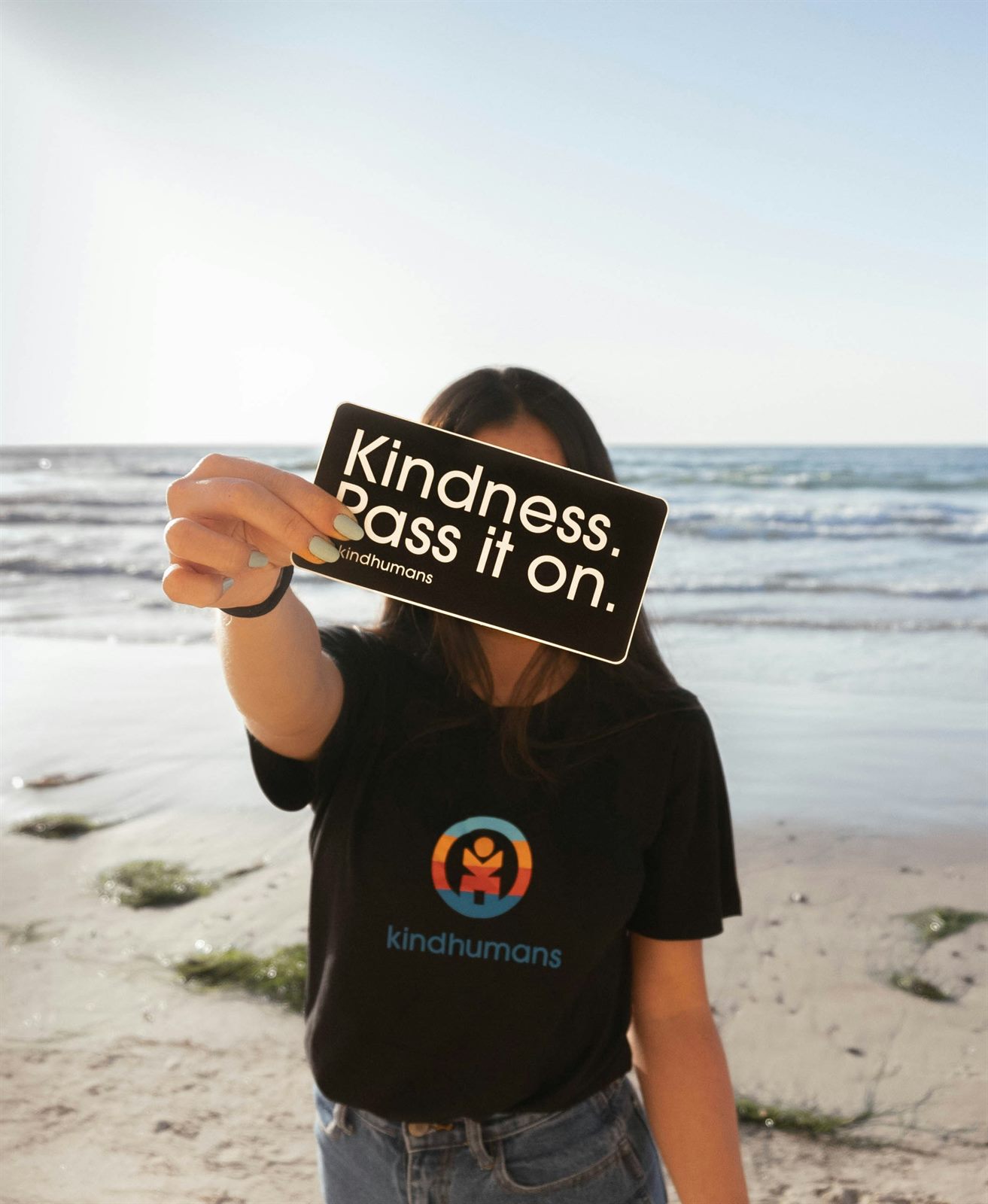
You do not need to wait for institutions to catch up. The research is clear enough to act on now — and the returns are immediate.
Make it structural, not spontaneous. Spontaneous kindness is unreliable. The research shows that planned, habitual acts are more effective than impulsive ones. Set a daily or weekly intention: one act of kindness per day, however small — a compliment, holding a door, a text to check on someone.
Give time, not just money. Volunteering your time produces stronger wellbeing effects than financial giving. Contact a local organisation and commit to a regular slot — even two hours a month produces measurable results within three months.
Practise micro-kindnesses at work. Workplaces are the most underused venue for prosocial behaviour. Publicly acknowledging a colleague's effort, mentoring a junior team member, or simply asking how someone is doing — and meaning it — compounds into significant wellbeing gains over time.
Focus on the unexpected recipient. Studies show that kindness directed at strangers or acquaintances — not close friends or family — produces the largest happiness boost. The novelty and social risk of reaching out to someone outside your inner circle amplifies the neurological reward.
Track it briefly. Journalling three acts of kindness per week for as few as four weeks has been shown in clinical trials to raise happiness scores and reduce depressive symptoms. The act of noticing and recording increases the neurological impact of the behaviour itself.
- Curry et al. — Kindness and Happiness Meta-Analysis, Journal of Experimental Social Psychology, 2018
- Dunn, Aknin & Norton — Spending Money on Others Promotes Happiness, Science, 2008
- Moll et al. — Human Fronto-Mesolimbic Networks Guide Decisions About Charitable Donation, PNAS, 2006
- Aknin et al. — Prosocial Spending and Well-Being, Journal of Personality & Social Psychology, 2013
- NHS England — Social Prescribing and Community-Based Support, 2023
- Layous et al. — Kindness Counts: Prompting Prosocial Behavior in Preadolescents, PLOS ONE, 2012
- WHO — World Mental Health Report, 2022
- Forecast The World Research Desk — 800+ data sources