The Scale of the Change
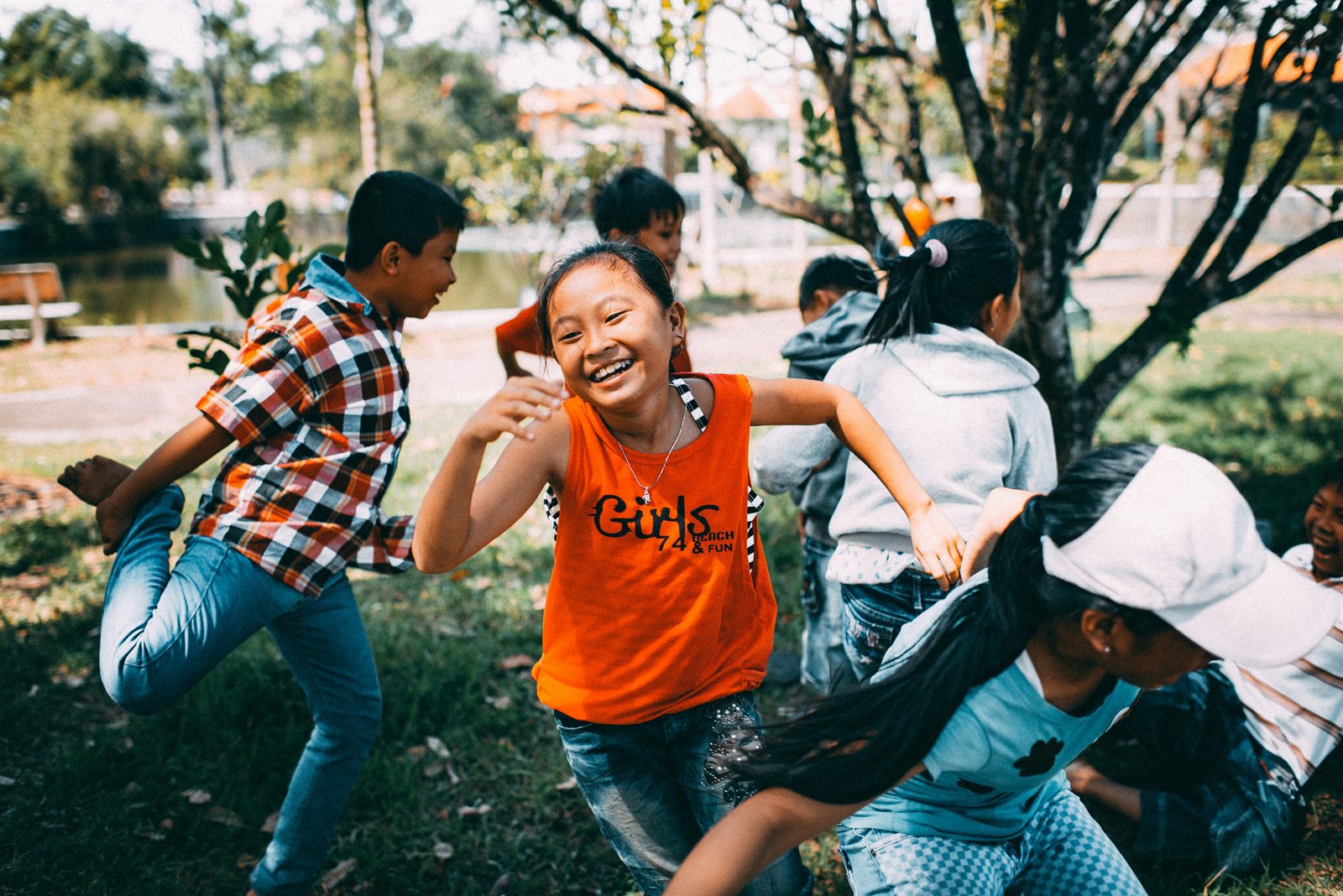
In 1970, the average American child spent 44 hours per week in unstructured outdoor play. By 2020, that figure was under 4 hours. In the UK, Natural England data shows that children spend an average of 4 minutes per day in unstructured outdoor play — compared to the 11 hours they spend looking at screens. In an evolutionary blink, children went from the species that spent the most time in the natural world to the species that spends the least.
The change happened through an accumulation of individually reasonable decisions: traffic made streets unsafe; stranger-danger fears made unsupervised play feel irresponsible; screens provided an alternative that was easier, quieter, and required no coordination with neighbours. No single decision dismantled outdoor childhood. It was the sum of millions of cautious choices, each sensible in isolation, catastrophic in aggregate.
What the Research Shows
The consequences of this shift are measurable across multiple health domains. Rates of myopia (short-sightedness) have risen from 20% in 1970 to over 50% among children today — a rise directly and causally linked to reduced time in natural light. The mechanism is biological: outdoor light stimulates dopamine release in the retina, which regulates eye growth. Children who spend too little time outdoors develop eyes that grow in the wrong direction. We are producing a generation that literally cannot see clearly because we have kept it indoors.
Childhood anxiety, ADHD diagnoses, and depression have all risen steeply in the same period. Multiple studies confirm that outdoor unstructured play is uniquely restorative for children's developing nervous systems in a way that cannot be substituted by organised indoor activity, and cannot be substituted by screens. The sensory complexity of the natural environment — unpredictable surfaces, changing light, variable weather, the presence of living things — provides a form of neurological stimulation that indoor environments simply do not replicate.
"Children need three things from outdoor play: risk, agency, and natural unpredictability. All three are absent from screens and from most organised activities. Without them, children's developing nervous systems lack the stimulation they were shaped for."
Dr. Peter Gray, Free to Learn, 2013The risk dimension is particularly important and particularly misunderstood. The same parental anxiety that keeps children indoors — the fear of falls, accidents, and stranger danger — is producing children who are less capable of managing risk, less resilient to setbacks, and more prone to anxiety than the generations who climbed trees and scraped knees. The protective impulse is counterproductive: children who are never allowed to experience manageable risk do not become safer. They become more afraid.
"A child who has never climbed a tree, fallen out of one, and climbed it again has missed something essential about what it means to be a child."
The Movement Forming
The response is building. Let Grow, a US non-profit dedicated to restoring children's independence, has secured right-to-roam legislation in 16 US states that explicitly protects parents who allow children to play outside without adult supervision. The legislation is a direct response to the absurd situation in which parents were being reported to child protective services for allowing children to walk to school or play in a park alone — activities that were universal within living memory.
The Forest Schools movement has expanded to over 5,000 schools in 50 countries, with Norway's friluftsliv (outdoor life) education model being studied and adopted internationally. Adventure Playground networks are being rebuilt in cities across the UK, US, and Europe. Parent groups are explicitly organising phone-free, screen-free neighbourhood play hours — creating the social permission that individual parents feel they cannot give unilaterally. These are not nostalgic. They are intentional, evidence-based designs for what children's development requires.
What Could Happen
The parents' movement, policy change, and schools adopting outdoor education produce a measurable increase in unstructured outdoor play time. Right-to-roam legislation spreads to more jurisdictions. Forest Schools become standard rather than exceptional. The combination of cultural shift, legal protection for parents, and school-based intervention reverses the generational trend. Children spend more time outside in 2032 than in 2022.
Interest in outdoor play grows among aware parents but structural barriers — traffic danger, urban density, parental anxiety, and the competitive pull of screens — prevent the trend from becoming population-wide. Outdoor play increases in middle-class and suburban environments but not across the population. The gap between children with access to safe outdoor environments and those without widens.
Investment in play streets, car-free zones, and school ground transformation produces rapid and decisive reversal in specific cities that becomes the template others follow. The urban redesign approach proves faster and more equitable than relying on individual parental choices, reaching children across income levels simultaneously. A model emerges that spreads faster than organic cultural change would predict.
What Can We Do

If you have children: give them unsupervised outdoor time this week. Not structured, not supervised, not with a schedule. Let them be bored outside. Let them find something to do. Accept the scratches. The research on what unstructured outdoor time produces — in terms of creativity, resilience, physical development, and social skill — is among the most consistent in developmental psychology. The boredom is not the problem. It is the point.
If you influence schools or local policy: advocate for outdoor time as a health intervention, not a luxury. Forest Schools. Adventure playgrounds. Longer unstructured break times. School grounds transformed from tarmac car parks into environments with trees, varied surfaces, and places to hide. The school environment shapes children's relationship with the outdoors for their entire childhood. Changing it changes everything downstream.
Walk around your neighbourhood and count how many children you see playing outside. If the number is zero, that is not a coincidence or a weather problem. It is the outcome of decisions — by planners, parents, schools, and legislators — that can be unmade. Then work backward from zero and ask which decision, changed first, would make the most difference.
- Larson et al. — Outdoor Time Among US Adolescents: National Health Interview Survey, 2019
- Natural England — Monitor of Engagement with the Natural Environment Survey, 2024
- Gray, P. — Free to Learn: Why Unleashing the Instinct to Play Will Make Our Children Happier, More Self-Reliant, and Better Students for Life, 2013
- Morgan et al. — The Increasing Prevalence of Myopia in Children, The Lancet, 2021
- Forecast The World Research Desk — 800+ data sources