What Research Found When Families Stopped Eating Together
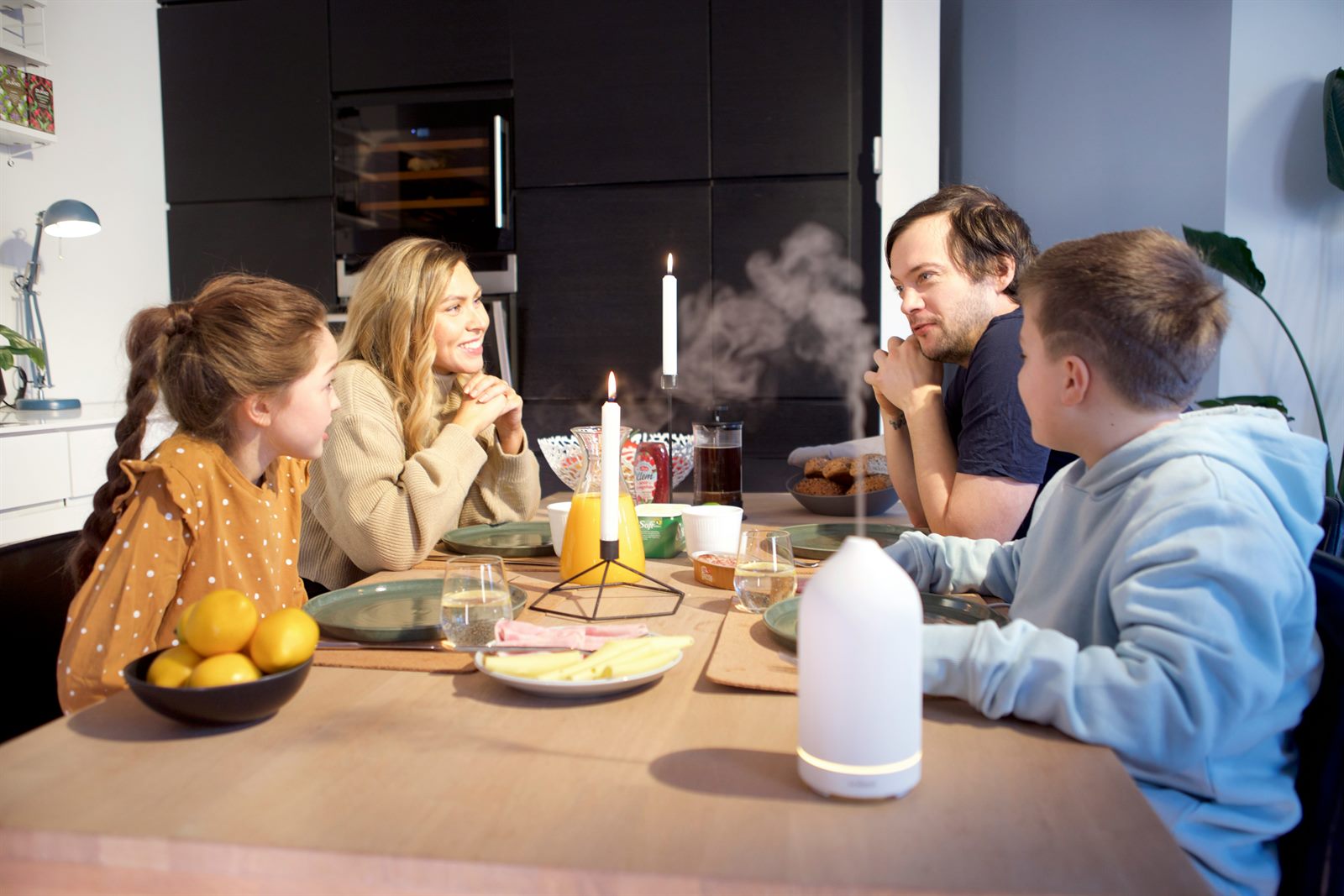
The Family Dinner Project at Harvard has tracked shared family mealtimes for 25 years. Their findings are unambiguous: children in families that eat dinner together five or more times per week show 35% lower rates of substance abuse, 24% higher academic performance, significantly lower rates of eating disorders, better emotional regulation, and stronger family communication. No other single family practice has produced outcomes this consistent across this many variables.
That last point is important. Researchers have studied parenting interventions, school programmes, community initiatives, and therapeutic approaches. The nightly family dinner — a practice so ordinary that most families who have it don't think of it as a practice at all — outperforms almost all of them. Its power lies in its frequency, its informality, and the depth of relationship that accumulates across hundreds of unremarkable evenings together.
What Happened to the Family Dinner
The average American family ate dinner together 5.3 times per week in 1960. By 2020, that number was 3.1 times — and falling. The causes are structural: both parents working late, children's activity schedules, ubiquitous screens that offered individualised entertainment, and the rise of meal delivery that made different meals for different people trivially easy.
The table didn't disappear because people stopped valuing connection. It disappeared because the conditions that supported it were systematically dismantled. Work schedules extended. After-school programmes multiplied. The television moved from the lounge to the bedroom to the pocket. Each change was individually small and reasonable. Together, they eroded the daily ritual that had anchored family life across all of recorded history.
"The family dinner table is not about the food. It is the most reliable recurring moment in family life for connection, communication, and the transmission of values. When it disappears, something irreplaceable goes with it."
Dr. Anne Fishel — The Family Dinner Project, Harvard Medical School, 2022The consequences showed up in the data over the following decades — in rising rates of adolescent anxiety and depression, in weakened family bonds, in young adults who reported feeling unknown by their own parents. The dinner table wasn't just about eating. It was the primary infrastructure for family relationship, and when it went, the relationship infrastructure went with it.
"You cannot replicate in one hour on Saturday what happens in 20 minutes every evening at a table. Frequency matters more than intensity."
The Revival Underway
Cookware and dining furniture sales are at record highs. This is not accidental. The pandemic forced families back to the table for the first time in decades, and many discovered — or rediscovered — something they hadn't realised they were missing. The habit formed under necessity is now being maintained by choice, supported by significant consumer investment in the physical space of shared eating.
"Family dinner commitment" challenges on social media have attracted millions of participants. The irony of using social media to reclaim time from social media is not lost on anyone, but the intent is genuine. Parents and young adults are publicly committing to shared mealtimes in a way that creates social accountability — the same mechanism that makes parkrun work, applied to the dinner table.
School meal programmes are expanding to teach children to eat together. Recognising that many children have no experience of shared mealtimes at home, schools in the UK, Scandinavia, and parts of the US are designing communal lunch as an educational experience — teaching the conversation, the patience, the shared attention that the family table used to transmit automatically.
The "phone-free dinner" movement is growing across households and restaurants. Several restaurant chains have introduced voluntary phone-stacking rituals. The movement toward phone-free mealtimes signals something significant: people are actively choosing to reconstruct the conditions that make shared eating meaningful rather than simply eating in the same room while looking at separate screens.
Research on the family dinner is being cited by paediatricians in standard healthcare recommendations. The evidence has moved from academic literature to clinical practice. When a GP asks about family mealtime frequency in the same breath as sleep and exercise, the dinner table has been officially recognised as a health intervention.
What Could Happen
The dinner table re-establishes itself as the daily social anchor for most households. Research evidence reaches general awareness. The phone-free dinner becomes standard rather than exceptional. Structural changes — flexible working, later school start times, shorter commutes — make the daily shared meal achievable for the majority of families who want it.
The desire is there but the structural obstacles prove stubborn. Work schedules, commuting, children's activity pressures, and delivery app convenience prevent a return to the 5x weekly norm. Shared mealtimes improve but don't recover to historical levels. The benefits remain partially captured rather than fully realised.
The dinner table becomes a public health priority. Employers offer protected evening hours as a standard benefit. School schedules shift to accommodate the working day in ways that preserve family time. The shared meal is recognised not as a private choice but as an infrastructure question — as important to public health as cycling lanes or park access.
What Can We Do
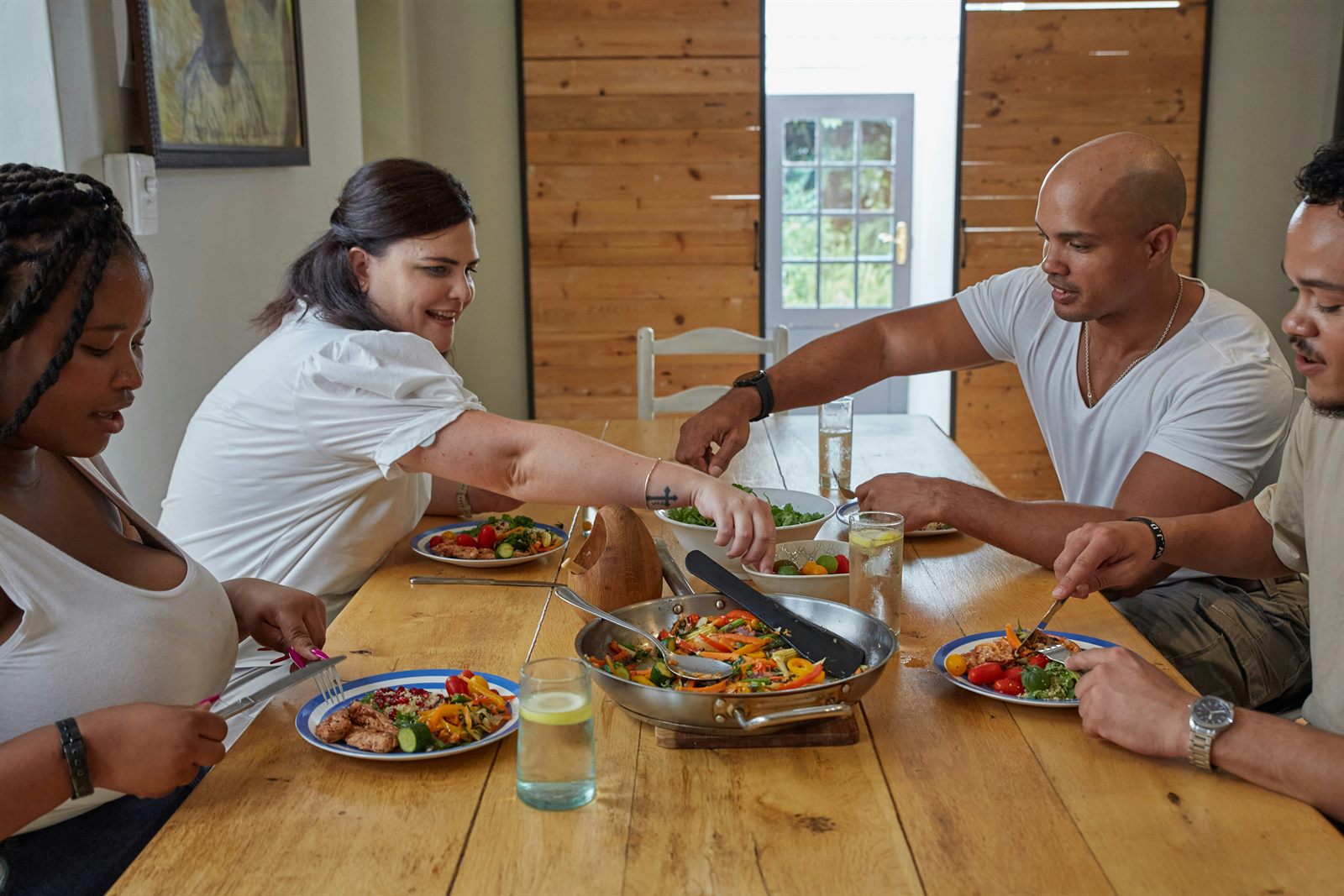
Pick one evening this week where everyone in your household eats together, with no phones on the table. Make the food simple so that is not the barrier. Ask one question you haven't asked before. Then do it again next week.
The research shows that the benefits compound with frequency, not with effort. You don't need a perfect family dinner. You need a regular one. A bowl of pasta eaten together five times a week produces more resilient children than a special meal eaten once a month. The value is in the accumulation of ordinary evenings, not in any individual occasion.
The phone-free rule is not optional. The research specifically measures attentive shared mealtimes. A dinner where four people sit at the same table while looking at separate screens is not a family dinner in any meaningful sense. The phones go face-down. Ideally, they go in another room. This is the one non-negotiable structural element, and it is also the most difficult. Start there.
- The Family Dinner Project — Research Summary and Impact Data, Harvard Medical School, 2022
- Fishel, A. — Home for Dinner: Mixing Food, Fun, and Conversation for a Happier Family and Healthier Kids, 2015
- National Center on Addiction and Substance Abuse — The Importance of Family Dinners, Columbia University, 2012
- NPD Group — Cookware and Dining Furniture Sales, 2024
- Forecast The World Research Desk — 800+ data sources