The Question

For most of the era after 1945, allies could assume that the broad direction of American foreign policy would survive a change of president. Treaties signed under one administration were honored by the next; a commitment made in Washington was, more or less, a commitment. That assumption has frayed. In the space of roughly ten years, the United States reversed itself on a series of major international commitments — not through defeat or crisis, but through the ordinary turning of its own electoral calendar.
Consider the record. The Iran nuclear deal — formally the Joint Comprehensive Plan of Action, or JCPOA — was signed in 2015, abandoned by Washington in 2018, and a later attempt to revive it failed. The Paris climate agreement was joined in 2016, left in 2017, rejoined in 2021, and left again in 2025. The United States withdrew from the Trans-Pacific Partnership, a sprawling Asia-Pacific trade deal, in 2017. It ended its long war in Afghanistan in 2021. Military aid to Ukraine became a domestic political football, its flow uncertain from one budget fight to the next. The question this forecast weighs is whether these swings are a passing turbulence — or the new normal that the world must now build around.
What the Evidence Shows
The pattern is not confined to one party or one president; it is structural. Under the US Constitution, foreign policy runs heavily through the executive branch. A president can sign or leave many international agreements, impose or lift sanctions, and reposition forces without fresh legislation. Deals struck as "executive agreements" rather than Senate-ratified treaties — as the Iran and Paris commitments effectively were — are especially easy for a successor to undo with a signature. What one administration builds, the next can unwind between one January and the next.
That fragility now shapes how partners behave. Across Europe, officials speak openly of "strategic autonomy" — the ability to act without depending on Washington — and of "de-risking" their security and supply chains away from a single guarantor. The debate sharpened after the Munich Security Conference in February 2025, where doubts about the durability of American commitments moved from private worry to public strategy. Capitals from Brussels to Tokyo now ask a question that would have seemed strange a generation ago: what is our plan if the United States changes its mind?
"Europe must take more responsibility for its own security."
— Recurring theme, Munich Security Report, 2025Public opinion supplies the fuel. Surveys by the Pew Research Center have for years documented deep partisan divides over America's global role — over alliances, trade, immigration, and the use of force. When the two major parties hold sharply different views of the country's place in the world, and power alternates between them, foreign policy inherits the swing. An electorate divided on first principles produces a foreign policy that lurches rather than steers.
"Alliances built over decades now hinge on a single vote — and the world has started to notice."
Why This Is Happening
Power is concentrated in one office. The founders gave the president wide latitude in foreign affairs, and over two centuries that latitude has grown. Congress can fund or defund, ratify or refuse, but the day-to-day direction of diplomacy, sanctions, and force posture sits in the executive branch. When the presidency changes hands, the steering wheel changes with it — and there are few institutional brakes to slow a sharp turn.
Polarization has hardened into two rival worldviews. A generation ago, a rough bipartisan consensus underwrote alliances, free trade, and American leadership. That consensus has splintered. Today the parties disagree not only on tactics but on the basic purpose of American power abroad — whether to lead a global order or to husband resources at home. Each election becomes a referendum on that question, and the answer keeps flipping.
The electoral clock is short and relentless. A presidential term is four years; a midterm can shift Congress after two. That cadence is far faster than the decades over which alliances, deterrence, and trust are built. Partners planning on a twenty-year horizon must now hedge against a counterpart whose direction can reverse on a two-to-four-year cycle — a mismatch that erodes confidence even when a given policy holds.
What Could Happen
Europe presses ahead on strategic autonomy, Asian partners deepen their own arrangements, and states across the board stockpile, diversify suppliers, and build alternatives — treating American reliability as a variable to be managed rather than a constant to be assumed. Cooperation continues, but always with a fallback.
A major external crisis, or reforms that lock more commitments into ratified treaties and law, narrows the partisan gap and steadies American policy for a stretch — restoring some of the predictability allies remember, at least across a few key issues.
Reversals grow so frequent and sweeping that partners quietly write the United States out of their long-term plans, adversaries exploit the gaps, and the fabric of American-led alliances begins to fray in ways that are hard to repair.
What Can We Do
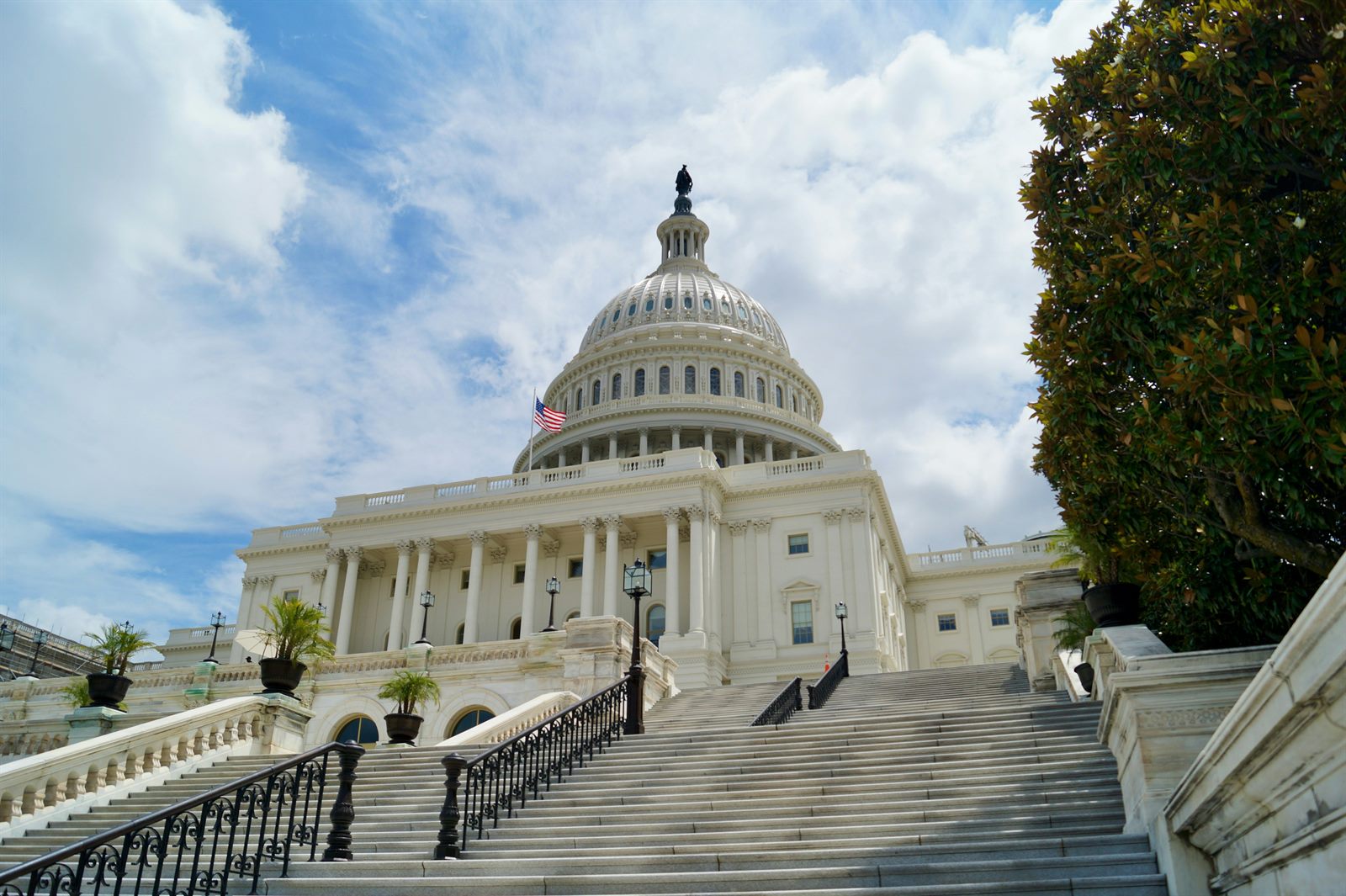
Foreign policy can feel remote from daily life, decided by officials far away. But its swings touch trade, jobs, and security everywhere, and citizens are not powerless to steady them.
Learn how commitments are actually made. Know the difference between a Senate-ratified treaty and an executive agreement, and why the second is so easy to reverse. Understanding which promises are durable and which are not makes it far harder to be surprised — or spun — when the direction changes.
Reward consistency where you can. Voters, businesses, and officials who value predictable engagement can support candidates and institutions that seek to lock commitments into law rather than leave them to the stroke of a pen. Durable policy is built, not wished for.
Follow the credible trackers. The Council on Foreign Relations, Brookings, and Chatham House publish careful, non-partisan analysis of American policy and its reversals. Watching how commitments hold or break over time beats reacting to each headline in isolation.
Build for resilience, not dependence. Whether a business, an ally, or a community, plan for a range of American postures rather than betting everything on one. Diversified supply chains, broadened partnerships, and contingency plans turn a volatile partner into a manageable risk instead of a single point of failure.
- Council on Foreign Relations — analyses of US foreign-policy continuity, 2025
- Brookings Institution — Foreign Policy program research, 2025
- Pew Research Center — Partisan divides on America's global role, 2024–2025
- Munich Security Report, 2025
- Chatham House — The US and the international order, 2025
- Forecast The World Research Desk — 800+ data sources