The Question
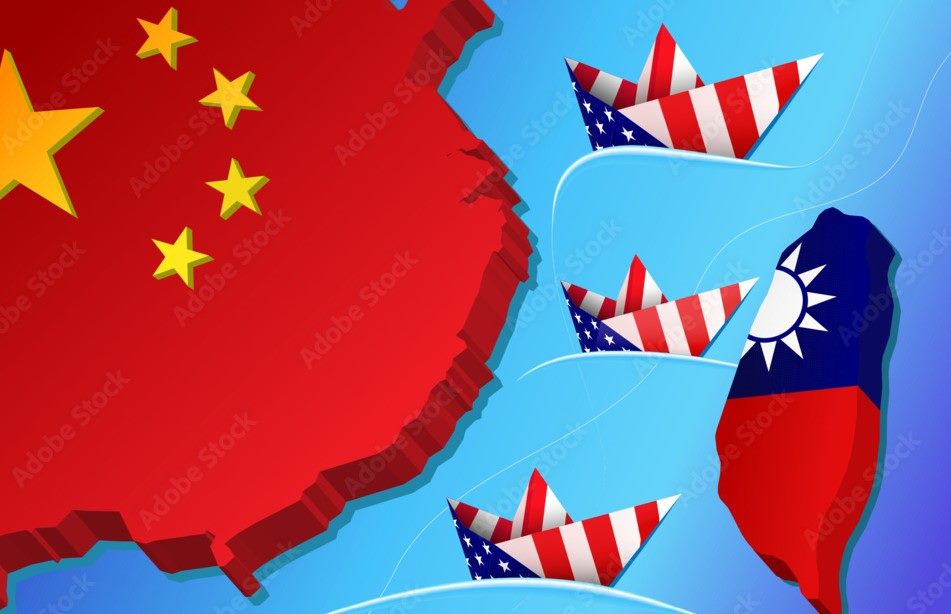
The United States and China compete in many places — the South China Sea, technology, space, the Korean Peninsula. Most of those rivalries can simmer indefinitely without shots fired. The Taiwan Strait is different, and the difference is structural. Since the Taiwan Relations Act of 1979, Washington has practiced "strategic ambiguity": it arms Taiwan and hints it might defend the island, without ever promising to. Beijing, for its part, treats Taiwan as sovereign territory whose status is non-negotiable.
That arrangement kept the peace for four decades because neither side had to test it. The question this forecast addresses is whether the strait has now become the single most probable place where American and Chinese forces end up shooting at each other — not necessarily through a planned war, but through the collision of two militaries operating at close quarters around a commitment neither fully spells out.
What the Evidence Shows
Consider what is now packed into and around this narrow sea. China's People's Liberation Army Navy is the world's largest by number of hulls — more than 370 ships and submarines, according to the Pentagon's 2024 report on Chinese military power. On the other side, the United States is visibly rearranging the region: the AUKUS pact to supply Australia with nuclear-powered submarines, a military buildup on Guam, expanded access to nine Philippine bases under the EDCA agreement, and new missile deployments on Japan's southwest islands, some within sight of Taiwan.
Then there is the modeling. In January 2023, the Center for Strategic and International Studies published "The First Battle of the Next War," a wargame that ran 24 iterations of a hypothetical 2026 Chinese invasion of Taiwan. In most runs, the United States, Japan, and Taiwan repelled the invasion — but at staggering cost: typically two US aircraft carriers and ten to twenty large surface warships sunk, with thousands of American casualties in the first weeks. The wargamers' conclusion was sobering on both ends: China would probably fail, and America would win something close to a pyrrhic victory — a win so costly it resembles defeat.
"The United States and its allies defeated the invasion in most scenarios, but defense came at a high cost: two aircraft carriers and hundreds of aircraft lost, and thousands of servicemembers killed in a matter of weeks."
— CSIS wargame report, The First Battle of the Next War (January 2023)Most telling is what the two militaries practice. Chinese forces rehearse blockades and encirclements of Taiwan; American forces rehearse breaking them. Both drill for this contingency more than for any other. History adds a warning about accidents: in 2001, a Chinese fighter collided with a US EP-3 surveillance plane near Hainan, killing the Chinese pilot and forcing the American crew to land in China. That crisis was defused in eleven days. The same collision today, amid daily intercepts and far worse relations, would be much harder to contain.
"Wars here would not need to be chosen. In a strait this narrow, they can simply be stumbled into."
Why This Is Happening
Two military machines are pointed at one narrow contingency. When both sides build, base, and train around the same scenario for years, the scenario acquires its own gravity. Ships and aircraft operate closer together, more often, with less margin. Every intercept and transit becomes a test of nerve, and the law of large numbers goes to work on the odds of a mistake.
Ambiguity deters — until it misleads. Strategic ambiguity works by keeping Beijing guessing about American intervention. But guessing cuts both ways: Beijing could underestimate US resolve and start something it believes will stay local, or overestimate a threat and move preemptively. A blockade is the nightmare version — each rung of a "blockade-to-shooting ladder," from inspections to intercepts to the first sinking, seems small until one is a shot.
Alliances transmit local incidents outward. US treaties with Japan and the Philippines — and American forces spread across their territory — mean a Taiwan fight would not stay a Taiwan fight. Analysts call this chain-ganging: allies pulled into a conflict by their commitments rather than their choices. The same web that deters Beijing also guarantees that a clash, once started, widens fast.
What Could Happen
Intercepts, cable incidents, and exercise surges produce repeated scares through the late 2020s, each defused by back-channels and restraint. The strait remains the most likely trigger of a US–China clash without the trigger being pulled — a decade of white-knuckle stability resembling the Cold War's tensest sea lanes.
A collision, a shoot-down, or a blockade enforcement incident kills servicemembers on one or both sides. Forces exchange fire locally while leaders race to stop the ladder — the modern EP-3 scenario with live ammunition. The outcome hinges on hotlines, domestic politics, and luck, and even a contained clash transforms the global economy's risk pricing overnight.
Beijing attempts the invasion the CSIS wargame modeled, and the United States and Japan fight. The wargame's median result — invasion repelled, carriers lost, thousands dead in weeks — would be the largest naval war since 1945, with semiconductor supply and world trade as collateral damage regardless of who prevails.
What Can We Do
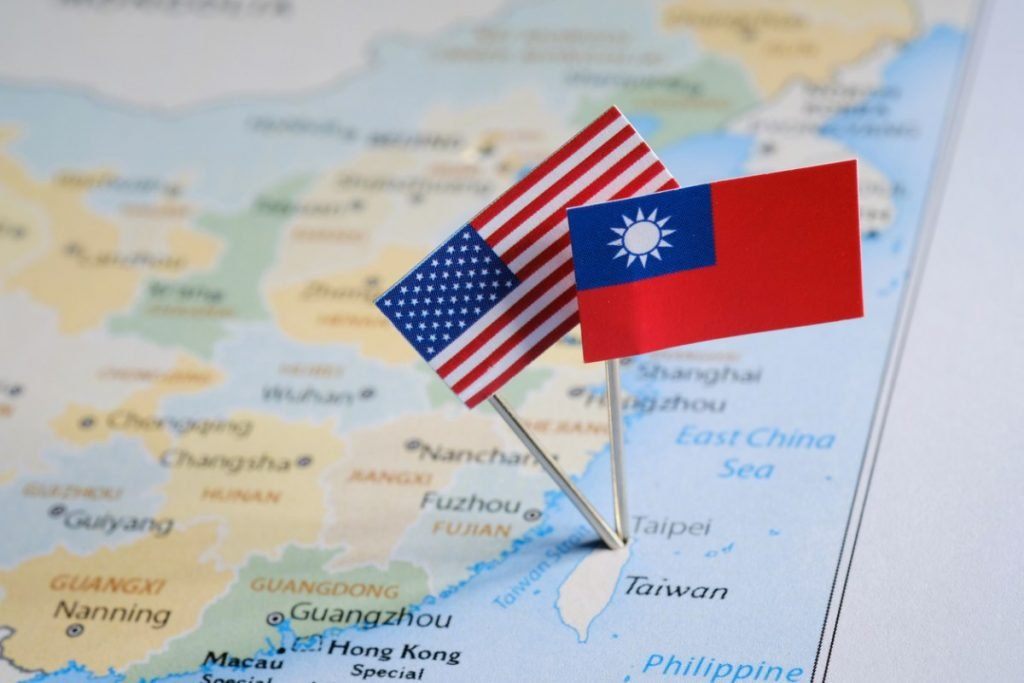
No reader can widen the strait or rewrite the Taiwan Relations Act. But this is a risk that will be managed — or mismanaged — in public, and knowing what to watch makes the difference between understanding events and being frightened by them.
Watch whether the militaries are talking. The single best leading indicator is the state of US–China military-to-military communication: hotlines, defense minister meetings, maritime safety talks. When those channels are open, near-misses get defused like the 2001 EP-3 crisis; when Beijing suspends them, every incident becomes more dangerous.
Distinguish capability news from intent news. New bases in the Philippines, missiles on Japanese islands, and Chinese ship counts describe what forces could do, not what leaders have decided. Treat each report as a change in the odds, not a countdown — that is how professional analysts read the same headlines.
Understand why this concerns you economically. Taiwan produces most of the world's advanced semiconductors, and the strait's sea lanes carry a large share of global trade. Even a contained clash would ripple through the price of everything containing a chip — which is one reason both governments, and every company with a supply chain, are quietly planning around it.
Reward sober analysis over drama. Wargames like CSIS's exist to prevent war by pricing it honestly. Sharing careful, sourced work — rather than invasion-date speculation — builds the public patience that crisis management requires. In a standoff where perception shapes decisions, an informed public is not a bystander.
- CSIS — The First Battle of the Next War: Wargaming a Chinese Invasion of Taiwan (January 2023)
- US Department of Defense — Military and Security Developments Involving the PRC (2024)
- IISS — The Military Balance (2026)
- RAND Corporation — Taiwan Strait deterrence and escalation studies
- U.S. Naval Institute — Proceedings analyses of Taiwan contingencies
- Forecast The World Research Desk — 800+ data sources