The Question
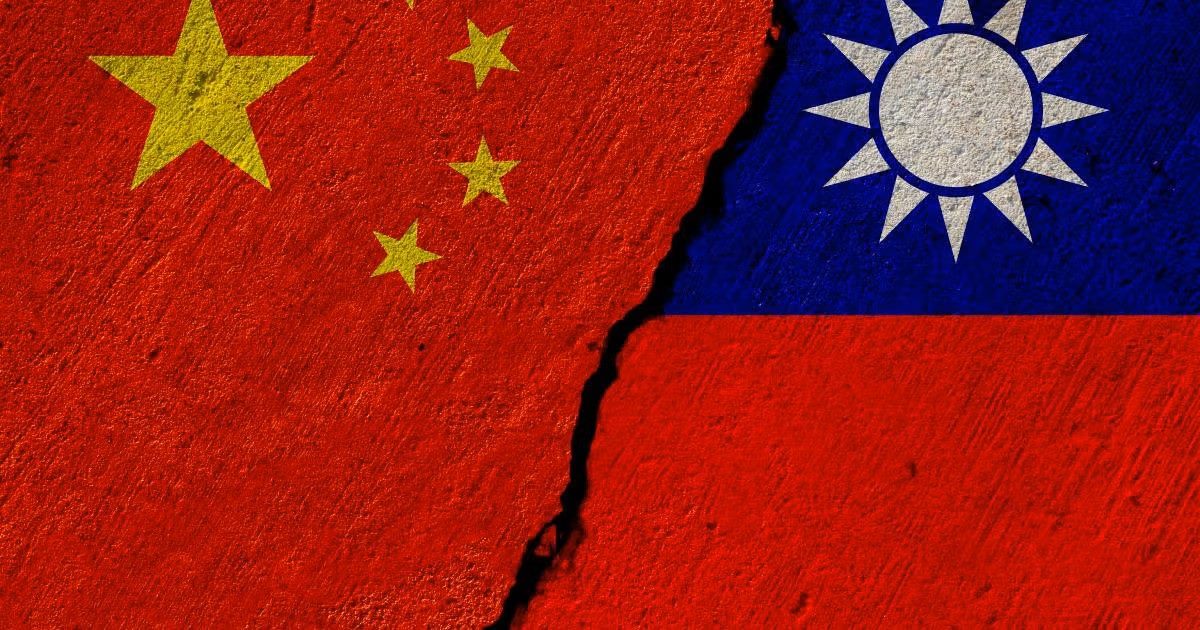
China's leader Xi Jinping has said that reunification with Taiwan "must be fulfilled." The People's Liberation Army has been ordered to complete a major modernization milestone by 2027, the centennial of its founding, and in March 2021 the then-commander of US forces in the Indo-Pacific, Admiral Philip Davidson, told Congress the threat to Taiwan could manifest "in the next six years" — a warning that became known in defense circles as the "Davidson window."
Those data points are usually read as a countdown to invasion. But a capability deadline is not a decision, and the question that matters for the next decade is a different one: which path does Beijing actually choose? An amphibious assault across a hundred miles of rough water is history's hardest military operation. The alternative — a long campaign of military, economic, and psychological pressure designed to convince Taiwan that resistance is futile — is cheaper, deniable, and already underway. This forecast asks whether pressure, not invasion, remains China's primary strategy through 2035.
What the Evidence Shows
The pressure campaign is not hypothetical; it is measurable. In 2024 the PLA staged two large encirclement exercises around Taiwan, named Joint Sword-2024A and Joint Sword-2024B, rehearsing how to seal off the island. Chinese military aircraft now cross the median line — the informal midpoint of the Taiwan Strait that both sides once respected — nearly every day, and routinely enter Taiwan's air defense identification zone (ADIZ), the buffer airspace where approaching aircraft are supposed to identify themselves.
Below the military threshold sits a toolkit analysts call the gray zone: hostile acts calibrated to stay short of war. Undersea communication cables near Taiwan were damaged in multiple incidents between 2023 and 2025. China's coast guard has patrolled around Kinmen, a Taiwanese-held island just off the mainland coast. Beijing has suspended imports of selected Taiwanese goods at politically convenient moments and runs sustained disinformation campaigns. Since President Lai Ching-te took office in May 2024 — a leader Beijing labels a separatist — every tool has been used more often.
"The PRC employed a comprehensive campaign of diplomatic, information, military, and economic pressure against Taiwan, seeking to compel unification while deterring moves toward independence — coercion designed to succeed without a war."
— Pentagon report, Military and Security Developments Involving the PRC (2024)Taiwan is adapting rather than folding. Conscription was extended from four months to twelve, effective 2024. Defense budgets are rising year over year. Its military is shifting to an asymmetric "porcupine" strategy — lots of small, mobile, hard-to-target weapons such as anti-ship missiles and drones, meant to make the island indigestible rather than to match China ship for ship. Meanwhile, researchers at CSIS and RAND increasingly study blockade and "quarantine" scenarios — where China's coast guard imposes customs-style inspections on Taiwan-bound shipping — as the plausible alternatives to invasion.
"The goal of a siege is not to storm the walls. It is to make the city open its own gates."
Why This Is Happening
Invasion is the most dangerous option on Beijing's menu. A cross-strait assault would be the largest amphibious operation ever attempted, against prepared defenses, with a real chance of American intervention. Failure could threaten the Communist Party's hold on power. Pressure, by contrast, risks little: each cable cut, incursion, or trade ban is individually too small to justify a military response from anyone.
Coercion compounds like interest. Every median-line crossing that goes unanswered becomes the new normal, and the next crossing starts from there. Exercises that once caused crises are now routine; coast guard patrols around Kinmen erode Taiwan's control without a shot. Over a decade, the cumulative effect is to shrink the space Taiwan operates in — militarily, economically, and psychologically.
Time, in Beijing's view, converts strength into leverage. The 2027 modernization milestone is best read not as an invasion date but as the point when the PLA can credibly hold every option — blockade, quarantine, bombardment, invasion — at the ready. A credible capability changes negotiations without being used. Whether time actually favors Beijing is contested: Taiwanese identity is diverging from China and its partners are rearming. But Chinese strategy behaves as if patience pays.
What Could Happen
Exercises, incursions, cable incidents, and economic coercion keep ratcheting up through the late 2020s and early 2030s. Beijing tests quarantine-style inspections in limited form, banking that Taiwan and its partners will absorb each step. Taiwan hardens, the strait grows more dangerous, but neither reunification nor war arrives by 2035.
Beijing escalates to open interdiction of Taiwan-bound shipping — a legal and military gray zone that puts the US and allies to an agonizing choice between breaking the cordon and accepting a strangled Taiwan. The crisis either collapses into negotiation or becomes the on-ramp to the war both sides claim not to want.
Convinced that coercion has failed or that windows are closing, Beijing attempts the amphibious assault its 2027-era military was built to make possible. This is the least probable path precisely because it is the most catastrophic for China if it fails — but it cannot be ruled out, especially after a Taiwanese move Beijing deems irreversible.
What Can We Do

Cross-strait strategy is set in Beijing, Taipei, and Washington, but the pressure campaign works partly through perception — which means how the rest of the world pays attention genuinely matters.
Learn to distinguish signal from routine. Not every Chinese exercise is a prelude to war, and treating each one as such causes alarm fatigue. Track the trend lines instead: Taiwan's Ministry of National Defense publishes daily counts of incursions, and sustained changes in scale or kind matter more than any single day's headlines.
Watch the coast guard, not just the navy. Analysts expect a quarantine — customs-style inspection of shipping — to be run by China's coast guard precisely because it looks like law enforcement rather than war. White hulls doing a warship's job would be one of the clearest escalation signals available.
Understand the economic exposure. Taiwan fabricates most of the world's advanced semiconductors. Any blockade scenario is therefore a global economic event, not a regional one — a reason governments and companies are diversifying chip production now, and a useful lens for judging how seriously to take each escalation.
Treat viral cross-strait content with suspicion. Disinformation is a documented pillar of the pressure campaign, aimed at persuading Taiwanese that defense is hopeless and outsiders that the island's fate is sealed. Check whether dramatic claims trace to named officials or verifiable data before passing them on.
- US Department of Defense — Military and Security Developments Involving the PRC (2024)
- CSIS — China Power Project, cross-strait deterrence and quarantine analyses
- Taiwan Ministry of National Defense — National Defense Reports and daily PLA activity tracking
- RAND Corporation — analyses of blockade and coercion scenarios against Taiwan
- IISS — The Military Balance (2026)
- Forecast The World Research Desk — 800+ data sources