The Question
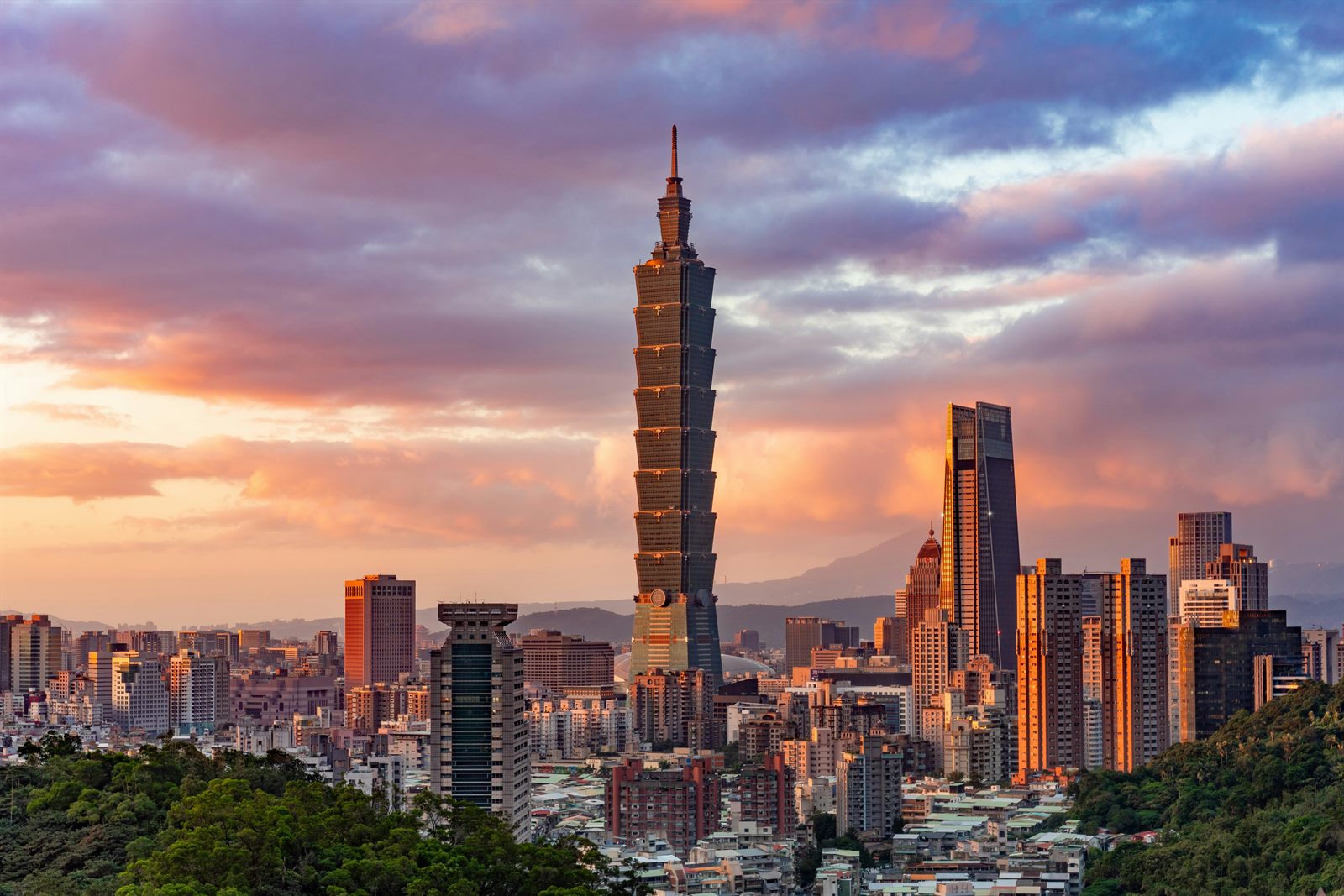
Most wars, however terrible, stay regional. A confrontation over Taiwan would not. The island of 23 million people sits at the center of two systems the modern world cannot function without: the semiconductor industry and the shipping lanes of East Asia. Taiwan is a self-governing democracy that Beijing regards as a breakaway province to be brought under its control — by force if necessary. The United States practices "strategic ambiguity": it arms Taiwan and keeps open the possibility of defending it, without promising to. Around this unresolved question, the world's two largest economies now circle each other with warships, war games, and export bans.
This forecast is not about whether war breaks out — we assess that separately. It is about what happens to everyone else if Washington and Beijing ever collide over the island, whether through invasion, blockade, or a naval incident that spirals. The evidence points to a category of shock with no modern precedent: faster than the oil crises of the 1970s, broader than the 2008 financial crash, deeper than the pandemic. Understanding why requires looking at what, exactly, the world has parked on one island a hundred miles off China's coast.
What the Evidence Shows
Start with the chips. Semiconductors are the tiny processors inside phones, cars, data centers, medical equipment, and weapons — the physical foundation of modern life. Taiwan Semiconductor Manufacturing Company, better known as TSMC, produces roughly 90% of the world's most advanced chips, and Taiwan as a whole holds about 60% of the global "foundry" market — the factories that manufacture chips designed by companies such as Apple and Nvidia. A modern car contains more than 1,000 chips. When a shortage hit in 2021, global automakers lost roughly 10 million vehicles of production. That episode, analysts note, was a tiny preview of what losing Taiwan's output would mean.
Economists have tried to price the unthinkable. Bloomberg Economics estimated in January 2024 that a war over Taiwan would cost the world economy around $10 trillion in its first year — roughly 10% of global GDP. A blockade of the island alone would cost about $5 trillion. The Rhodium Group, in a separate analysis, found that a blockade would disrupt well over $2 trillion in economic activity before any sanctions or military response is even counted.
"At around $10 trillion, equal to about 10% of global GDP, the price tag of war dwarfs the blow from the war in Ukraine, the Covid pandemic and the Global Financial Crisis."
— Bloomberg Economics — Taiwan War Cost Estimate, January 2024Then there is the water itself. Nearly half of the world's container fleet passed through the Taiwan Strait in 2022, by Bloomberg's count, and the energy lifelines of Japan and South Korea run through nearby seas. Fighting would mean rerouted shipping, soaring insurance, and paralyzed ports across East Asia. Add finance: the United States and China exchanged about $580 billion in goods in 2024, and a sanctions war between them would dwarf the measures imposed on Russia — this time aimed at the world's factory floor rather than a commodity exporter.
"The world parked its most irreplaceable industry on the one island two superpowers might fight over."
Why This Is Happening
Concentration happened because it was efficient. For decades it made economic sense to let one extraordinary company in one place master the world's hardest manufacturing process. TSMC's dominance was not designed as a vulnerability; it emerged from specialization, scale, and engineering excellence. But efficiency quietly built a single point of failure, and geopolitics has now caught up with the supply chain.
Interdependence cuts both ways. Taiwan's chip industry is often called a "silicon shield" — the theory that no one would dare destroy what everyone needs. The same dependence, though, guarantees that if deterrence fails, the damage goes global instantly. The shield and the shock are the same mechanism, which is why even a bloodless blockade carries a multi-trillion-dollar price tag.
Diversification is real but slow — and the crown jewels are staying put. TSMC is building fabrication plants in Arizona, which began producing chips in 2025 as the company's announced US investment expanded to roughly $165 billion, alongside plants in Kumamoto, Japan, and Dresden, Germany. But its leading-edge production remains in Taiwan, and replicating that ecosystem of engineers and suppliers elsewhere would take a decade or more.
What Could Happen
Even a limited clash or blockade freezes chip exports, closes the strait to shipping, and triggers sanctions between the world's two largest economies. Markets crash, electronics production stalls within weeks, and the world enters a downturn deeper than 2008 — with recovery measured in years, not quarters.
Instead of open conflict, a quarantine or escalating gray-zone pressure raises costs gradually — insurance premiums, rerouted cargo, panic stockpiling of chips. The global economy absorbs a chronic drag rather than a heart attack, painful but with time to adapt.
A collision or standoff is de-escalated within days, shipping resumes, and diplomacy caps the damage. Some costs stick — higher risk premiums and faster diversification — but the full $10 trillion scenario never materializes.
What Can We Do
No household can hedge a $10 trillion shock. But understanding the exposure — and supporting the policies that shrink it — is far from pointless.
Recognize how exposed ordinary life is. The phone in your pocket, the car in your driveway, and the servers behind every app depend on chips from one island. Seeing that clearly explains why governments are spending billions on semiconductor plants — and why this distant dispute belongs in your news diet.
Support resilience even when it costs more. Spreading chip production across Arizona, Japan, and Europe is slower and pricier than concentrating it in Taiwan — a form of insurance paid through subsidies and higher prices. Treating that cost as protection rather than waste makes the world measurably safer from this shock.
Businesses should map their dependence now. The 2021 shortage taught carmakers that a missing $2 chip can idle a $40,000 vehicle. Firms that trace their supply chains down to the foundry level, hold strategic inventory, and qualify second sources will weather any strait crisis far better than those that discover their exposure afterward.
Back the guardrails, not the brinkmanship. Military hotlines, crisis-communication channels, and steady diplomacy between Washington and Beijing are the cheapest insurance on Earth given what is at stake. Voters and leaders who reward de-escalation — without abandoning deterrence — are protecting the world economy as much as any subsidy.
- Bloomberg Economics — The Price of a Taiwan Conflict, 2024
- Rhodium Group — The Global Economic Disruptions From a Taiwan Conflict, 2022
- CSIS — The First Battle of the Next War: Wargaming a Chinese Invasion of Taiwan, 2023
- Semiconductor Industry Association — State of the US Semiconductor Industry, 2025
- IMF — World Economic Outlook, 2025
- Forecast The World Research Desk — 800+ data sources