The Question
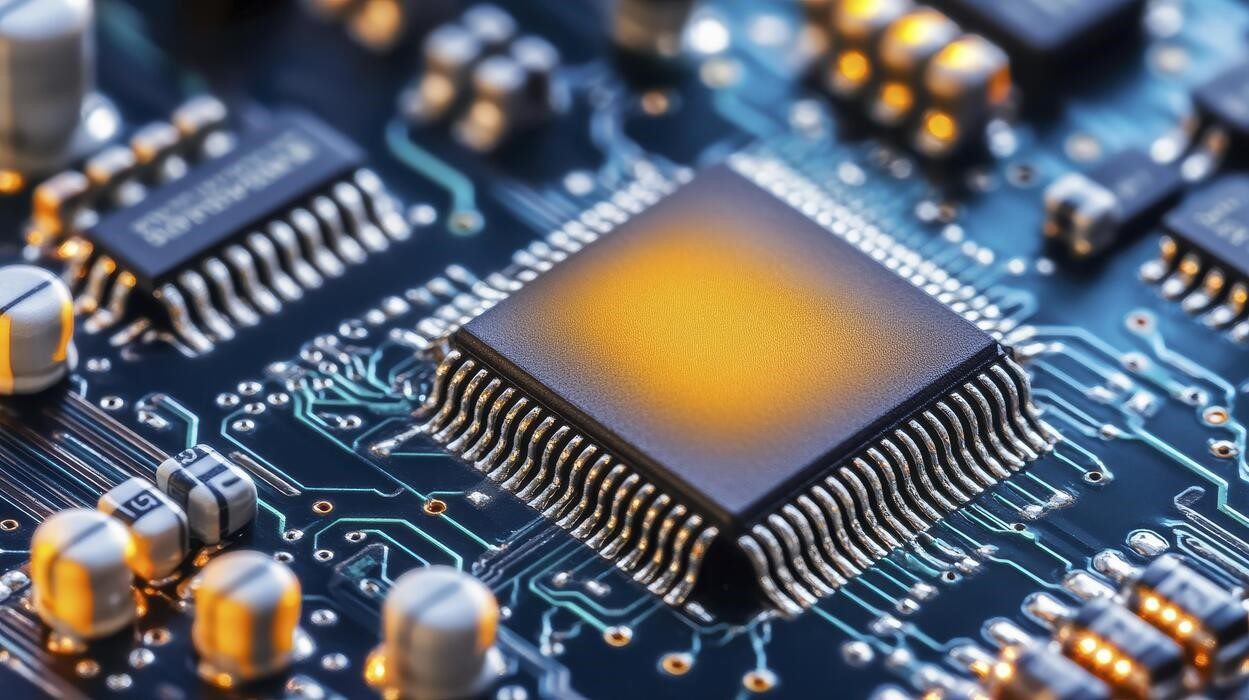
A semiconductor — a "chip" — is the tiny slab of patterned silicon that does the thinking inside almost every modern device. The most advanced ones pack tens of billions of switches into a fingernail-sized square, and making them is arguably the hardest manufacturing task humans have ever mastered. That difficulty is the whole story: because so few places can make the best chips, controlling them has become a source of national power, and denying them a weapon.
The question this forecast weighs is whether semiconductors stay at the center of great-power competition, or whether the contest cools as supply chains spread out and tempers ease. We assess the rivalry is likely to persist and even intensify, because the underlying facts — extreme concentration, deep interdependence, and a strategic prize in AI — are not going to change quickly. The chip war is not a metaphor. It is being fought right now with real tools.
What the Evidence Shows
The supply chain runs through choke points on four continents, and each is a pressure point. Chip design and the specialized software to do it (called EDA) are dominated by the United States. The machines that print circuits — extreme ultraviolet, or EUV, lithography systems that cost more than $200 million each — are made by exactly one company, ASML of the Netherlands. Key materials and tools come from Japan. And the actual fabrication of the most advanced chips is concentrated in Taiwan and South Korea, with Taiwan's TSMC alone making roughly nine of every ten leading-edge chips. No single country can build a cutting-edge chip alone.
Governments have turned that structure into policy. The United States passed the CHIPS and Science Act in 2022, putting $52.7 billion toward domestic chipmaking, and layered on export controls starting in October 2022 to keep the most advanced chips and tools from China. The European Union answered with a Chips Act worth roughly €43 billion; China has long funded its industry through a state "Big Fund"; and under Dutch rules in 2023–24, ASML's most advanced machines cannot be sold to China. Subsidies and bans, side by side, are now the ordinary language of chip policy.
"Semiconductors have become the choke point of the modern economy — the resource that arms both prosperity and power."
— Themes drawn from Chris Miller, "Chip War" (2022), and CSIS supply-chain analysisChina has not stood still. In 2023, Huawei and the chipmaker SMIC startled analysts by producing a domestically made 7-nanometer processor despite the controls. Beijing also holds cards of its own: it restricted exports of gallium and germanium — metals used in chips and electronics — in 2023, and has curbed rare-earth processing technology. Around all of this sits Taiwan's so-called "silicon shield": the argument that the island's indispensable role in chipmaking gives the world a powerful stake in its stability. It is a shield made of supply chains, and its strength is exactly what this contest is about.
"No nation can make a cutting-edge chip alone — which is why every nation now treats the supply chain as strategy."
Why This Is Happening
Concentration turns a product into a weapon. When any critical good is made in only a few places, whoever controls those places gains leverage — and everyone else feels exposed. Advanced chips are the extreme case: one lithography maker, one dominant foundry, a few design hubs. That concentration is not an accident to be fixed overnight; it is the product of decades of specialization and staggering costs, which is why the leverage, and the anxiety, endure.
Chips are dual-use, so security folds into economics. The same processors that power smartphones also guide missiles, train military AI, and crack codes. That makes a chip both a consumer product and a weapon component, so trade policy and national defense collapse into one question. Once a government decides a rival's chip industry is a security threat, ordinary commerce becomes a battlefield — and the other side responds in kind.
AI raised the stakes overnight. The recent surge in artificial intelligence runs on exactly the leading-edge chips this contest is about. Suddenly the prize is not just faster phones but the compute that may decide economic and military advantage for a generation. That reframing is why chip policy moved from trade ministries to the center of national-security strategy — and why no major power feels it can afford to fall behind.
What Could Happen
Export controls and national subsidies continue, new fabs open in the US, Europe, Japan, and India, and China keeps advancing behind the frontier without catching it. The supply chain diversifies gradually but stays concentrated enough that chips remain a central strategic contest through the decade.
Controls and countermeasures harden into two increasingly separate technology blocs — one Western-aligned, one centered on China — raising costs worldwide and slowing innovation, but reducing each side's dependence on the other over time.
A conflict, blockade, or major disaster disrupts Taiwanese production, triggering a global economic shock given the island's dominance in leading-edge chips. The "silicon shield" is tested directly, with consequences far beyond the tech sector.
What Can We Do
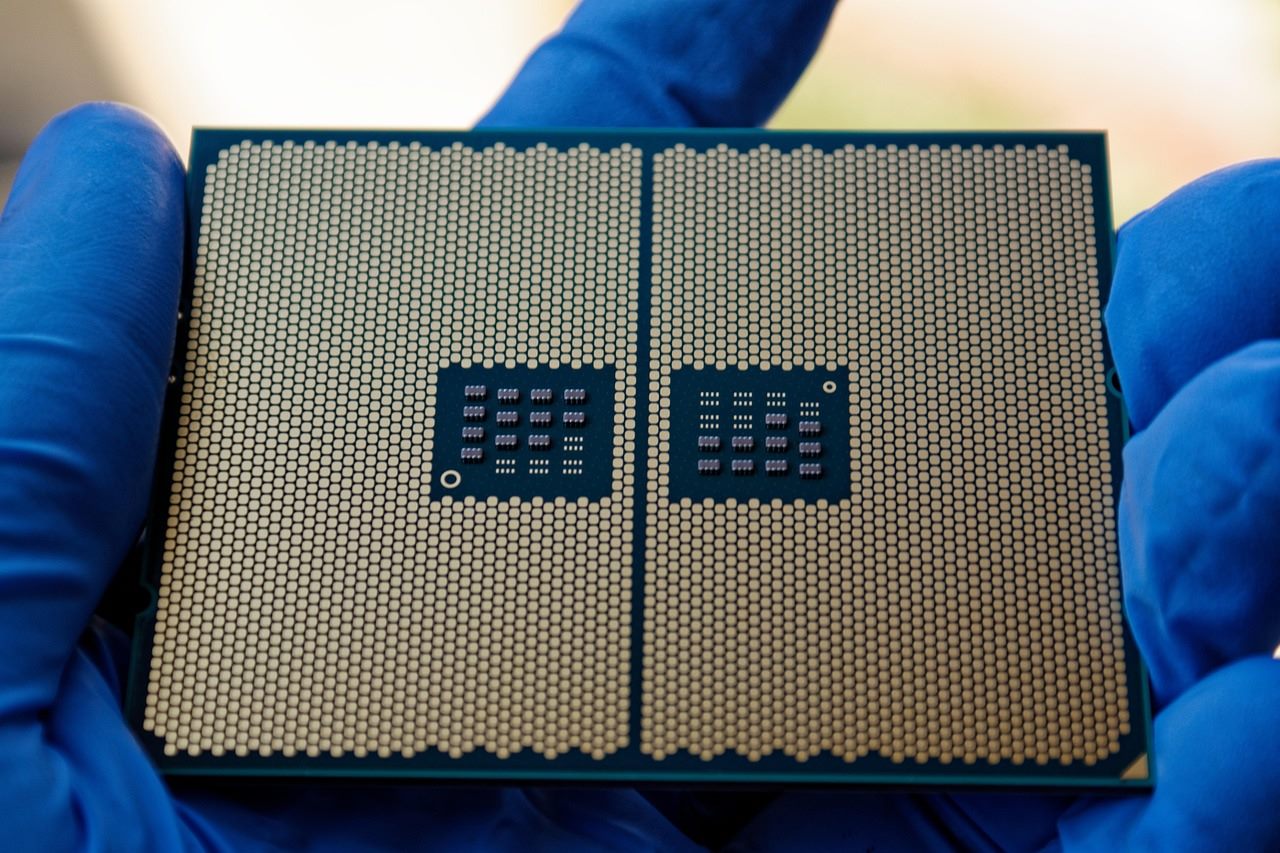
Semiconductor policy sounds like a specialist's concern, but it shapes prices, jobs, and security for everyone. A public that grasps the basics is harder to mislead when the subject is used to stoke either alarm or complacency.
Learn where the choke points are. Knowing that one Dutch firm makes the essential machines, that Taiwan makes most leading-edge chips, and that design sits largely in the US explains most headlines at a glance. These few facts turn a bewildering topic into a readable map.
Watch the real indicators. The Semiconductor Industry Association, CSIS, and the Congressional Research Service publish clear, sourced tracking of capacity, controls, and new fabs. Following them beats reacting to whichever export ban or breakthrough is trending this week.
Weigh resilience against cost. Building redundant fabs at home makes supply chains safer but chips more expensive. Recognizing that trade-off honestly — security has a price — helps citizens judge whether their governments are spending wisely rather than merely spending.
Keep Taiwan in the picture. Much of the world's chip supply hinges on one island's stability. Supporting steady, de-escalatory diplomacy across the Taiwan Strait is not only a security question; it is, quite literally, an economic one for everyone who owns a device.
- Semiconductor Industry Association — State of the Industry Reports, 2024–2025
- CSIS — Semiconductor Supply Chain and Export-Control Analysis, 2024
- Congressional Research Service — CHIPS and Science Act, 2022–2024
- Chris Miller — "Chip War: The Fight for the World's Most Critical Technology" (2022)
- ASML and TSMC — Public Annual Filings, 2024
- Forecast The World Research Desk — 800+ data sources