The Question
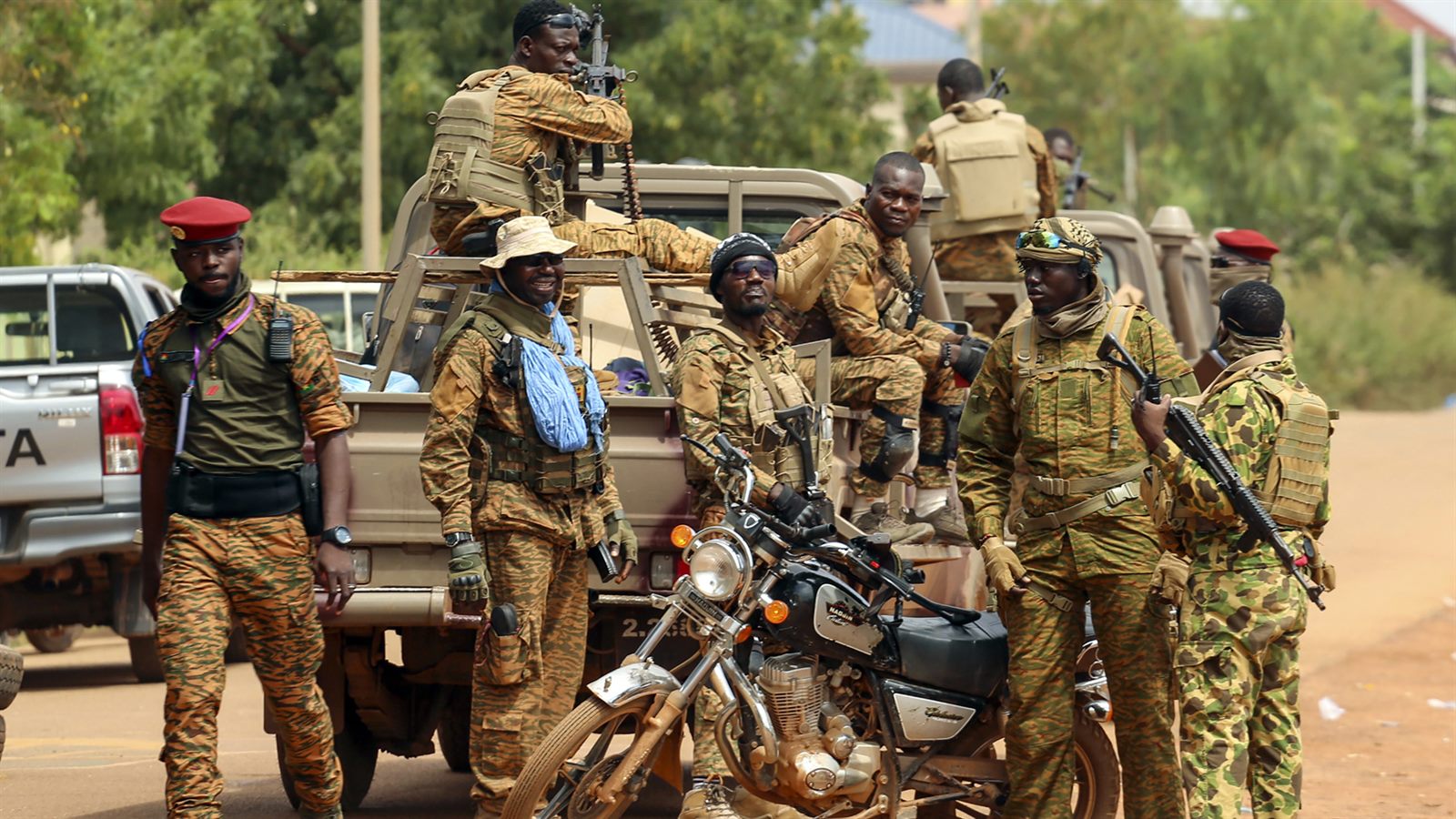
The Sahel is the semi-arid belt that stretches across Africa just below the Sahara Desert, running through countries such as Mali, Burkina Faso, Niger, and Chad. Poor, sparsely governed, and battered by drought, it has always been fragile. But since 2020 that fragility has hardened into a pattern of open state breakdown. A wave of military coups has toppled elected governments across the region: Mali in 2020 and again in 2021, Guinea in 2021, Burkina Faso twice in 2022, and Niger in July 2023, while Chad went through a contested succession in 2021 after its long-ruling president was killed.
The soldiers who seized power did not merely change governments; they redrew the region's alignments. The juntas of Mali, Burkina Faso, and Niger formed the Alliance of Sahel States in 2023 and announced their withdrawal from ECOWAS, the West African regional bloc, with the exit taking effect in 2025. They expelled the French forces that had spent years fighting insurgents there, saw a US drone base in Niger close, and turned instead to Russia for security. The question this forecast weighs is whether this cascade has run its course — or whether the same pressures will topple more governments and hollow out more states by 2032.
What the Evidence Shows
Start with the sheer density of the coups. In roughly three years, the Sahel and its neighbors saw successful power seizures in Mali (twice), Guinea, Burkina Faso (twice), and Niger, alongside Chad's contested handover — a concentration of military takeovers unmatched anywhere in the world over that span. Each success appeared to lower the barrier for the next: soldiers watched neighbors seize power and survive international condemnation, and drew the obvious lesson. Analysts have called the region a "coup belt" for good reason.
The realignment that followed was just as striking. France's Operation Barkhane, its long counter-insurgency mission in the Sahel, wound down in 2022, and French troops left Niger in 2023; the US drone base at Agadez in Niger closed in 2024. Into the vacuum stepped Russia's "Africa Corps," the state-backed successor to the Wagner private military company, offering the juntas security services and political cover in exchange for access and influence. In the space of a few years, a region long tied to the West reoriented toward Moscow.
"The Sahel has become the epicenter of global terrorism, accounting for the largest share of deaths from terrorism worldwide."
— Framing consistent with the Global Terrorism Index, 2025Yet the coups solved nothing on the ground. Jihadist insurgencies have spread rather than receded — an al-Qaeda affiliate known as JNIM and a rival Islamic State branch now contest large stretches of countryside, staging attacks that the juntas, with or without Russian help, have struggled to stop. The Global Terrorism Index has identified the Sahel as the epicenter of terrorism deaths worldwide, and millions of people have been displaced by the violence. The governments changed; the war got worse.
"Each coup made the next one easier — and none of them made the countryside any safer."
Why This Is Happening
State weakness and violence feed each other. Sahelian governments have long struggled to project authority beyond their capitals, leaving vast rural areas ungoverned. Jihadist groups exploit that vacuum; the resulting insecurity discredits civilian governments; and soldiers use the failure to justify seizing power — only to find they cannot solve the problem either. This loop, in which insecurity breeds coups and coups fail to deliver security, is the core engine of the region's instability.
Coups have become contagious and low-cost. When one junta seizes power and faces only sanctions it can withstand, the demonstration effect is powerful. Neighboring officers see that takeovers succeed, that regional bodies like ECOWAS lack the leverage to reverse them, and that a new external patron stands ready to help. Each successful coup weakens the norm against the next, spreading the pattern across borders.
External patronage has shifted, not stabilized. The departure of French and American forces and the arrival of Russian contractors changed who backs the region's rulers but not the underlying conditions. Russian security support helps juntas hold power and suppress rivals, yet it has not defeated the insurgencies, and it deepens the juntas' isolation from Western aid and investment — leaving fragile states more dependent, not more secure.
What Could Happen
The insurgencies grind on, juntas fail to restore security, and new power seizures or deepening state breakdown hit one or more Sahelian countries by 2032. The Alliance of Sahel States endures but delivers little, and the coup belt neither heals nor fully explodes.
One or more juntas hold credible elections or strike workable security arrangements, regional diplomacy revives, and the wave of takeovers loses momentum without the region's core problems being solved.
Jihadist violence and instability spread decisively south toward the Gulf of Guinea, coups reach previously stable neighbors, and the crisis becomes a broad West African emergency rather than a Sahelian one.
What Can We Do
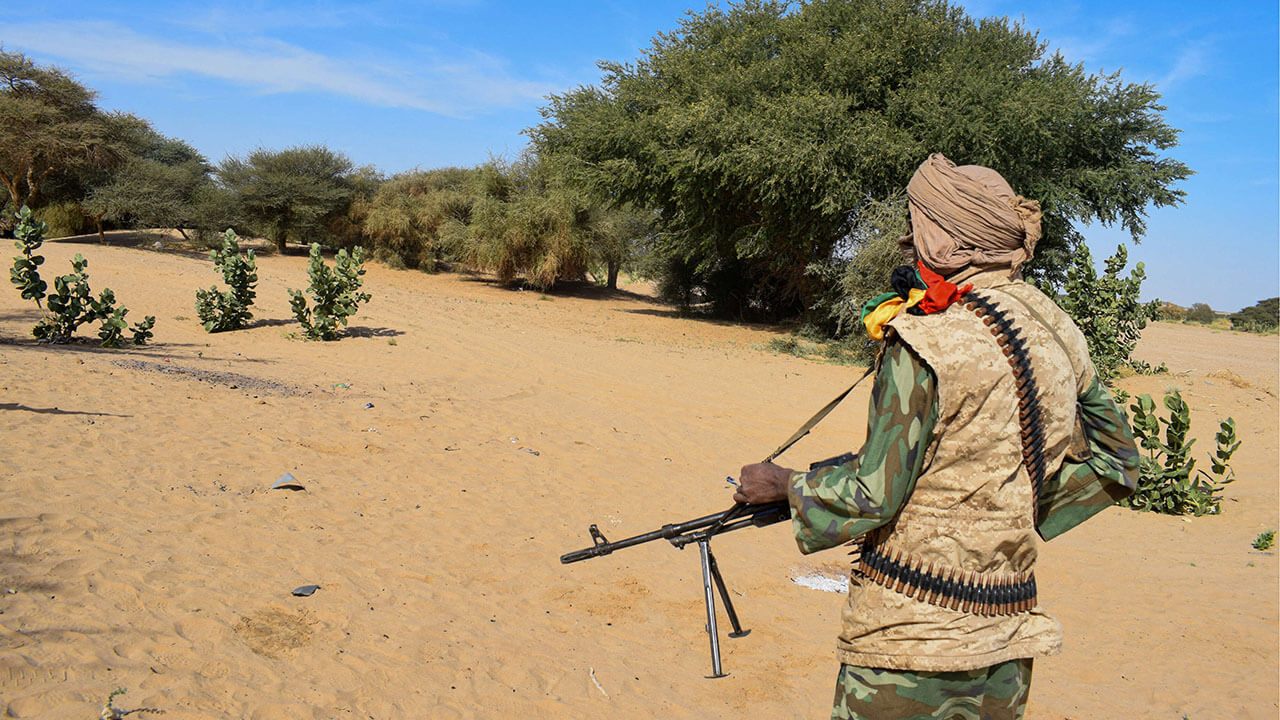
The Sahel rarely leads the news outside the region, and its crises can feel remote. Yet its instability drives migration, terrorism, and humanitarian need that reach far beyond Africa, and understanding it is the first step to responding well rather than reflexively.
Learn where and what the Sahel is. The name refers to the arid belt below the Sahara, not a single country, and grasping that it spans multiple fragile states explains why a coup in one place so easily inspires another. Geographic literacy guards against treating a complex regional crisis as a single foreign headline.
Support humanitarian access, not just security fixes. Millions have been displaced, and aid agencies working in the region are often the only functioning institutions many communities see. Backing organizations like UN OCHA that deliver food, shelter, and protection addresses the human cost that military solutions have repeatedly failed to touch.
Follow the credible conflict trackers. Groups such as ACLED, the International Crisis Group, and the Africa Center for Strategic Studies document coups, attacks, and displacement with careful sourcing. Watching their data beats reacting to dramatic but unrepresentative single incidents.
Question quick-fix narratives. Neither Western counter-terrorism missions nor Russian security contractors have stabilized the Sahel, and simple stories about a single villain or savior tend to mislead. Insisting on the harder truth — that state weakness and rural insecurity are the root causes — keeps attention on solutions that might actually work.
- ACLED — Armed Conflict Location & Event Data, 2025
- Global Terrorism Index, 2025
- International Crisis Group — Sahel Reports, 2024
- Africa Center for Strategic Studies — Sahel Analysis, 2024
- UN OCHA — Sahel Humanitarian Overview, 2025
- Forecast The World Research Desk — 800+ data sources