The Question
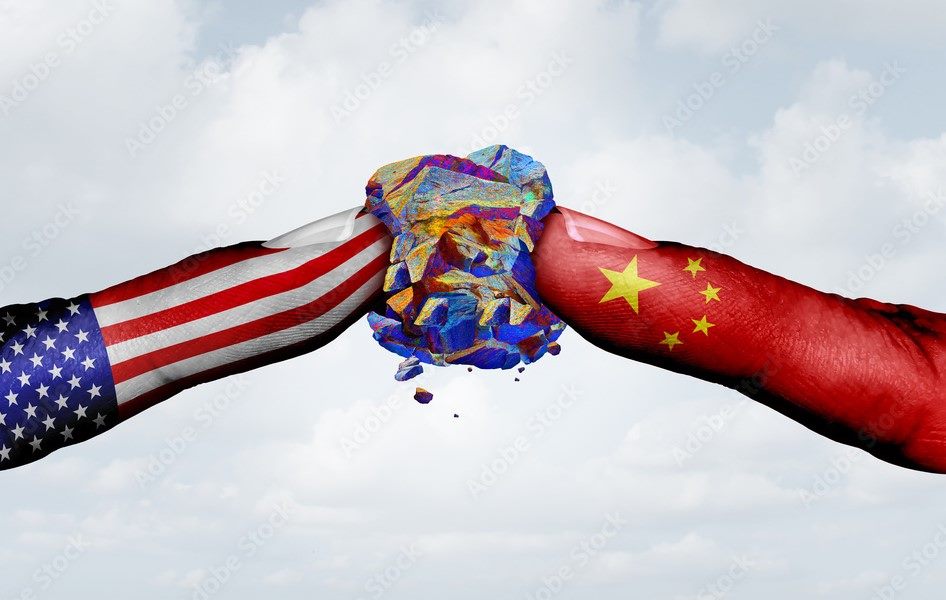
Between 1944 and 1949, exhausted by the deadliest war in history, the world's leading states set out to build something that had never quite existed: a standing set of rules and institutions to govern how nations deal with one another. The United Nations was founded in 1945. The Bretton Woods conference in 1944 created the International Monetary Fund and the World Bank to steady money and finance; a companion trade system, the GATT, later became the World Trade Organization. NATO followed in 1949. At the center sat a simple, radical rule, written into Article 2(4) of the UN Charter: states shall not use force against the territory of others. Borders were not to be changed by conquest.
That architecture did not end all wars, but it set the terms on which most disputes were judged. For eight decades it framed what was legitimate and what was not. The question now is whether it still does. The rules are being ignored or gridlocked more often than they are enforced — yet no rival blueprint has been agreed to take their place. This forecast is about the framework of rules and institutions specifically, not the raw distribution of power: the danger it weighs is an interregnum, a gap between one order and the next, rather than a clean handover from old to new.
What the Evidence Shows
Start with the founding rule. In 2014, Russia annexed Crimea, seizing territory from Ukraine by force. In 2022, following its full-scale invasion, Moscow claimed four more Ukrainian regions as its own — the largest attempted forcible annexation in Europe since the Second World War. Whatever the outcome on the battlefield, the mere attempt struck directly at Article 2(4), the norm on which the whole post-war order was meant to rest. When the central rule can be openly defied by a permanent member of the Security Council, the exception threatens to become the precedent.
The institutions meant to uphold the rules are faltering too. The World Trade Organization's top court, the Appellate Body, has been paralyzed since 2019, unable to issue binding rulings because its judges' seats went unfilled. The UN Security Council — designed as the world's crisis manager — is frequently deadlocked, its five permanent members able to veto action against themselves or their partners. The result is a system whose referees have been sidelined just as the fouls have grown more brazen.
"All Members shall refrain from the threat or use of force against the territorial integrity or political independence of any state."
— Charter of the United Nations, Article 2(4), 1945Meanwhile, rising powers are pressing for something different. Many call openly for a "multipolar" order — a world of several centers rather than one — and an expanded BRICS grouping has been floated as a counterweight to Western-led institutions. At the same time, the United States, long the chief enforcer of the old rules, applies them less consistently than it once did. What has not appeared is agreement on any replacement. Reform of the UN has stalled for decades; no new charter, no new court, no new consensus has emerged. The old order is weakening faster than a new one is being built.
"The rules of 1945 are cracking — and no one has yet agreed what should be written in their place."
Why This Is Happening
The enforcers have lost the will, or the unity, to enforce. A rules-based order only holds if powerful states are willing to defend the rules, including against themselves. When the permanent members of the Security Council are divided — or are themselves the ones breaking the rules — enforcement stalls. Each unpunished breach lowers the cost of the next, and the machinery built to deter aggression grinds to a halt precisely when it is needed most.
The institutions have not kept pace with the world. The bodies of 1945 reflect the power map of 1945. The Security Council's permanent seats and the weighting of votes in the financial institutions still mirror the victors of a war that ended eighty years ago. Rising states see structures that under-represent them and question why they should be bound by rules they had little hand in writing — an argument that erodes the legitimacy the whole system depends on.
Breaking is easier than building. Tearing down a rule takes one act of defiance; agreeing on a replacement takes consensus among rivals who distrust one another. Powers can agree that the old order is unsatisfactory while disagreeing entirely on what should follow. That asymmetry is why an interregnum, not a tidy transition, is the likeliest shape of the coming years — the old framework decays while no new one commands enough agreement to replace it.
What Could Happen
The institutions of 1945 stay standing but grow steadily weaker and more selectively applied, while no successor system is agreed. States improvise through regional blocs, ad hoc coalitions, and bilateral deals — an order in name that functions less and less like one in practice.
A shock or sustained diplomacy produces meaningful reform — expanded Security Council membership, a revived trade court, updated financial institutions — that restores some legitimacy and enforcement, patching the old order rather than replacing it.
The single order splinters into competing blocs with their own institutions, trade rules, and payment networks — a divided world of parallel systems in which the universal rules of 1945 no longer meaningfully bind anyone.
What Can We Do
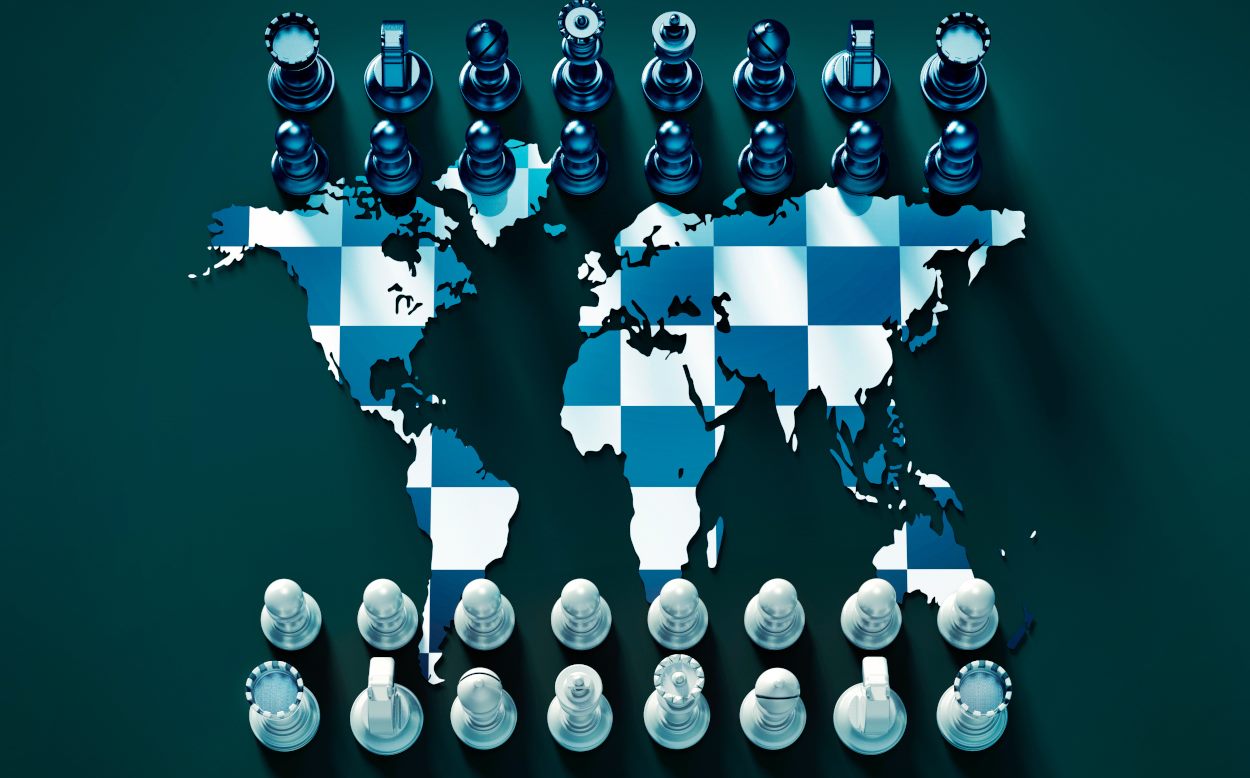
The architecture of world order can feel distant from ordinary life, yet it quietly shapes whether trade flows, whether borders hold, and whether disputes end in courts or in wars. Citizens are not mere spectators to its fate.
Understand what the rules actually are. Know what the UN Charter's ban on conquest means, what the Security Council can and cannot do, and why a frozen trade court matters. A public that grasps the framework is harder to persuade that its erosion is either harmless or inevitable.
Value institutions before you miss them. Imperfect bodies that keep channels of dispute open are easy to mock and hard to rebuild. Support leaders and policies that seek to reform these institutions rather than abandon them; a flawed forum still beats no forum at all.
Watch the norm on borders above all. The single most important post-war rule is that territory cannot be seized by force. Treat each breach — and each attempt to normalize one — as the serious matter it is, because tolerance of one conquest quietly licenses the next.
Follow the credible analysts. Chatham House, the International Institute for Strategic Studies, Brookings, and the major foreign-affairs journals track how the order is changing with care and without hysteria. Reading them beats absorbing the loudest claims that the world is either fine or finished.
- Charter of the United Nations, 1945 — Article 2(4)
- Foreign Affairs — essays on the future of world order, 2023–2025
- Chatham House — The future of the international order, 2025
- IISS — Strategic Survey, 2025
- Brookings Institution — Global order and governance research, 2025
- Forecast The World Research Desk — 800+ data sources