The Question
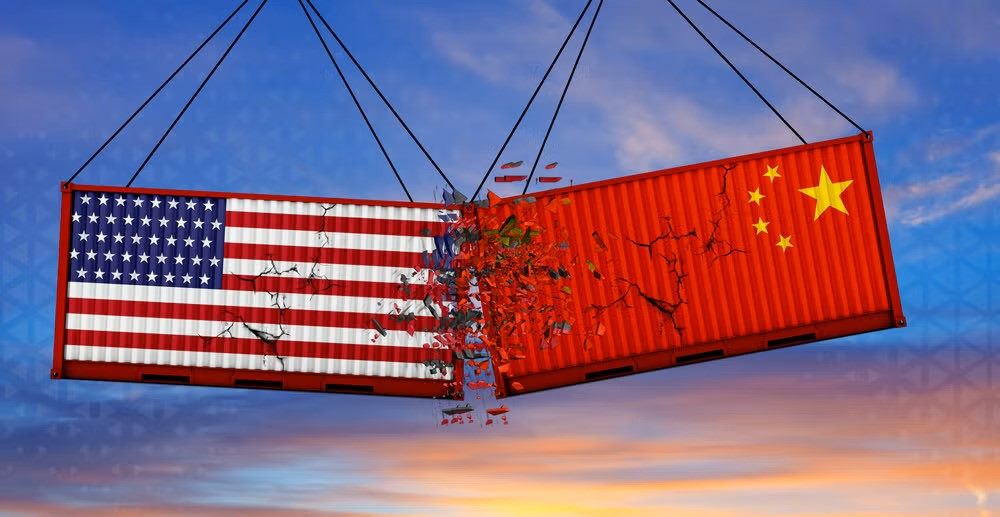
The first Cold War organized the entire world for four decades — its alliances, its economies, its proxy wars, even its Olympics. The question now is whether the United States and China have entered something similar: a hostile, global, systemic competition that stops short of direct war but sorts nearly everything else. Officials in both capitals reject the label. The pattern of the past eight years increasingly fits it.
The term matters less than the trajectory. What began as a tariff dispute in 2018 has widened into a contest over technology, alliances, military position, and the rules of the global economy — with both governments now openly planning for decades of rivalry. This forecast weighs whether that contest defines world politics into the 2040s, the way the US–Soviet standoff defined the second half of the twentieth century, or fades into something more ordinary.
What the Evidence Shows
Technology became the front line. In October 2022, Washington imposed sweeping export controls to cut China off from advanced chips and the tools that make them, tightening the rules repeatedly through 2025. Beijing answered with proof of resilience — Huawei and the chipmaker SMIC produced a domestically made 7-nanometer chip in 2023 — and with counter-leverage: restricting exports of gallium and germanium, obscure metals essential to chipmaking, in 2023, then graphite and antimony in 2024, and wielding rare-earth export controls as bargaining leverage in 2025 before partial truces eased the standoff.
Trade and alliances hardened in parallel. The 2025 tariff confrontation reached triple-digit levels — import taxes above 100% — before a truce struck in Geneva that May, and official language softened from "decoupling" to "de-risking": not cutting China off, just reducing dependence. Meanwhile the blocs are forming: AUKUS, the Quad, and the US-Japan-Korea Camp David summit of 2023 on one side; the Shanghai Cooperation Organisation and an expanded BRICS — adding Egypt, Ethiopia, Iran, and the UAE in 2024, then Indonesia in 2025 — on the other. China's defense budget is the world's second largest, its military milestones set for 2027, 2035, and 2049, while US forces pivot toward the Indo-Pacific.
"When a rising power threatens to displace a ruling power, the resulting structural stress makes a violent clash the rule, not the exception."
— Graham Allison — Destined for War, 2017Yet this is not a rerun. The United States and the Soviet Union barely traded; Washington and Beijing exchanged about $580 billion in goods in 2024 and remain woven into each other's supply chains. China exports products, not a revolutionary ideology with global reach. And a thick layer of middle powers — India, the Gulf states, much of Southeast Asia, Brazil — refuses to pick a side, hedging profitably between the giants. If this is Cold War 2.0, it is being fought inside a single connected world economy, which changes how it can be waged.
"The last cold war divided the planet in two. This one runs through a single, interconnected economy."
Why This Is Happening
A power transition is underway. Political scientist Graham Allison calls it the "Thucydides Trap": when a rising power approaches a ruling one, fear and ambition push both toward confrontation. China's economic and military rise is the largest such challenge the United States has faced since it became the world's leading power — and each capital now openly names the other as its central rival.
Technology fused with security. Advanced chips decide both economic and military power, so each side now treats semiconductors, artificial intelligence, and critical minerals as strategic weapons rather than ordinary commerce. Export controls beget counter-controls, and every new restriction deepens the logic of rivalry. Washington's sweeping 2022 chip restrictions were answered by Beijing's curbs on gallium, germanium, graphite, and eventually rare earths — each move convincing the other side that dependence is dangerous and the technological divorce must continue.
Domestic politics rewards toughness on both sides. Hawkishness toward China is one of the few bipartisan positions left in Washington; nationalism runs strong in Beijing. Leaders in both capitals face far more political risk from looking weak than from escalating — a ratchet that keeps turning in one direction.
What Could Happen
Export controls, rival blocs, and military competition persist for two decades, punctuated by periodic truces — like Geneva in 2025 — but no reconciliation. Trade continues in de-risked form, and every major global issue, from AI rules to climate finance, gets negotiated in the rivalry's shadow.
A Taiwan or South China Sea incident escalates into direct military confrontation. Even a brief clash would rewire the world economy overnight and could freeze both blocs into full Cold War-style separation for a generation.
Economic pain, leadership changes, or shared crises produce a durable accommodation. Competition fades toward ordinary great-power friction, and the "cold war" framing looks, in hindsight, overdrawn.
What Can We Do
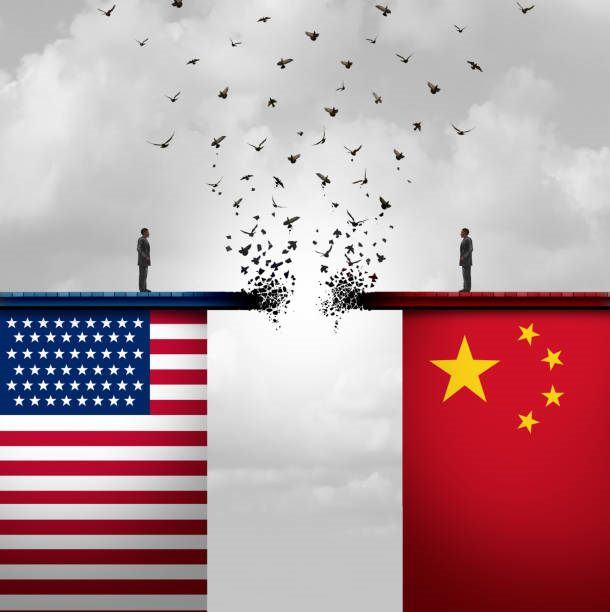
Nobody chooses a cold war from their living room. But citizens shape how their societies wage one — and whether it stays cold.
Learn the difference between rivalry and war. The first Cold War never became a direct superpower conflict, partly because publics and leaders learned to compete without shooting. Treating this confrontation as manageable — neither apocalyptic nor inevitable — is the mindset that kept the peace once before.
Expect the split to reach your wallet and your gadgets. De-risking means duplicated supply chains, rival technology standards, and higher prices. Products, apps, and even scientific collaboration will increasingly come in US-aligned and China-aligned versions. Budgeting for that world beats being surprised by it.
Refuse the enemy-image trap. Rivalry between governments is not a license for hostility toward people. The McCarthy era showed how cold wars can corrode the societies waging them from within — and remembering that history is part of competing well, not a distraction from it.
Support the guardrails. Military hotlines, arms-control talks, climate cooperation, and summit diplomacy do not end rivalries, but they keep incidents from becoming wars. Backing leaders who keep channels to Beijing open — while competing hard — is how a two-decade contest stays cold.
- Council on Foreign Relations — US-China Relations Analyses, 2025
- Brookings Institution — Global China Project, 2025
- Peterson Institute for International Economics — US-China Trade Monitor, 2025
- IISS — Strategic Survey, 2025
- Graham Allison — Destined for War, 2017
- Forecast The World Research Desk — 800+ data sources