The Question
The war that began on October 7, 2023 formally wound down with the October 2025 ceasefire, and on January 14, 2026 its architects declared phase two of the plan underway. On paper, the outline of a new order exists. A National Committee for the Administration of Gaza — a Palestinian technocratic body, meaning one staffed by administrators and professionals rather than party politicians — has been formed to run the territory day to day. Above it, an international "Board of Peace" has been established to oversee Gaza's transition and steer the money and politics of rebuilding.
On the ground, much of that architecture is still just paper. As of mid-2026 the Board of Peace is not yet operating inside Gaza — its members have not been allowed in, and there is no clear timeline for when they will be. So the question this forecast poses is not simply whether Gaza gets rebuilt. It is whether the rebuilding becomes the proving ground for a new way of ordering the region — money, governance, and security bound together under international oversight — or the place where that project visibly fails, taking the wider hopes for a post-war Middle East down with it.
What the Evidence Shows
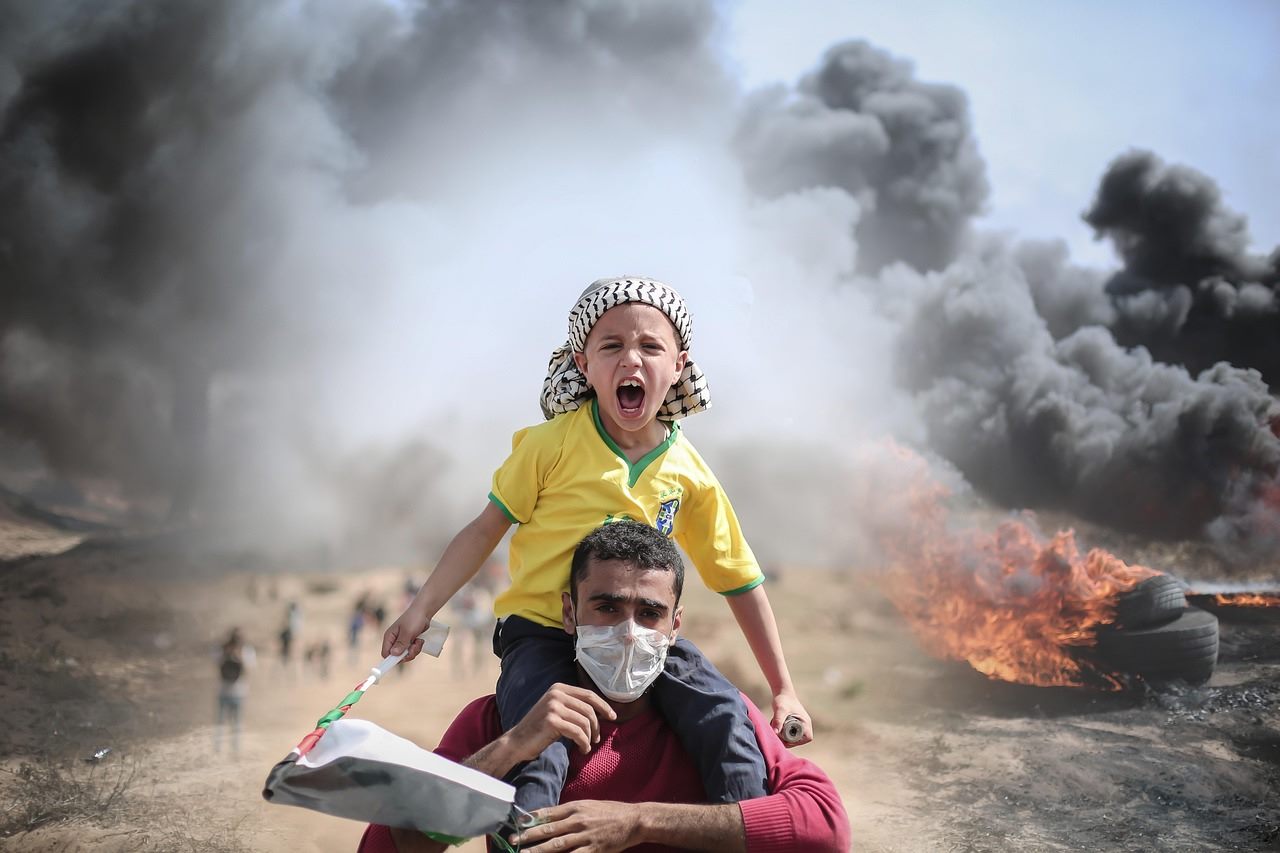
Start with the scale. Roughly 80% of Gaza's buildings are damaged or destroyed. More than fifty million tonnes of rubble await clearance — much of it mixed with unexploded munitions — and only about 0.5% has been cleared. Over one million people remain without permanent shelter. Health and education systems have not been rebuilt. Food security has improved since the ceasefire took hold, yet the UN's blunt verdict is that there is still "no recovery" underway in any meaningful sense.
The money is pledged but parked. A joint assessment by the UN, World Bank, and European Union in February 2025 put reconstruction needs near $53 billion; later UN estimates run as high as $70 billion. The Arab League endorsed an Egyptian-drafted $53 billion reconstruction plan in March 2025. Yet as of mid-2026, most donor pledges have not been transferred into the World Bank-administered reconstruction fund. The blockage is political: Israel's prime minister has said reconstruction cannot begin before Hamas disarms, and the disarmament talks are stalled.
"Food is moving and famine has receded, but this is not recovery. There are no rebuilt hospitals, no functioning school system, no permanent homes rising from the rubble. A ceasefire has been achieved; a future has not."
— UN briefings to the Security Council on Gaza, 2026Nor is the ceasefire itself secure. Diplomats describe it as far from perfect: hundreds of people have been killed in violations since October. And every piece of the puzzle depends on every other — clearing rubble requires security, moving money requires governance, seating the Board of Peace requires Israeli and Palestinian consent, and the truce itself gains strength only from visible signs that peace pays. That circular dependence is exactly why reconstruction has become the test of the entire post-war order, not just a construction project.
"Fifty million tonnes of rubble is not just debris. It is the weight every plan for a new Middle East must lift."
Why This Is Happening
Reconstruction is where every unresolved question converges. You cannot clear a neighborhood without deciding who provides security, cannot fund a ministry without deciding who governs, cannot open a crossing without deciding who inspects it. Disarmament, borders, policing, and Palestinian politics all funnel into the practical business of rebuilding — which is why the rebuilding, not the ceasefire, is the true measure of the peace.
The money exists, but the trust does not. Gulf and Western donors could finance $53–70 billion over time, but they will not pour it into a governance vacuum or onto a battlefield-in-waiting. Israel conditions reconstruction on Hamas disarming; Hamas has not agreed; the Board of Peace waits outside. Until someone breaks that circle, pledges stay parked in ministries and Gazans stay in tents.
The region's powers have staked their credibility on the outcome. The United States authored the 20-point plan; Egypt and the Arab League drafted the rebuilding blueprint; Gulf states are expected to fund much of it. If this coalition delivers, it becomes the model for how the region manages its crises. If it fails, the lesson — that ceasefires stop wars but nothing replaces them — will echo for a generation.
What Could Happen
Reconstruction proceeds in fits and starts — partial disarmament arrangements, a Board of Peace that eventually gains a footing, rubble cleared over years rather than months. Progress is real but perpetually hostage to politics, and the effort dominates Middle East diplomacy deep into the 2030s, testing every government it touches.
A disarmament-and-governance bargain — or sustained pressure from donors and mediators — lets pledges flow into the World Bank-administered fund at scale. Rebuilding accelerates visibly, strengthening the ceasefire and anchoring wider regional normalization around a functioning, internationally supervised Gaza.
Violations spiral, the truce breaks, and reconstruction is abandoned before it begins. The Board of Peace dissolves into irrelevance, donors walk away, and the region returns to the familiar cycle of destruction and rearmament — with the 20-point plan filed away as another cautionary tale.
What Can We Do
Most readers cannot clear rubble or seat a peace board. But Gaza's reconstruction will be one of the largest aid and rebuilding efforts of our era, and sustained public attention shapes how honestly it proceeds.
Track pledges against delivery. Donor conferences produce headline numbers; the number that matters is what actually reaches the World Bank-administered fund and projects on the ground. When you read that billions have been "pledged," ask how much has moved. That gap is the single best indicator of whether the peace is real.
Support vetted humanitarian organizations. More than a million people need shelter, and health and education systems must be rebuilt from nothing. Established agencies with long track records in Gaza can turn donations into tents, clinics, and classrooms now, while the big money waits on politics.
Read casualty and violation claims with care. The ceasefire era is also an information war. Hundreds have died in violations, and each incident arrives wrapped in competing narratives. Note who reports a claim, whether it is independently verified, and resist amplifying whatever is merely loudest.
Watch the governance details, not just the drama. The real signals are procedural: whether Board of Peace members enter Gaza, how much authority the National Committee actually wields, whether disarmament talks resume. These dull-sounding developments will decide the region's next decade more than any single strike or speech.
- UN Security Council — briefings on Gaza (2026)
- UN/World Bank/EU — Gaza Interim Damage and Needs Assessment (2025)
- UK House of Commons Library — Gaza 2026: Board of Peace and National Transitional Committee
- World Bank — Gaza reconstruction fund documentation (2025–2026)
- Security Council Report — monthly Middle East forecasts (2026)
- Forecast The World Research Desk — 800+ data sources