The Question
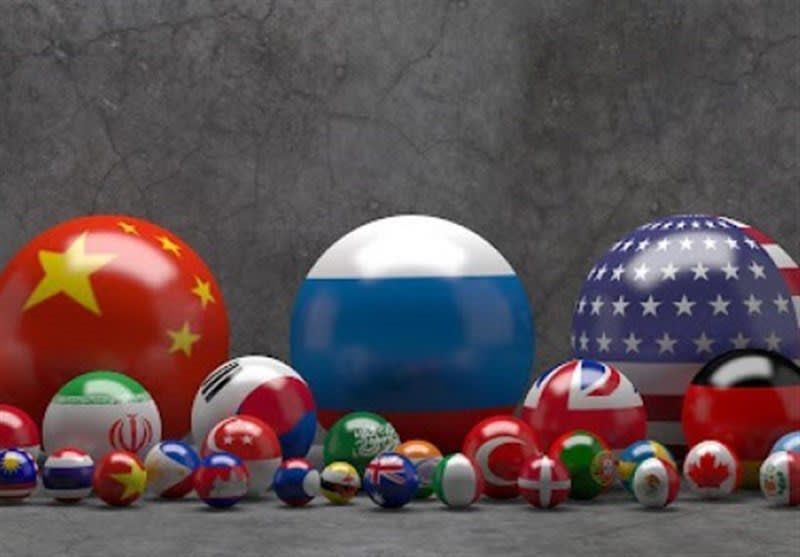
When the Soviet Union crumbled, the columnist Charles Krauthammer gave the new age a name: the "unipolar moment," coined in 1990 to describe a world with a single dominant power. For roughly three decades, the United States was that power — the only country that could project military force anywhere, anchor the global financial system, and set the agenda of international institutions largely on its own terms.
"Unipolar" is political-science shorthand for a world organized around one pole of power; "bipolar" means two, as in the Cold War, and "multipolar" means several. The question this forecast weighs is not whether America is collapsing — it is not — but whether the unipolar structure is over, and if so, which arrangement of power replaces it by 2035.
What the Evidence Shows
The economic numbers tell the clearest story. Measured by purchasing power parity — a yardstick that adjusts for what money actually buys in each country — China's economy has been larger than America's since about 2016, according to the IMF. The US share of global manufacturing fell from roughly 28% in 2001 to about 16%, while China's rose to around 30%. The dollar's share of global currency reserves — the money central banks hold — has slid from about 71% in 1999 to roughly 58%, per the IMF's COFER data: still dominant, but steadily eroding.
Military and institutional power are diffusing too. The Chinese navy is now the world's largest by number of hulls. Regional powers — Turkey, Saudi Arabia, India, Israel — increasingly act on their own initiative rather than waiting for Washington's cue. The 2021 withdrawal from Afghanistan marked the close of the post-9/11 expeditionary era, when America remade distant states by force. Meanwhile the referees of the old order have stopped working: the UN Security Council is gridlocked by vetoes, and the World Trade Organization's appeals court — the body meant to settle trade disputes between nations — has been paralyzed since 2019 because judge appointments were blocked. The machinery built for a one-superpower world is running without an operator.
"The unipolar era is not ending because American power collapsed. It is ending because everyone else's power grew."
— Forecast The World research brief, 2026Yet the ledger has another column. The United States retains assets no rival matches: a network of more than 30 treaty allies spanning Europe and Asia, the world's reserve currency, energy self-sufficiency, and a commanding lead in advanced technology and artificial intelligence. No other country combines military reach, financial centrality, and alliance depth. That is why serious analysts debate not whether America remains the single most powerful state — it does — but whether any single state can still run the system alone.
"The next world order will have one strongest power — but no single boss."
Why This Is Happening
Economic catch-up was always coming. The extraordinary US share of world output after 1945, and again after 1991, reflected rivals in ruins — not a permanent state of nature. As China, India, and others industrialized, the gap had to narrow. What unipolarity's end mostly measures is the rest of the world recovering its historical weight — for most of recorded history, Asia produced the majority of global output, and the past two centuries were the exception rather than the rule.
Military power spread to the middle tier. Precision missiles, drones, and cyber tools now give mid-sized states capabilities once reserved for superpowers. When Turkey can shape wars with its drone exports and Gulf states can pursue their own foreign policies, the deference that defined the unipolar era fades — regional players no longer need a superpower's permission.
The institutions froze while the world moved. The UN Security Council and WTO reflect the power map of 1945 and 1995 respectively. As rising states found the old bodies unresponsive and vetoes piled up, countries routed around them — building smaller coalitions of the willing, from AUKUS to BRICS, and weakening the system's single center of gravity further.
What Could Happen
One military superpower, several economic poles, and a thick layer of hedging middle powers. Business gets done through "minilateral" coalitions — small purpose-built groups like AUKUS, the Quad, and I2U2 — rather than grand global institutions. Messier than unipolarity, but functional.
Rivalry sharpens until most states are pressed into two camps, echoing the Cold War. Technology, trade, and finance split into rival blocs, and middle powers lose the room to hedge that they enjoy today.
No structure consolidates. Institutions keep decaying, regional wars multiply without a stabilizer, and the world drifts toward the unmanaged great-power jostling of the early twentieth century — the most dangerous outcome on the board.
What Can We Do
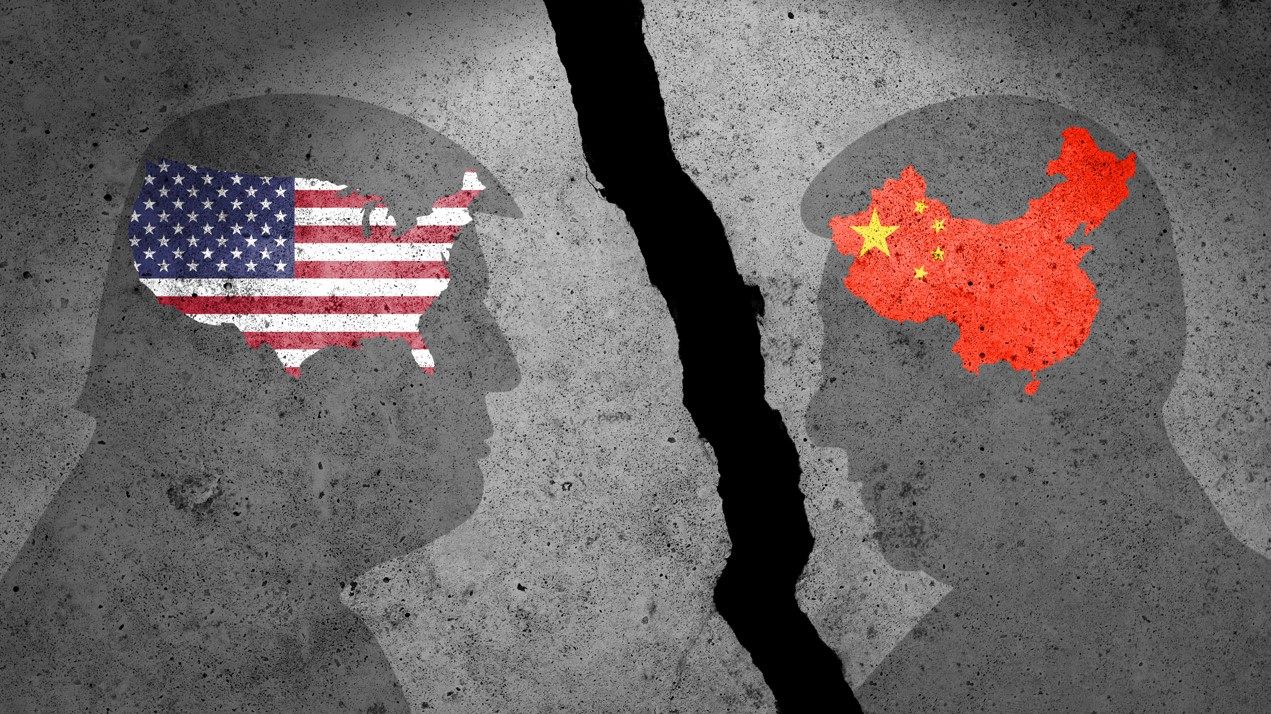
Ordinary citizens do not choose the world's power structure. But the shift away from unipolarity will touch prices, politics, and news feeds everywhere — and understanding it beats being ambushed by it.
Retire the collapse story and the forever story. The two loudest narratives — America is finished, or America will dominate indefinitely — are both wrong on the evidence. The US remains the strongest single power in a world it no longer runs alone. Holding that nuance is the single best inoculation against bad analysis.
Expect a noisier world, and budget for it. With no single enforcer, regional conflicts flare more often and supply chains reroute more frequently. Diversified savings, flexible career skills, and a margin for price shocks are the household-level versions of what states call resilience.
Watch the middle powers. India, Turkey, Saudi Arabia, Brazil, and Indonesia are where the new order is actually being negotiated — whom they trade with, arm with, and vote with. Their choices will tell you which future is winning years before the superpowers announce it.
Value the boring machinery. Alliances, trade rules, arms-control channels, and functioning courts are what separate a managed transition from a disorderly one. Supporting leaders who invest in that machinery — at home and abroad — is a citizen's most direct lever on how this era ends.
- IMF — COFER, Currency Composition of Official Foreign Exchange Reserves, 2025
- IMF — World Economic Outlook, 2025
- World Bank — World Development Indicators, 2025
- RAND Corporation — studies of national power, 2024
- Council on Foreign Relations; Foreign Affairs — essays on multipolarity, 2023–2025
- Forecast The World Research Desk — 800+ data sources