The Question
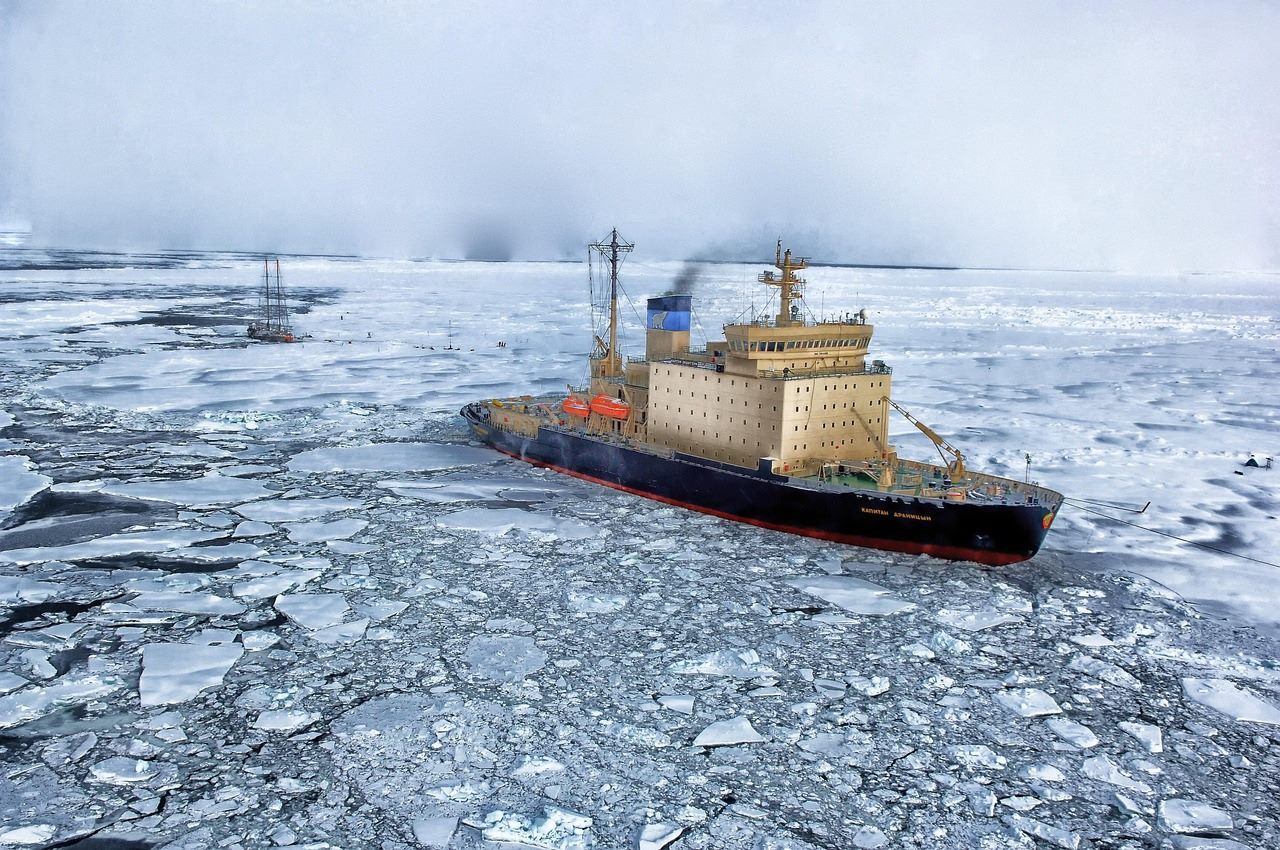
For most of the twentieth century the Arctic was a place armies preferred to avoid: a wall of ice, cold, and darkness that guarded the top of the world better than any fortress. Even during the Cold War, when American and Soviet submarines stalked each other beneath the pack ice, the region above the surface stayed mostly quiet, governed by cooperation and a shared assumption that the ice would always be there. That assumption is now dissolving. The Arctic is warming roughly three to four times faster than the global average — a phenomenon scientists call "Arctic amplification" — and the sea ice that once sealed the region shut is thinning and retreating each summer.
As the ice pulls back, it reveals things nations have long wanted but never reached: new sea routes that could cut thousands of miles off voyages between Asia and Europe, and, by the US Geological Survey's estimate, roughly 13% of the world's undiscovered oil and about 30% of its undiscovered natural gas, plus critical minerals prized for modern technology. The question this forecast weighs is whether the coming decade turns the Arctic from a shared scientific commons into a contested arena — a new front in the rivalry among Russia, China, and the Western alliance.
What the Evidence Shows
Russia holds the strongest hand and is playing it hardest. It owns roughly half the Arctic coastline, fields by far the largest Arctic military, and has spent years reopening Soviet-era bases, airfields, and radar stations across its far north. Central to its strategy is the Northern Sea Route — the shipping lane hugging Russia's Arctic coast that a warming ocean is making navigable for more of the year. Moscow treats the route as sovereign infrastructure, backed by the world's only fleet of nuclear-powered icebreakers, and markets it as a faster corridor between Asia and Europe. On the far side of the pole, the Northwest Passage through Canada's Arctic islands is opening on a similar trajectory.
China, which has no Arctic coast at all, declared itself a "near-Arctic state" in a 2018 white paper and announced plans for a "Polar Silk Road" — an extension of its global infrastructure push into the far north. It is building icebreakers, funding polar research stations, and investing in Arctic energy and mineral projects, often in partnership with Russia. The West, meanwhile, has consolidated. After Russia's 2022 invasion of Ukraine, the Arctic Council — the main forum for cooperation among the eight Arctic states — paused its normal work as the other seven members suspended dealings with Moscow.
"Climate change is opening the Arctic, and the region is becoming an arena of strategic competition."
— Framing drawn from US and NATO Arctic strategy documents, 2022–2024The alliance map shifted decisively when Finland joined NATO in 2023 and Sweden followed in 2024. That made seven of the eight Arctic states — every one except Russia — members of the alliance, leaving Moscow diplomatically isolated across the entire region. Overlapping seabed claims add friction of their own: Russia, Canada, and Denmark (through Greenland) have all filed claims to parts of the Arctic Ocean floor, including the underwater Lomonosov Ridge that runs near the North Pole. Greenland's mineral wealth and commanding position between North America and Europe have made it, too, a focus of outside interest.
"For centuries the ice kept the great powers out. Now the melt is inviting them in."
Why This Is Happening
The physical map is changing faster than the political one. Arctic amplification means the region warms far faster than the rest of the planet, so ice that took millennia to form is retreating within a single human lifetime. Each retreating summer opens water that was closed for all of recorded history, and open water invites ships, drilling rigs, and the navies that follow commerce. Geopolitics is simply rushing to catch up with geography that no longer matches the old maps.
Resources and routes raise the stakes. The Arctic's estimated share of the world's undiscovered oil and gas, its deposits of critical minerals, and its shorter shipping lanes turn a remote wilderness into potential strategic prize. When a place holds both energy and a trade shortcut, powers that can reach it rarely leave it alone — and melting ice is steadily lowering the cost of reaching it.
The war in Ukraine fractured Arctic cooperation. For decades the Arctic was insulated from wider rivalries by habits of scientific and environmental collaboration. Russia's 2022 invasion shattered that insulation: the Arctic Council froze, NATO expanded to Russia's northern doorstep, and Moscow leaned harder on China as its remaining major partner. A region once managed as an exception to great-power politics is being folded back into them.
What Could Happen
Russia continues rebuilding bases and patrolling the Northern Sea Route; NATO expands Arctic exercises and surveillance; China deepens its research and investment footprint. Competition sharpens across military, economic, and legal domains, but shared dangers — brutal weather, high costs, mutual risk — keep it below the threshold of armed clashes.
Search-and-rescue, fisheries, and environmental monitoring pull the Arctic states back toward limited, practical collaboration even amid wider tension, reviving parts of the Arctic Council's work and dampening the sense of a new front line.
A confrontation over a shipping lane, a resource claim, or a military encounter escalates into a dangerous standoff, turning the Arctic into an active flashpoint rather than a slow-burning competition.
What Can We Do
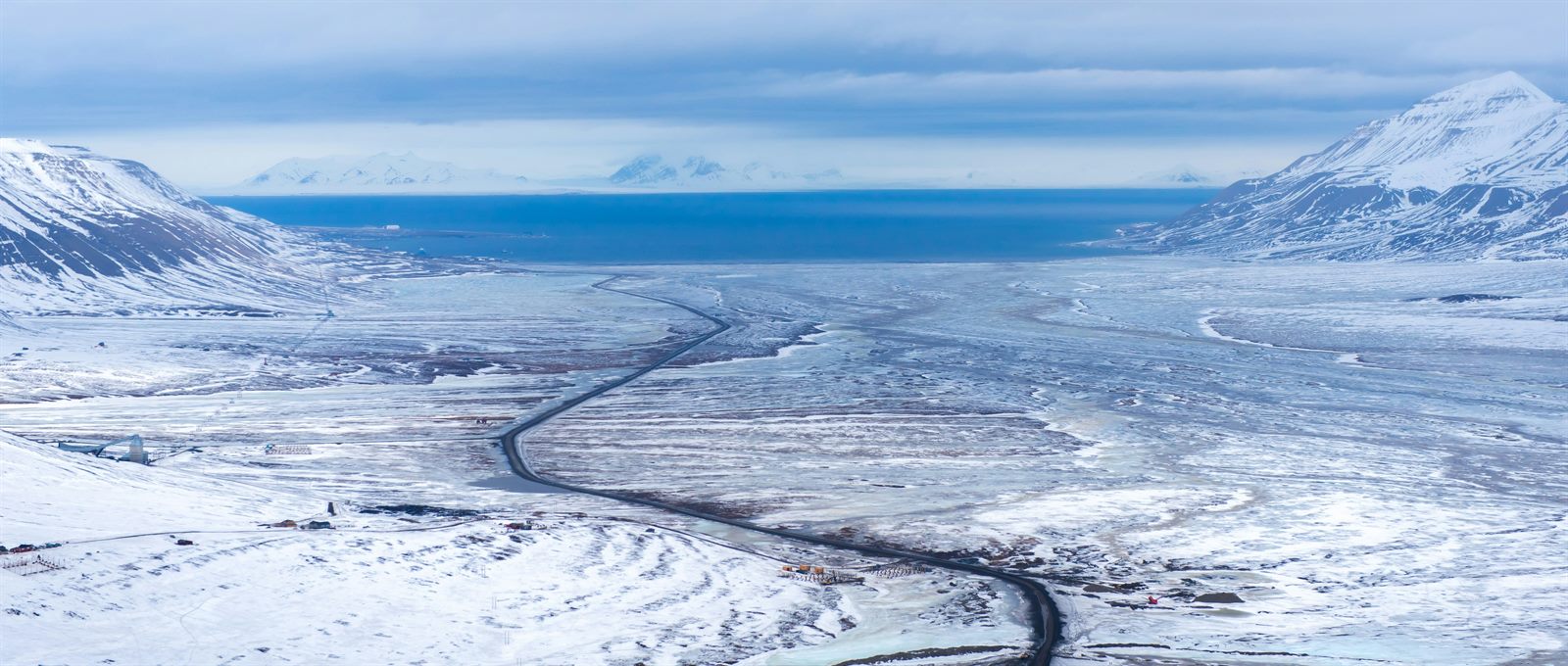
The Arctic can feel impossibly distant — a place of ice and few people, far from most readers' lives. Yet its shipping lanes, energy, and stability touch global trade and climate, and how it is governed is a choice, not a fate.
Understand what "Arctic amplification" means. The region is not warming at the same pace as everywhere else; it is warming several times faster, which is why the map is changing now rather than in some distant century. Grasping that single fact explains most of the geopolitics that follows and guards against treating the Arctic as a frozen abstraction.
Support the institutions that keep the peace. The Arctic Council and the legal frameworks that govern seabed claims are unglamorous but valuable. Backing their revival — even in narrow, practical forms like search-and-rescue and environmental monitoring — helps keep competition from curdling into confrontation.
Follow the credible trackers. Institutions like SIPRI, CSIS, and the Norwegian Institute of International Affairs publish careful, sourced analysis of Arctic militarization and resource claims. Watching deployments, base openings, and legal filings beats reacting to alarmist headlines about a "scramble for the pole."
Hold the climate and security stories together. The Arctic is at once a climate warning and a strategic contest, and treating them separately misses the point: the melt is the reason for the rivalry. Insisting that leaders address both — emissions and stability — is how citizens keep the whole picture in view.
- US Geological Survey — Circum-Arctic Resource Appraisal, 2008
- Arctic Council — Status and Statements, 2022–2024
- SIPRI — Arctic Security and Military Analysis, 2024
- CSIS — Arctic Program Reports, 2024
- Norwegian Institute of International Affairs (NUPI) — Arctic Studies, 2024
- Forecast The World Research Desk — 800+ data sources