The Question
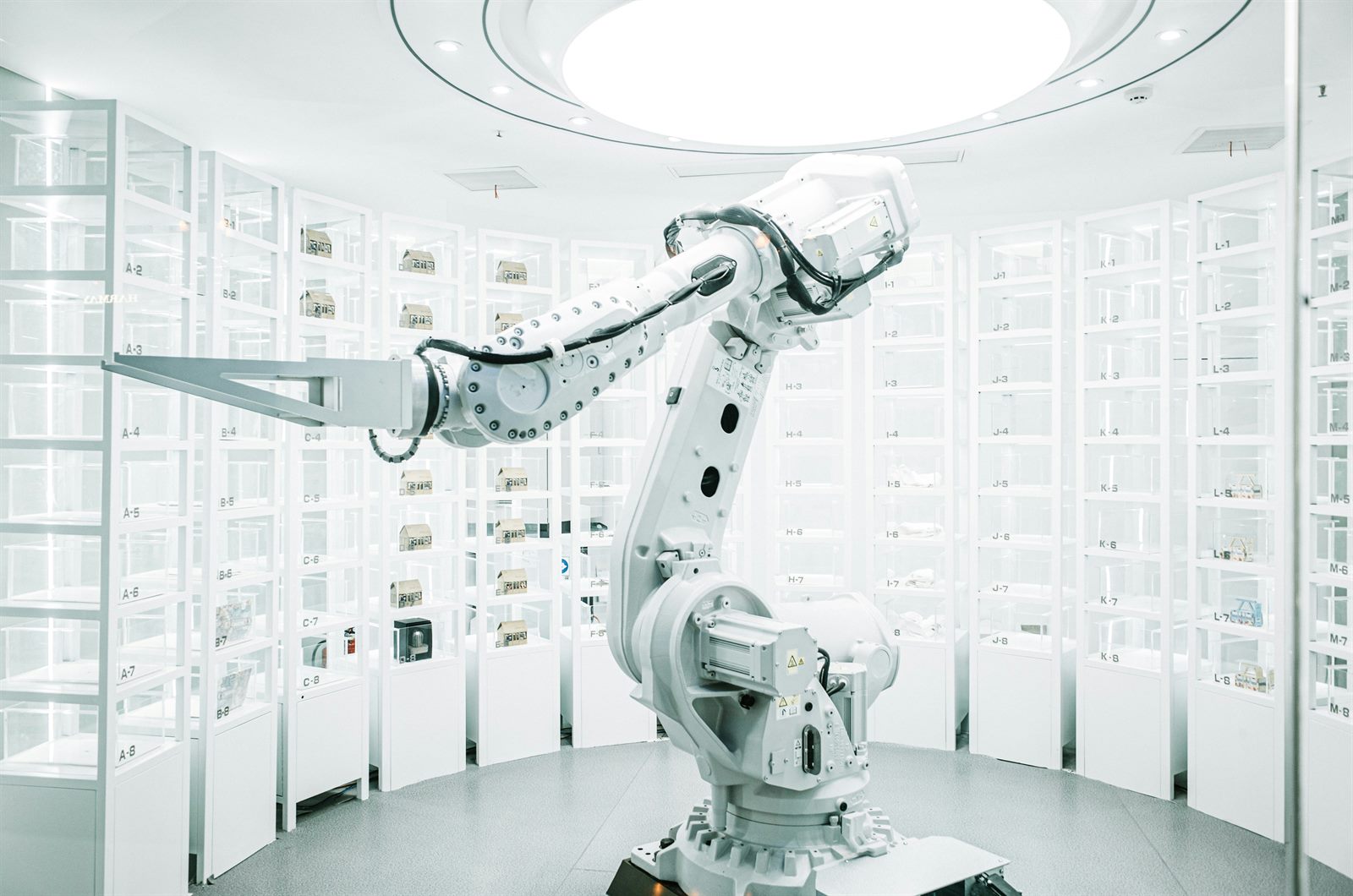
Every major wave of technology has triggered the same fear: that machines would take all the jobs. The spinning jenny threatened weavers. The steam engine threatened labourers. The computer threatened typists, bank tellers, and travel agents. In every case, the technology eliminated some jobs, created others, and left the economy larger than before. The optimists have been right — so far.
But there is a serious argument that this wave is different. Previous technologies replaced physical labour or narrow clerical tasks. AI can write, code, analyse, diagnose, advise, and reason. It can do, at scale and speed, things that previously required years of education and expensive human expertise. When the machine can do cognitive work, the historical playbook may not apply. By 2033, we predict the net job count from automation will be negative — even as the quality and pay of the jobs that survive and emerge will be higher than what was lost. That is a genuine economic gain and a genuine social crisis, simultaneously.
What the Evidence Shows
The World Economic Forum's Future of Jobs Report 2025 estimated that automation would displace 85 million jobs globally by 2025, while creating 97 million new ones — a net positive. But those numbers mask a critical asymmetry. The jobs being displaced are concentrated among lower-income workers: data entry clerks, call centre agents, paralegals, junior accountants, logistics coordinators. The jobs being created are concentrated among higher-income workers: AI trainers, prompt engineers, robotics technicians, data scientists, human-AI workflow managers. The gain and the loss are happening to different people.
In the US, the Bureau of Labor Statistics has tracked a hollowing out of middle-skill, middle-income jobs since the 1990s — a trend economists call "job polarisation." High-skill, high-wage jobs grew. Low-skill, low-wage service jobs grew. The middle collapsed. AI is accelerating this process dramatically. Law firms already use AI tools to handle document review work that previously employed armies of junior associates. Radiologists are seeing AI-assisted screening reduce the hours of routine work per scan. Even software engineers are writing less boilerplate code as AI handles more of the mechanical work.
"The jobs AI creates will pay more — but they will require skills that the workers AI displaces do not yet have and may not be able to acquire quickly."
— McKinsey Global Institute — "The Future of Work After COVID-19", 2025There is also a speed problem. Even when new jobs emerge from technological change, workers historically needed a generation to retrain and reposition. The handloom weavers displaced by industrialisation did not become factory engineers — their children did. If AI disrupts labour markets at the pace current trajectories suggest, the transition window is far shorter than anything previous waves allowed. The people losing jobs now may not have a decade to retrain. They may have two or three years.
"The new jobs will be better — but better for whom, exactly, is the question that will define the next decade."
Why This Is Happening
AI has crossed the cognitive threshold. For most of computing history, machines could only do what they were explicitly programmed to do. Modern AI — large language models, vision systems, reasoning engines — can generalise. They can handle novel situations, interpret ambiguous instructions, and produce work that requires genuine judgment. That is a qualitative shift, not just a quantitative one. It is the difference between a calculator and a colleague.
The economics of automation have inverted. Historically, automating a task required expensive custom engineering. A robot that could sort packages cost millions to design and deploy. Now, a general-purpose AI tool can handle a wide range of knowledge tasks for a few hundred dollars a month per user. The economic threshold for replacing a human worker has dropped dramatically — and will continue to drop as the technology improves and prices fall.
Education and retraining systems are not built for speed. A traditional four-year degree takes four years. Community college retraining programs run one to two years. Corporate training budgets are typically the first thing cut in a downturn — precisely when retraining is most needed. The infrastructure for helping workers adapt to technological change is slow, expensive, and underfunded relative to the pace of the disruption now underway.
What Could Happen
By 2033, the job market has bifurcated sharply. High-skill workers who can collaborate with AI — managing, directing, and correcting it — command premium wages and face strong demand. Routine cognitive and manual workers face sustained displacement without an obvious landing spot. A large population of working-age adults cycles through gig work, retraining programs, and underemployment. GDP grows. Inequality grows faster. The political consequences are significant.
Governments intervene at scale: universal retraining credits, shorter working weeks to spread available work more broadly, stronger wage floors, and investment in human-intensive sectors — care work, education, community services — that AI cannot easily replicate. The displacement is real, but it is absorbed into an expanded social infrastructure rather than dumped onto individuals. This requires a level of political coordination that is rare but not unprecedented — the post-war welfare state was built in a decade.
AI productivity gains are so large that they generate entirely new industries at a scale that absorbs the displaced workforce rapidly. Just as the internet created social media managers, SEO specialists, and app developers from scratch, AI spawns categories of work we cannot yet name. Wages broadly rise, including for lower-skill workers, as the economic pie expands faster than any cohort can be excluded from it. This is the optimistic scenario — and it requires a pace of new industry formation that has no clear historical precedent.
What Can We Do

Whether automation is a threat or an opportunity for you depends enormously on where you sit in the labour market — and what you do now.
Identify the automatable parts of your job. Be honest. Routine, rule-based, repetitive tasks — regardless of how skilled they feel — are the most vulnerable. The parts of your job that require genuine human judgment, relationship management, ethical reasoning, or creative synthesis are far more durable. Know which is which.
Learn to work with AI, not just alongside it. The workers who will fare best are not those who ignore AI or those who are replaced by it — they are those who become skilled at directing, correcting, and amplifying AI tools. This is a learnable skill. Start now, before the pressure is acute.
Invest in uniquely human capabilities. Empathy, persuasion, physical dexterity in complex environments, creative vision, and ethical judgment are all things AI does poorly. Skills that concentrate in these areas — nursing, teaching, skilled trades, leadership, design — are more durable than skills in pure information processing.
Do not wait for your employer to retrain you. Corporate retraining programs are underfunded and often too slow. Online learning platforms, community colleges, and professional communities offer faster, cheaper, and more current skill development. Take ownership of this now.
Support policies that spread the gains. The productivity gains from AI will be enormous. How those gains are distributed — through wages, public services, or shareholder returns — is a political question. Engaging with that question is not abstract. It will directly determine whether the AI revolution is experienced as liberation or displacement by the majority of workers.
- World Economic Forum — "Future of Jobs Report" — WEF, 2025
- McKinsey Global Institute — "The Future of Work After COVID-19" — MGI, 2025
- Bureau of Labor Statistics — Occupational Employment Projections — BLS, 2025
- Acemoglu D. & Restrepo P. — "Robots and Jobs" — NBER Working Paper, 2023
- OECD — "Employment Outlook: The Future of Work" — OECD, 2024
- Forecast The World Research Desk — 800+ data sources