The Question

In 1980, the median age of a first-time homebuyer in the United States was 29. In 2025, it was 38. That number is not just a statistic — it is a story about an entire economic ladder that has been quietly pulled up. The path to homeownership that previous generations walked in their late twenties — modest savings, reasonable mortgage, affordable starter home — no longer exists in recognisable form for most young Americans in most cities.
We are not asking whether homeownership will die. It will not. We are asking something more precise: will buying a home before 40 remain a realistic aspiration for ordinary young Americans, or will it become the exclusive territory of those with high incomes, family wealth, or exceptional luck in the housing lottery? By 2034, we predict the answer is somewhere uncomfortable between those two poles — and closer to the second than most people want to admit.
What the Evidence Shows
The numbers paint a stark picture. The national homeownership rate for Americans under 35 fell from 43% in 2004 to around 37% in 2025. That decline is partly cyclical — the 2008 financial crisis reshaped the market — but much of it is structural. Home prices relative to median incomes reached historic highs in 2022 and have not meaningfully corrected since. In major metro areas, the ratio of median home price to median household income exceeded 10:1. Historically, housing economists considered 3:1 to 4:1 to be the affordable range.
Interest rates have compounded the problem. A home that cost $400,000 in 2020 with a 3% mortgage required a monthly payment of roughly $1,686. The same home bought in 2024 at 7% requires $2,661 per month — a 58% increase in the actual cost of carrying the same asset. Down payments have followed prices upward, requiring a larger absolute savings target even at the traditional 20% threshold. The window between "earning enough to start saving" and "saving enough to buy" has widened dramatically.
"The median age of first-time homebuyers has risen by nearly a decade in two generations. We are not witnessing a delay — we are witnessing a structural exclusion."
— National Association of Realtors — "Profile of Home Buyers and Sellers", 2025Institutional investors — companies that buy single-family homes to rent them — now own a meaningful share of the starter home inventory in many markets. When a $250,000 house becomes a corporate rental asset, it does not just raise prices. It removes that unit from the for-sale market permanently, reducing the supply of homes that first-time buyers can purchase. The starter home market is being systematically drained from both ends: too few are being built, and too many of those that exist are being converted to rentals.
"Homeownership before 40 has quietly become a privilege, not a milestone — and most people haven't been told."
Why This Is Happening
Supply has not kept pace with demand for decades. Local zoning laws in most American cities effectively prohibit the construction of affordable housing. Single-family zoning, minimum lot sizes, parking requirements, and lengthy permitting processes all raise the cost of building. The result is a chronic undersupply of homes relative to household formation. Basic economics: when supply is constrained, prices rise. This is not a mystery — it is policy.
The wealth gap has become a homeownership gap. For buyers who receive parental help with a down payment — a so-called "Bank of Mom and Dad" — the affordability barriers are manageable. For those who do not, they are increasingly insurmountable. The National Association of Realtors estimates that over 25% of first-time buyers now receive gift money from family. That share is rising. Homeownership is becoming an inheritance-enabled privilege rather than an earned one.
Student debt delays the timeline. The average 2025 graduate carries roughly $38,000 in student loan debt. Loan payments, combined with rent in an expensive market, can make saving for a down payment a decade-long project. By the time a typical borrower has saved a sufficient deposit, they are well past 30 — and in many markets, past 40.
What Could Happen
Young adult homeownership rates continue to decline slowly. The median first-time buyer age reaches 42 by 2034. Ownership remains above 33% for the under-40 cohort, but only barely, and only because high earners with family wealth continue to buy. The bottom half of the income distribution gives up on ownership as a life goal and adapts to long-term renting. Policy interventions are proposed but too fragmented and underfunded to reverse the trend at scale.
A combination of state-level zoning reform, federal incentives for affordable construction, and restrictions on institutional home buying moderately increases starter home supply. Prices soften in some markets. The homeownership age stops rising and stabilises. A meaningful number of young adults in reformed markets can buy by 35. This scenario requires sustained political will that has eluded housing reformers for two decades — but there are signs of genuine movement in states like California, Montana, and Minnesota.
A significant economic downturn — driven by job losses, rate shocks, or a burst of speculative building — causes home prices to fall sharply. A window of two to three years opens where entry-level homes become temporarily affordable. Young buyers who entered the downturn with savings capture the opportunity. This is less a structural fix than a painful reset — and history shows that many potential first-time buyers are too economically insecure during recessions to capitalise on falling prices.
What Can We Do
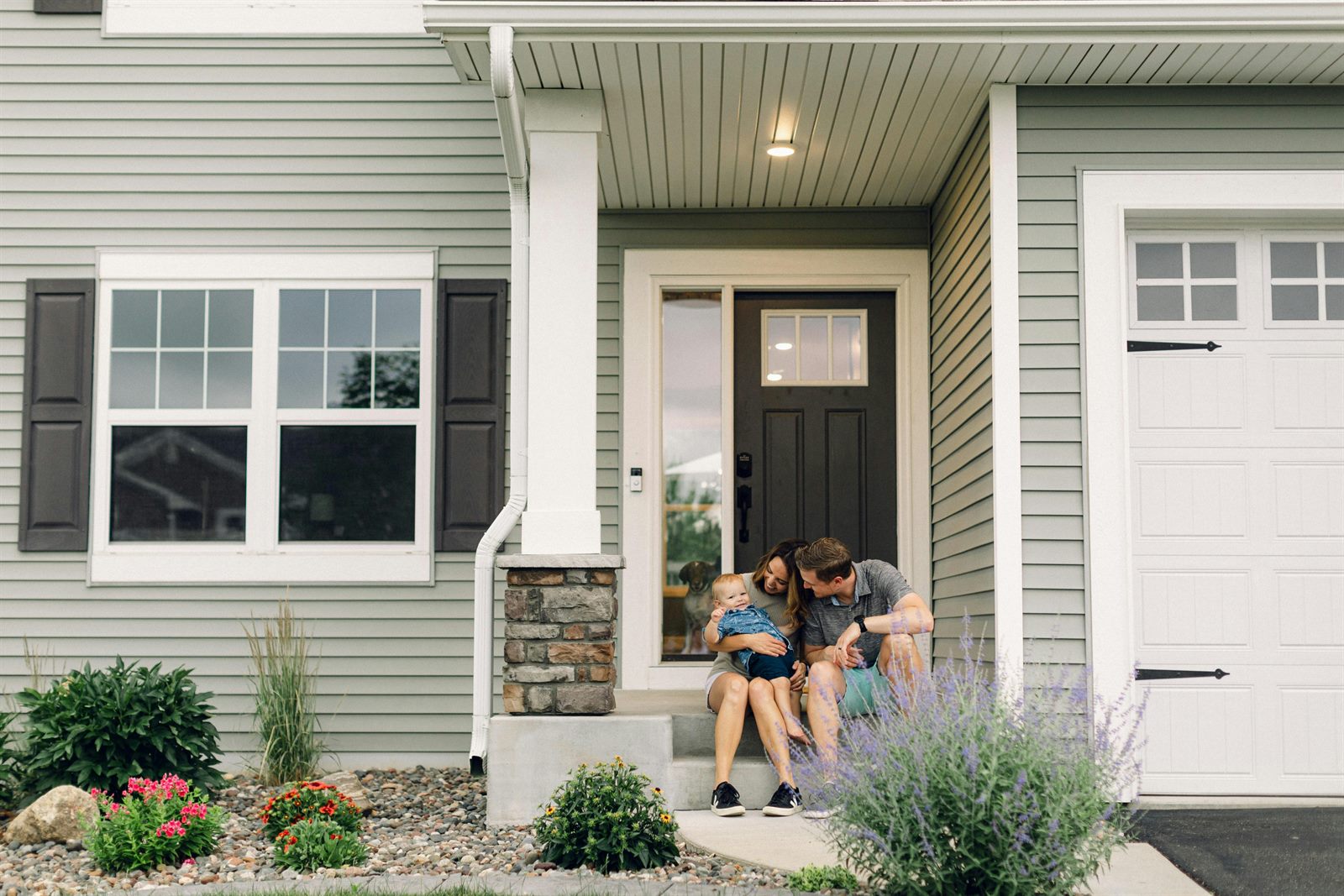
Homeownership may be harder than it was, but it is not impossible for everyone. Strategy matters more than it used to.
Reconsider geography. The affordability crisis is severe in coastal cities but far less acute in secondary markets. Cities like Pittsburgh, Indianapolis, Cleveland, and Tulsa still offer homes in the $200,000–$300,000 range within reach of median incomes. If remote work makes your location flexible, the map of affordable homeownership is much larger than it appears from San Francisco or New York.
Understand the real cost of waiting. Every year you delay buying in a rising market can add years to your savings timeline. Conversely, buying too early with a stretched budget can be financially devastating. Run the actual numbers for your specific income and local market before assuming either that you cannot afford to buy or that you definitely should.
Explore alternative paths to ownership. Co-buying with a friend or sibling, community land trusts, shared equity schemes, and employer housing assistance programs all exist and are underutilised. They are not perfect solutions, but they can make ownership achievable in markets where solo purchase is not realistic.
Engage in local housing politics. Zoning reform is decided at the city and county level. Attending planning meetings, supporting pro-housing candidates, and opposing NIMBYism (the "not in my backyard" opposition to new housing) is one of the highest-leverage things a young renter can do. The housing shortage is a political problem with a political solution.
Do not measure your life against an outdated script. Renting long-term is not failure. In many European cities, it is the norm. Building wealth through investments while renting in a competitive city can be more financially rational than stretching to buy at a peak. The goal is financial security — and homeownership is one path to it, not the only one.
- National Association of Realtors — "Profile of Home Buyers and Sellers" — NAR, 2025
- Harvard Joint Center for Housing Studies — "State of the Nation's Housing" — JCHS, 2025
- Federal Reserve Bank of Atlanta — Home Ownership Affordability Monitor — HOAM, 2025
- Urban Institute — "Barriers to Homeownership for Young Adults" — Urban Institute, 2024
- Federal Reserve — Survey of Consumer Finances — Federal Reserve, 2024
- Forecast The World Research Desk — 800+ data sources