The Question
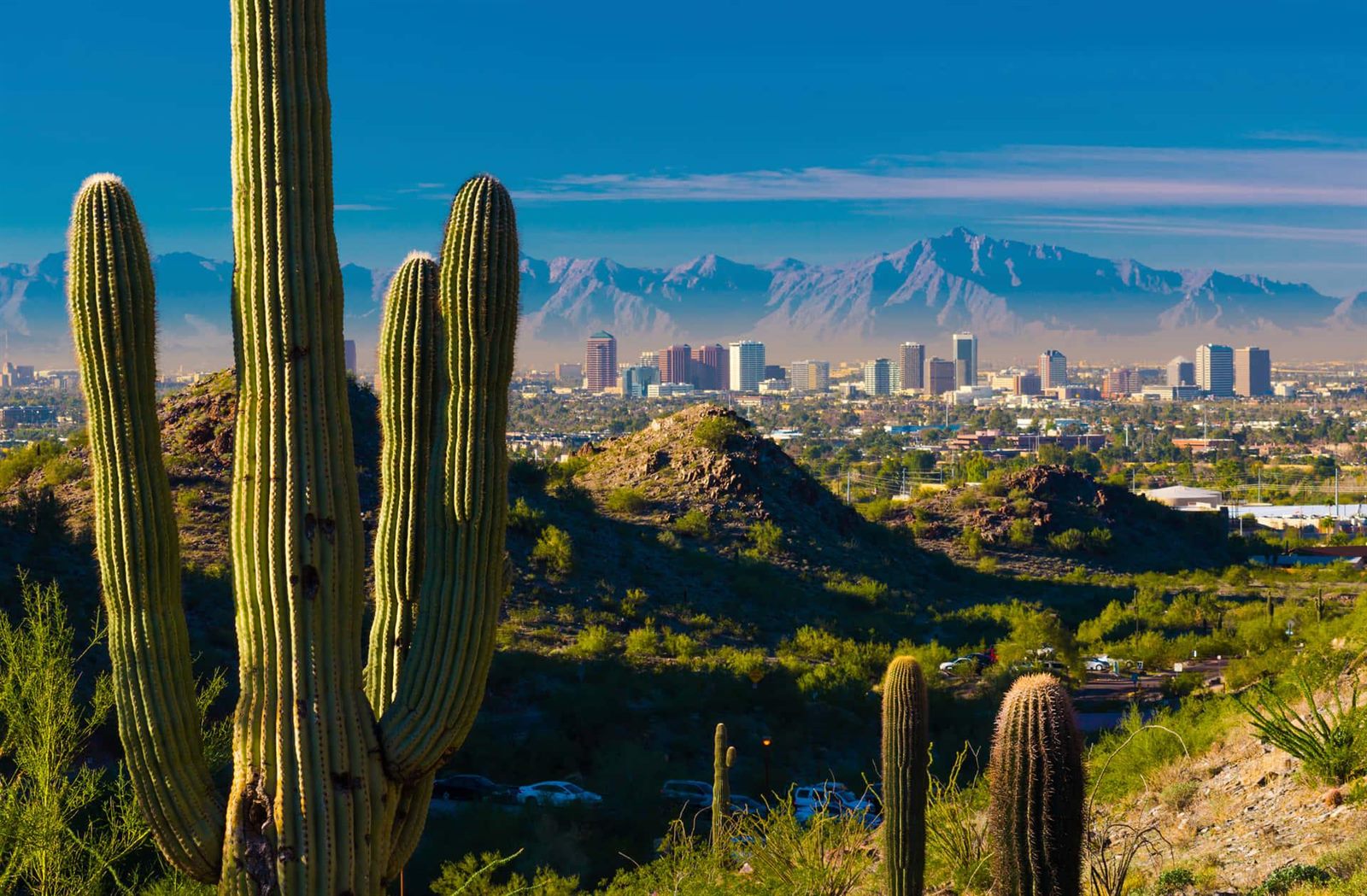
It is 4 p.m. in Phoenix, and the bank sign on Camelback Road reads 130°F. The streets are empty — not quiet, empty, the way a city looks in a blizzard. Rubber door seals have gone soft. The airport has grounded smaller planes because hot air is too thin to give their wings lift. In the burn unit at the Arizona Burn Center, doctors are treating people whose only mistake was falling onto a sidewalk: on days like this, asphalt reaches 180°F, hot enough to cause third-degree burns in seconds.
This is not science fiction. Every element of that scene except the number on the sign has already happened in Phoenix. The question is whether the number itself — 130°F, a reading no major city on Earth has recorded — arrives within the decade. The trend line says it is closer than almost anyone wants to believe.
What the Evidence Shows
The summer of 2023 rewrote what anyone thought a modern American city could endure. Phoenix logged 31 consecutive days at or above 110°F — the previous record was 18. Maricopa County confirmed 645 heat-related deaths that year, more than six times the toll a decade earlier. And here is the detail that worries scientists most: the nights stopped cooling down. Concrete and asphalt soak up heat all day and radiate it back all night — the "urban heat island" effect — so overnight lows in parts of Phoenix now stay above 90°F. The human body repairs itself from heat stress at night; take the nights away, and the damage compounds day after day.
Phoenix's saving grace has always been dryness. The truly lethal threshold is what scientists call wet-bulb temperature — a measure combining heat and humidity that marks the point where sweating stops working, because sweat can no longer evaporate to cool you. In humid heat, that limit can arrive at air temperatures below 100°F; in Phoenix's desert air, the body can survive astonishing readings, so long as it has water, shade, and — critically — air conditioning. That is the city's hidden dependency. A study led by Arizona State University researchers modeled a multi-day blackout during a Phoenix heat emergency and produced a scenario in which roughly half the city's population — hundreds of thousands of people — would need emergency care, overwhelming every hospital in the state. Air conditioning is not a comfort in Phoenix. It is life support for 1.7 million people, running on a grid.
"Phoenix is the first city in history to be entirely dependent on a machine for its summer survival. We have built a lunar colony in the Sonoran Desert and stocked it with golf courses. The 130-degree day is not the catastrophe — the catastrophe is that day plus a power failure."
— Journal of Urban Climate Resilience — "Cascading Failure in Heat-Dependent Cities," 2025The city knows it. Phoenix appointed the nation's first municipal heat officer, and its Office of Heat Response now runs like a year-round emergency service: coating streets with reflective "cool pavement," building shade corridors, and pushing "tree equity" programs — because wealthy neighborhoods have up to four times the tree cover of poor ones, and the temperature difference between leafy and bare districts can exceed 10°F. The same map predicts who dies: heat deaths concentrate among the poor, the elderly, the homeless, and those whose window AC unit fails in the wrong week. Those with money increasingly summer elsewhere; those without cannot leave.
"Every city on a warming planet will eventually face Phoenix's question. Phoenix just gets to answer it first."
Why This Is Happening
The baseline is rising underneath the extremes. Phoenix's average summer is several degrees hotter than in the 1970s, which means every heat wave now starts from a higher floor. The 122°F record was set in 1990 under weather patterns that, replayed on today's warmer baseline with a strong heat dome — a lid of high pressure that traps and cooks the air — plausibly lands in the high 120s. One unlucky week takes it further.
The city amplifies its own heat. Phoenix has replaced desert soil, which cools quickly at night, with thousands of square kilometres of asphalt and concrete that store heat like a battery. The urban heat island adds degrees precisely where the people are, and every new parking lot makes the next record slightly easier to break.
Growth is outrunning adaptation. Phoenix remains one of America's fastest-growing metro areas — cheap housing and sunshine still outsell fear. More people means more AC, more waste heat, more pavement, and more lives staked on the grid holding through the worst week of the worst summer.
What Could Happen
A strong heat dome in the early 2030s pushes the record past 125°F and then, in one brutal afternoon, to 130°F. The grid holds, but the toll is severe: hundreds of deaths that week, burn units at capacity, flights grounded, outdoor work banned. The event becomes a global turning point — the moment extreme heat is treated like hurricanes, with names, evacuations, and federal disaster declarations.
Warming continues, records fall in one- or two-degree steps — 123°F, 125°F, 127°F — but the freak alignment needed for 130°F stays just out of reach through 2035. Phoenix uses the borrowed time to harden its grid, expand shade, and build resilience hubs, becoming the world's exporter of heat-survival playbooks.
The defining catastrophe is not a number but a failure: a cyberattack, wildfire, or demand surge knocks out power for days during a 118°F stretch. The ASU worst-case model becomes real — mass casualties, evacuations of a million people, and the first partial abandonment of an American city to climate. Less likely, because utilities are hardening the grid — but this is the scenario emergency planners actually lose sleep over.
What Can We Do
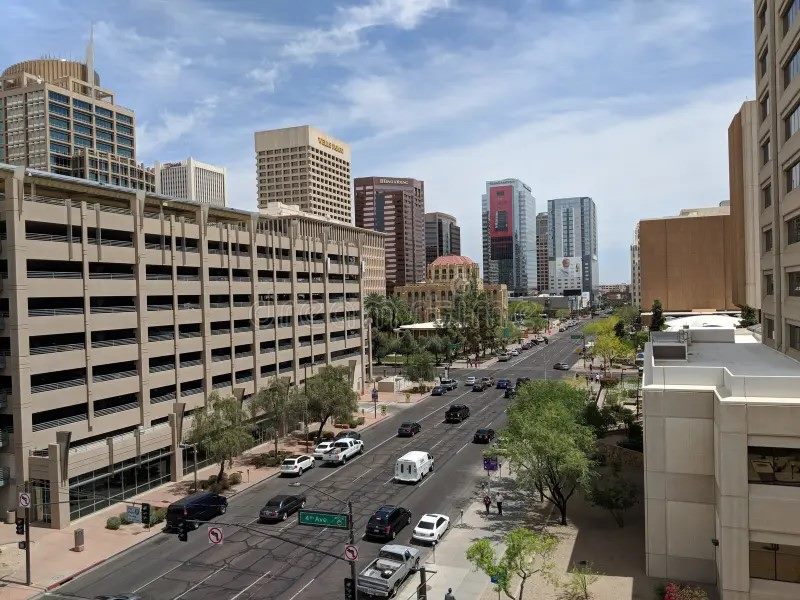
Extreme heat is the deadliest weather in America, yet it is the most survivable — nearly every death is preventable with preparation that costs little and starts at home.
Treat a heat wave like a hurricane forecast. Know your local warning system, and take "excessive heat" alerts as seriously as storm sirens. The killers are the third and fourth days, when bodies and power grids are both exhausted — plan your week around them, not just the peak afternoon.
Prepare for heat plus blackout, not heat alone. The deadly scenario is losing power in the worst week. Keep water stored, know the nearest public cooling center, and identify the coolest room in your home. A battery pack or a car with AC and a full tank is a survival tool. Check daily on elderly neighbors — most heat deaths happen alone, indoors, behind closed doors.
Cool your own patch. Shade trees on the west side of a house cut indoor temperatures and bills dramatically. Light-colored roofs reflect heat instead of storing it. If you live anywhere hot, these upgrades pay for themselves — and neighborhoods that plant together lower their shared temperature measurably.
Push for heat to be treated as the disaster it is. Support tree-planting in poor neighborhoods, cooling standards for rental housing, protections for outdoor workers, and grid hardening. Heat kills more Americans than floods, hurricanes, and tornadoes combined — vote and advocate accordingly, before your city becomes the next test lab.
- Maricopa County Department of Public Health — Heat-Associated Deaths Report, 2023–2024
- National Weather Service Phoenix — Historical Temperature Records and 2023 Heat Summary
- Arizona State University — "Heat Wave and Blackout: A Cascading Failure Simulation," 2023
- Journal of Urban Climate Resilience — "Cascading Failure in Heat-Dependent Cities," 2025
- City of Phoenix Office of Heat Response and Mitigation — Annual Report, 2025
- Forecast The World Research Desk — 800+ data sources